
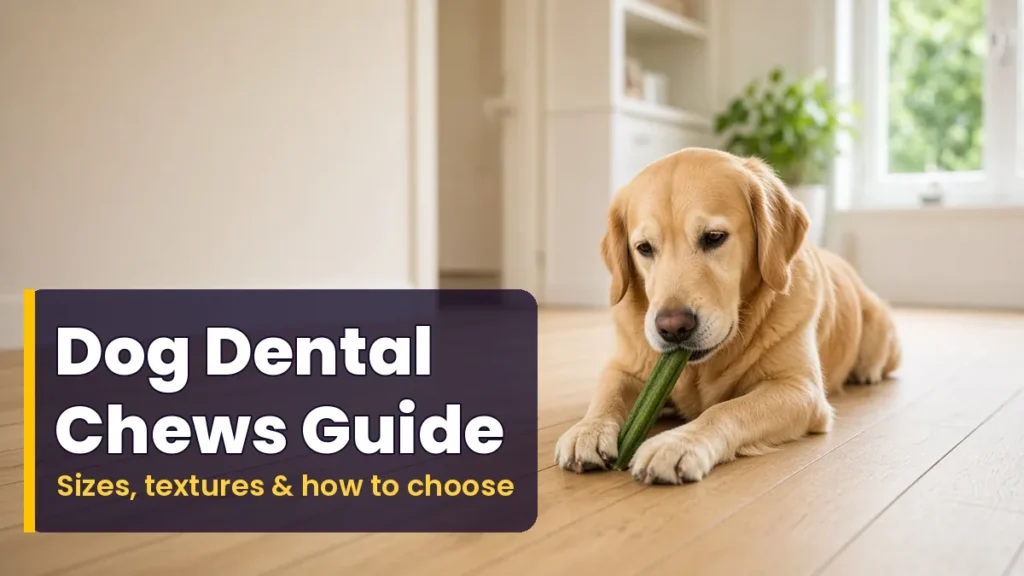
Dog Dental Chews: Sizes, Textures and How to Choose
Get our free Pet Care Starter Checklist
A printable checklist for dogs and cats, plus practical care tips and new arrivals by email.
No spam. Unsubscribe anytime. | Or see our monthly pet box →
Dog dental chews are chewy treats made to be part of your dog’s daily mouth care routine. They come in lots of sizes, shapes and textures, so picking one can feel confusing. This guide explains how dog dental chews work, how to pick the right size and texture, how to use them safely and how they fit with brushing. You can also browse the dog dental care products we stock.
Key takeaways
Here are the main things to know before you buy a dental chew. Each point is explained further down, with advice from Blue Cross, the PDSA, the American Kennel Club and the Veterinary Oral Health Council.
- Dental chews work best as one part of a routine that also includes brushing and vet checks.
- Pick a chew that matches your dog’s size. A chew that is too small can be a choking risk.
- Very hard chews can crack teeth, so a chew with some bend is often the safer pick.
- Dental chews have calories, so cut back your dog’s normal food a little.
- Stay close while your dog chews and take away small leftover pieces.
What are dog dental chews?
Dental chews are treats with a chewy texture that your dog has to work at. Instead of crunching once and swallowing, your dog gnaws on the chew for a while. Many have ridges, twists or bumps on the outside, and most are sized for small, medium or large dogs.
You may also see them called dental sticks for dogs, dental treats for dogs or dental chews for dogs. They all mean the same kind of product. The Blue Cross lists dental chews, a suitable diet and daily brushing as the three ways to stay on top of your dog’s dental hygiene.
Giving your dog dental chews and a suitable diet also has some effect in reducing plaque.
Blue Cross, Dog dental care
Why your dog’s teeth need daily care
Plaque is a sticky layer made of spit, food bits and bacteria. The PDSA says plaque collects on teeth and slowly turns into hard, brown tartar. The American Kennel Club says plaque forming is normal for every dog, which is why a daily routine matters.
The PDSA also says many dogs do not show signs of dental problems. That is why regular checks at home and with your vet are so useful. Signs to watch for include bad breath, red or bleeding gums and chewing on one side of the mouth.
Dental problems are very common. VCA Animal Hospitals says over 80% of dogs over the age of three have active dental disease. It also says tooth decay makes up less than 10% of dental problems in dogs, and that gum disease and broken teeth are the most common problems.
| Fact about dog teeth | Number | Source |
|---|---|---|
| Dogs over three with active dental disease | Over 80% | VCA Animal Hospitals |
| Share of dog dental problems that are tooth decay | Under 10% | VCA Animal Hospitals |
| Adult teeth in a dog’s mouth | 42 | American Kennel Club |
| Puppy teeth | Usually 28 | American Kennel Club |
| Age puppies usually have all baby teeth | 5 to 6 weeks | American Kennel Club |
Types of dental chews for dogs
Dental chews come in a few main styles. Each one feels different in your dog’s mouth and lasts a different amount of time. Here are the types you will see most often at an Australian pet shop.
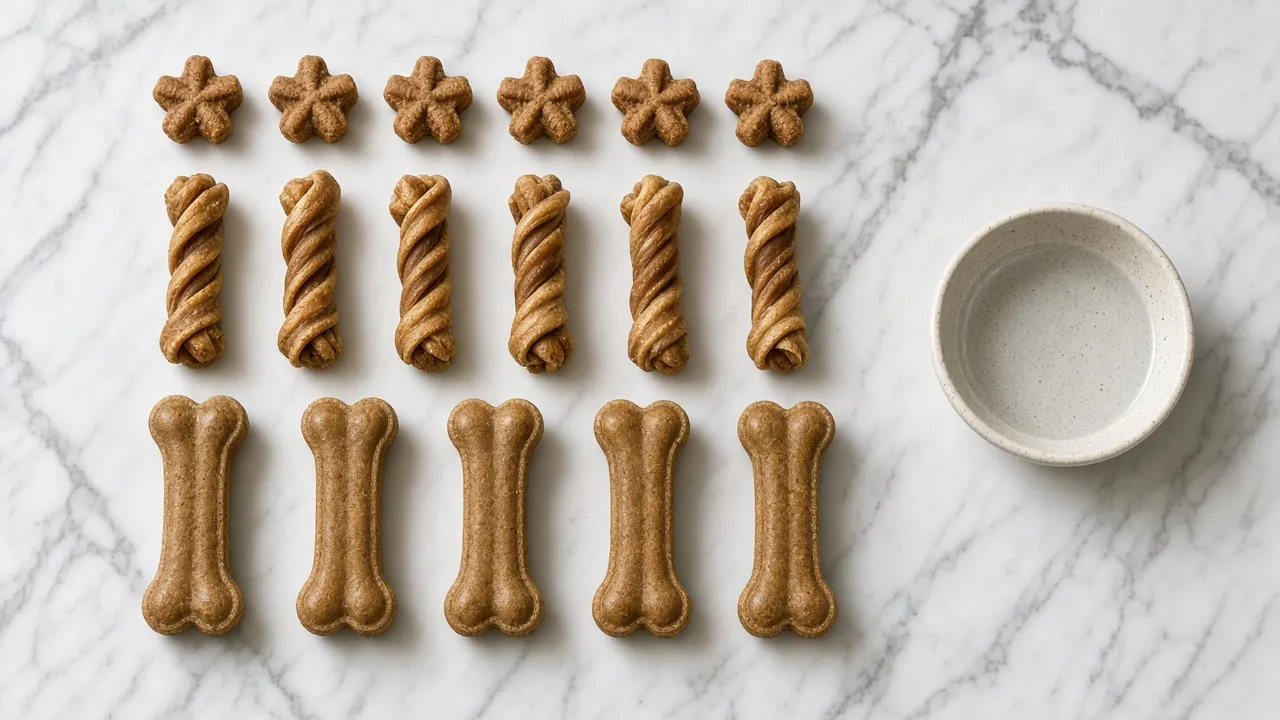
- Soft, bendy dental chews: shaped chews like a toothbrush or bone that bend when your dog bites. Greenies are a well-known example.
- Dental sticks: long sticks, often with ridges or a star shape, that your dog chews from end to end.
- Long-lasting chews: firmer treats made to last longer, sometimes used inside a treat toy.
- Natural chews: single-ingredient chews such as fish skins or sheep ears, which give your dog something to gnaw on.
Soft, bendy chews are often the easiest place to start, because your dog’s teeth can sink in without the chew being rock hard. Natural chews are a good option for dogs who need a simple ingredient list.
Our dog dental chews compared
These are the dental treats for dogs we stock right now. Each one links to its own product page with full details. Features below come from each product page on our site.
| Dental chew | Size or pack | Texture or flavour |
|---|---|---|
| Greenies Original Teenie | 340g, 43 treats, for toy and extra small dogs | Soft, bendy, original flavour |
| Greenies Original Regular | 340g, 12 treats, for medium dogs | Soft, bendy, original flavour |
| Greenies Original Value Pack | Larger value pack | Soft, bendy, original flavour |
| Greenies Sweet Potato | Several sizes | Made with real sweet potato |
| Greenies Fresh | Several sizes | Mint flavour |
| Greenies Blueberry | Several sizes | Blueberry flavour |
| Blackdog Collagen Dental Sticks | Stick shape | Long-lasting collagen chew |
| Starmark Everlasting Chicken Treat | Fits Starmark treat toys | Firm, long-lasting, chicken flavour |
Greenies Original Teenie and Regular
The Greenies Original Teenie pack has 43 small treats for toy and extra small breeds like a Chihuahua or Maltese. The Greenies Original Regular pack has 12 bigger treats for medium dogs like a Cavoodle or Beagle. Both have the soft, bendy Greenies texture. If you go through a lot, the Greenies Original Value Pack gives you more in one bag.
Greenies flavours
If your dog is fussy, a new flavour can help. We stock Greenies Sweet Potato dental treats, Greenies Fresh mint dental treats and Greenies Blueberry dental treats. Each product page shows the sizes available, so you can match the chew to your dog’s weight.
Blackdog Collagen Dental Sticks
The Blackdog Collagen Dental Sticks are a long-lasting stick for dogs who like a longer chew. They suit dogs who finish a soft chew too quickly.
Starmark Everlasting Chicken Treat
The Starmark Everlasting Chicken Treat is a firm, long-lasting chew made to fit inside Starmark Everlasting treat toys. Putting it in a toy turns chewing into a game, which is handy for bored dogs.
Natural chews
For a single-ingredient option, try Zeal hoki fish skins or Zeal free range sheep ears. You can find more ideas in our dog treats and chews range.
How to choose dog dental chews by size
Size is the most important thing to get right. The Blue Cross says dental chews should be the correct size for your dog, because chews that are too small can be a choking hazard. Check the weight guide on the pack before you buy.
- Toy and extra small dogs: pick the smallest size, such as a Teenie chew.
- Small dogs: pick a small or petite size for dogs like a Jack Russell or Shih Tzu.
- Medium dogs: pick a regular size for dogs like a Kelpie, Cavoodle or Border Collie.
- Large dogs: pick a large size for dogs like a Labrador, Golden Retriever or German Shepherd.
- Between sizes: go up a size, not down, so the chew cannot be swallowed whole.
| Greenies Original pack | Treats per 340g | Weight per treat |
|---|---|---|
| Teenie | 43 | About 8g |
| Regular | 12 | About 28g |
The American Kennel Club says small dogs fit 42 adult teeth into a tiny mouth, which can cause crowding. It also says large dogs who chew hard are at higher risk of breaking a tooth. So think about both size and how hard your dog chews.
How to choose a dental chew by texture
Texture matters as much as size. The Blue Cross warns that hard chews can risk cracking or wearing down your dog’s teeth. The PDSA also advises against bones and other very hard chews, because they can break off a large chunk of tooth.
VCA Animal Hospitals says any chew toy or dental treat should bend and give when you press it. It lists ice cubes, bones, hard nylon chews and antlers as objects that often cause broken teeth.
We advise against feeding your dog bones and other very hard chews because they can cause slab fractures.
PDSA, Dental disease in dogs
- Pick a chew with a little bend, not one that is rock hard.
- Press the chew with your thumbnail. If it leaves no mark at all, it may be too hard.
- Choose a longer-lasting chew for dogs who swallow soft chews fast.
- Try a natural chew for dogs who need a short ingredient list.
If your dog is a power chewer, our guide to dog toys for heavy chewers has ideas for tough toys that keep strong jaws busy.
How to give dental chews safely
Dental chews are safe for most dogs when you use them the right way. Follow these simple rules each time.
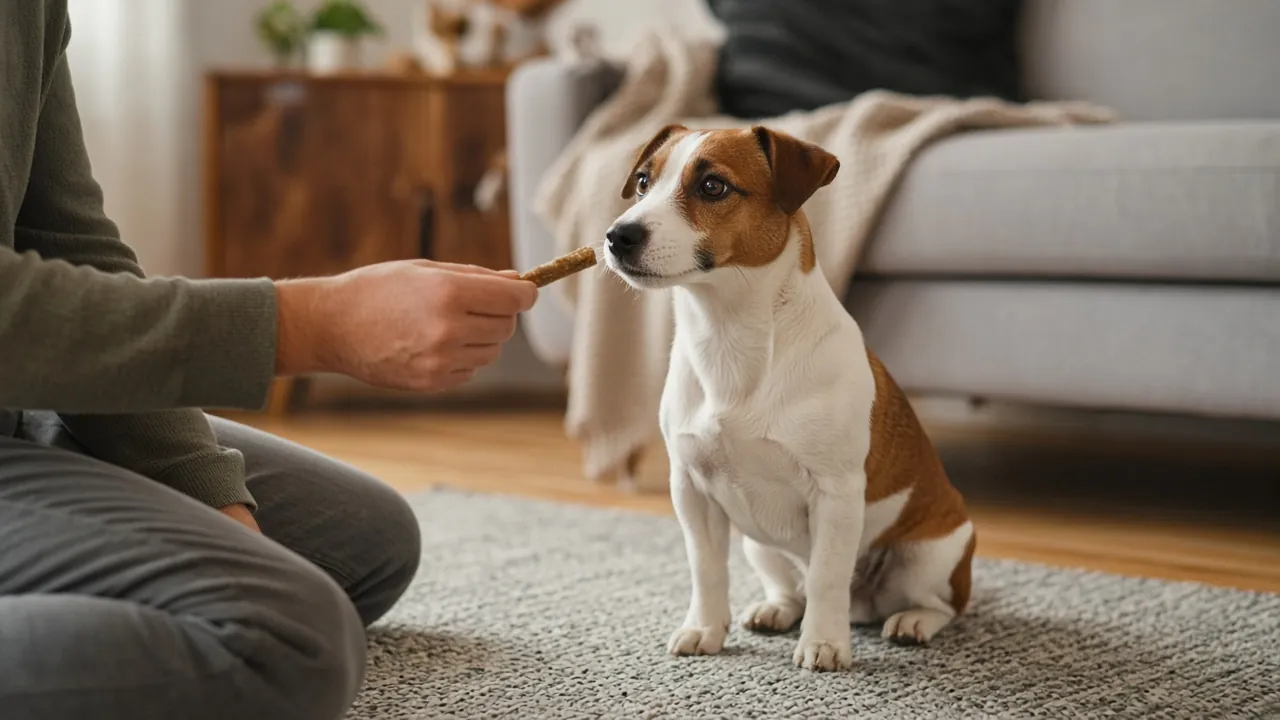
- Stay close while your dog chews.
- Take away the last small piece so it is not swallowed whole.
- Give fresh water with every chew.
- Follow the feeding guide on the pack, which is usually one chew a day.
- Feed dogs apart if they tend to steal each other’s chews.
The Blue Cross says many dental chews are high in calories. It suggests reducing your dog’s normal food so they do not put on weight. Count each chew as part of your dog’s daily food.
Dental chews and tooth brushing
Dental chews work best alongside brushing, not instead of it. The Blue Cross says daily tooth brushing is the best way to keep your dog’s teeth healthy. The American Kennel Club suggests dental chews, sprays, wipes and supplements as options if your dog will not let you brush.
To start brushing, the Blue Cross suggests stroking your dog’s cheek for a few days, then letting them lick toothpaste off the brush before you brush the front teeth. Always use a toothpaste made for dogs. The Vet’s Best Dental Care Kit includes a dog toothpaste and a three-headed brush.
Dental chews by the numbers
- 43 treats: in the Greenies Original Teenie 340g pack.
- 12 treats: in the Greenies Original Regular 340g pack.
- About 3.6 times as many: Teenie treats per 340g pack compared with Regular treats.
- 42 teeth: the number of adult teeth in a dog’s mouth, says the American Kennel Club.
- 28 teeth: the usual number of puppy teeth, says the American Kennel Club.
- 3 parts: brushing, a suitable diet and dental chews, the routine Blue Cross describes.
- Over 80%: dogs over three with active dental disease, says VCA Animal Hospitals.
- Under 10%: the share of dog dental problems that are tooth decay, says VCA Animal Hospitals.
- 8 chews: the dental chews compared in the table above.
- 5 sources: the animal welfare, vet and dog groups this guide draws on.
That means each Teenie treat weighs about 8g and each Regular treat about 28g. So a Regular treat is roughly three and a half times the size of a Teenie, which shows why matching the size to your dog really matters.
What the VOHC seal means
The Veterinary Oral Health Council is a group that reviews dental products for dogs and cats. Products that meet its standards can show the VOHC Seal of Acceptance. Its accepted products list includes groups such as edible chew treats, rawhide chews, toothpastes and toothbrushes. You can check its list when you compare dental sticks for dogs.
Want new treats and chews for your dog to try? Our pet subscription box sends a mix of goodies to your door.
Dog dental chews FAQ: specific questions about dental chews for dogs
These are common questions owners ask about dental chews for dogs. The answers are short and simple. Follow the links above for more detail.
Are dental chews good for dogs?
Blue Cross says dental chews and a suitable diet have some effect in reducing plaque. They work best alongside daily brushing and regular vet checks. Pick the right size, stay close while your dog chews and count the calories.
How often should I give my dog a dental chew?
Follow the feeding guide on the pack. Many dental chews are made to be given once a day. Reduce your dog’s normal food a little so they do not put on weight.
Can puppies have dental chews?
Many dental chews have a minimum age on the pack, so check the label before you give one to a puppy. Pick the smallest suitable size and watch your puppy closely while they chew.
What size dental chew should I buy?
Use the weight guide on the pack. If your dog is between two sizes, pick the bigger one so it cannot be swallowed whole.
Can dental chews replace brushing?
No. Blue Cross says daily tooth brushing is the best way to keep your dog’s teeth healthy. Dental chews are a helpful extra, not a swap for brushing.
References
The advice in this guide comes from the animal welfare, vet and dog sources listed here. Product details come from each product page on our site. Always ask your vet if you have concerns about your dog’s teeth or health.
- Blue Cross, Dog dental care: Caring for your dog’s teeth
- PDSA, Dental disease in dogs
- American Kennel Club, Dog Dental Care
- Veterinary Oral Health Council, Accepted Products
- VCA Animal Hospitals, Dental Disease in Dogs
Our monthly subscription box brings food, toys and treats for your dog or cat to your door. Pick a Starter, Standard or Deluxe box. Delivery is included Australia-wide, and you can cancel any time.
See the subscription boxes
During veterinary school, he contributed to projects involving species such as hammerhead sharks, Shark Bay mice, woylies, mulgara, and kangaroos, gaining valuable hands-on experience in wildlife health and preservation.


2 comments