

Dog Worming Tablets: How to Choose, Dose and Worm Safely
Get our free Pet Care Starter Checklist
A printable checklist for dogs and cats, plus practical care tips and new arrivals by email.
No spam. Unsubscribe anytime. | Or see our monthly pet box →
Dog worming tablets work best when you pick an allwormer that covers roundworm, hookworm, whipworm and tapeworm, dose it by your dog’s current weight, and give it on a regular schedule. Worming tablets do not prevent heartworm, so your dog needs a separate heartworm preventive too. This guide compares the wormers we stock and explains how often to worm puppies and adult dogs.
Key Takeaways
- Dose by your dog’s current weight and follow the label instructions carefully. Puppies grow fast, so weigh them often to get the right dose and avoid under-treating.
- A true “allwormer” must control all four major gut worms in dogs: roundworm, hookworm, whipworm and tapeworm (APVMA).
- Intestinal wormers do not stop heartworm, which is spread by mosquitoes (American Heartworm Society). Use a separate heartworm preventive.
- Treat fleas as well, pick up dog poo promptly and wash your hands, because some dog worms can infect people (SA Health).
Quick Comparison Table
Choosing the right dog worming tablets means knowing what each product targets and which dogs it suits. The table below compares the worming products we stock, the worms each one covers, and which dogs they suit best.
| Product | Form | Worms covered (label) | Best for |
|---|---|---|---|
| ParaGard Allwormer Tablets for Small Dogs and Puppies | Liver-flavoured tablet, 4 pack | Roundworm, hookworm, whipworm, tapeworm incl. hydatids | Puppies from 2 weeks and small dogs |
| Endogard Allwormer | Liver-flavoured tablet, 3 weight sizes | Roundworm, hookworm, whipworm, tapeworm incl. hydatids | Dogs up to 5kg, 10kg or 35kg (and cats up to 5kg) |
| Fido’s All Wormer Tablets 96 Pack | Tablet scored in quarters, 96 pack | Roundworm, hookworm, whipworm, tapeworm incl. hydatids | Multi-pet homes |
| Fido’s Closasole | Tablet, 10 or 100 pack | Roundworm, hookworm, tapeworm incl. flea tapeworm | Routine worming with no fasting |
| Drontal Puppies | 30mL liquid | Roundworm, hookworm, whipworm, tapeworm incl. hydatids | Young puppies |
| Greenies Pill Pockets | Soft treat with a pill pocket | None (helps you give a tablet) | Dogs that refuse tablets |
Fido’s All Wormer contains praziquantel and fenbendazole, and Fido’s Closasole contains niclosamide and levamisole. For the other products, check the pack for the active ingredients and the full dosing table.
Dog Worming Facts From Veterinary and Health Sources
These points from the APVMA (Australia’s vet medicine regulator), SA Health, ESCCAP and the American Heartworm Society explain why regular dog worming tablets matter for your dog and your family.
- The APVMA example dosing table for roundworm and hookworm is to treat puppies at 2, 4, 8 and 12 weeks of age, then every 3 months (APVMA).
- For whipworm, the same table suggests treating every 6 to 8 weeks after 3 months of age, and for other tapeworms every 3 months (APVMA).
- Dogs in hydatid areas should be treated every 6 weeks and should never be fed offal (APVMA).
- A wormer can only be labelled for general tapeworm control if it removes more than 99% of hydatid tapeworm at the label dose (APVMA).
- Dogs carry the hydatid tapeworm without signs, start passing eggs about 7 weeks after infection, and people can catch it from eggs in dog poo (SA Health).
- In a national Australian study of 1,400 dog poo samples, 23.9% of dogs carried gut parasites (Veterinary Parasitology).
- Of those dogs, 19.8% carried one type of gut parasite and 4.1% carried more than one (Veterinary Parasitology).
- Hookworm was found in 6.9% of the dogs tested: 11.4% of dogs from shelters and 3.0% of dogs from vet clinics (Veterinary Parasitology).
- One hookworm type that can infect people was found in 10.9% of the hookworm-positive dogs. Dogs aged 1 year or less, and dogs that had not been wormed, were more likely to carry hookworm (PubMed).
- A mosquito that bites an infected animal carries heartworm larvae that become infective in 10 to 14 days (American Heartworm Society).
- Heartworm is spread by mosquitoes. Inside a dog it takes about 6 months for the larvae to grow into adult worms, which can live for 5 to 7 years in dogs (American Heartworm Society).
- An infected dog may have 30 or more heartworms in its heart and lungs, and heartworm preventives are not 100% effective, so vets also test for it (American Heartworm Society).
How Often Should You Give Dog Worming Tablets?
A common Australian puppy routine is worming every 2 weeks from about 2 weeks of age until 12 weeks, then monthly until 6 months (RSPCA Pet Insurance). After that, most adult dogs are wormed every 3 months, but always follow your product label and your vet’s advice.
| Age or situation | How often | Why |
|---|---|---|
| 2 to 12 weeks | Every 2 weeks | Puppies can pick up roundworm from their mother |
| 12 weeks to 6 months | Every month | Young dogs are still growing and exploring |
| Adult dogs | Every 3 months, or as the label says | Keeps gut worms under control |
| Dogs in hydatid areas (farms, offal or carcass access) | Every 6 weeks | Hydatid tapeworm can infect people |

1. ParaGard Allwormer Tablets for Small Dogs and Puppies
ParaGard Allwormer Tablets for Small Dogs and Puppies are a broad-spectrum wormer for small dogs and puppies from just two weeks of age. These liver-flavoured tablets treat and control roundworm, hookworm, whipworm and tapeworm, including the hydatid tapeworm. You can give them with or without food, which makes dosing simple.
The 4-tablet pack suits puppies and small dogs, and ParaGard also makes medium and large dog strengths for when your pup grows.
What makes ParaGard stand out is that it can be used from two weeks of age, so you can start worming a young puppy early. The liver flavour appeals to many puppies, and because it can be given with or without food, you can dose at any time of day.
The main advantages of ParaGard are:
- Works from two weeks of age, so you can start worming puppies early.
- Covers all four major intestinal worm types, plus hydatids.
- Can be given with or without food.
- Liver flavour is usually eaten without fuss.
Two drawbacks worth noting: ParaGard does not protect against heartworm, so your puppy still needs a separate heartworm preventive. You also need to recheck your puppy’s weight often, because puppies grow fast and dosing by weight is critical for safety.
Verdict: A good choice for tiny puppies and small dogs when you want broad worm control that can start early.
2. Endogard Allwormer
Endogard Allwormer tablets are an option for worming dogs and cats from 2 weeks of age (for cats, see our cat worming tablets guide). The liver-flavoured tablets come in three sizes: dogs and cats up to 5kg, dogs up to 10kg, and dogs up to 35kg. Endogard controls roundworm, hookworm, whipworm and tapeworm, including hydatid tapeworm.
Give the dose for your dog’s current weight, and follow the label for how often to worm puppies and adult dogs.
Key Features
Endogard tablets are straightforward to use. The liver flavour appeals to most dogs, though some fussy eaters will still spit them out. The tablets suit multi-dog homes because you can buy the right size for each dog’s weight. One important note: Endogard controls intestinal worms but does not protect against heartworm, so your dog still needs a separate heartworm preventive.
Pros
- Covers all major intestinal worms, including hydatid tapeworm.
- Three weight sizes, so you can pick the right dose for your dog.
- Liver flavour makes most dogs willing to eat it.
- Works for puppies from 2 weeks old and adult dogs.
Cons
- Does not prevent heartworm, so a separate preventive is needed.
- Some dogs refuse the tablet despite the flavour.
- You need an accurate weight to dose correctly.
Who It’s Best For
Endogard suits owners who want a simple allwormer for puppies or adult dogs. Choose it if you have several dogs of different sizes, since the three weight options help you avoid over- or under-dosing.
Verdict: Reliable broad-spectrum intestinal worming in a simple tablet, with a separate heartworm preventive still needed.
3. Fido’s All Wormer Tablets 96 Pack
Fido’s All Wormer Tablets 96 Pack suit households with several dogs or cats. Each tablet contains praziquantel and fenbendazole, two active ingredients that work together to control roundworm, hookworm, whipworm and tapeworm, including hydatids. The tablets are scored in quarters, so you can adjust the dose to your dog’s weight. That makes them flexible for small and large dogs in the same home.
The standout feature is the 96-tablet count. Families with several pets, or anyone worming on a regular schedule, may find this pack more economical than buying small boxes again and again.
Key Strengths
- Economical for multi-pet homes and regular worming schedules.
- Tablets scored in quarters for dosing by weight.
- Broad-spectrum cover: roundworm, hookworm, whipworm and tapeworm, including hydatids.
- Suitable for both dogs and cats.
Drawbacks
There are only a few downsides to this pack. Most of them come from its size, because a big box of tablets lasts a long time. You also need to take care when you split tablets for small dogs, so each dose matches the label.
- A large pack lasts a long time, so check the expiry date before each dose.
- Breaking tablets into quarters takes a little care to get the dose right.
Verdict: Best value for multi-pet households that worm regularly.

4. Fido’s Closasole
Fido’s Closasole is a wormer for dogs and cats that controls roundworm, hookworm and tapeworm, including flea tapeworm. It comes in 10 or 100 tablet packs, so it suits single dogs or multi-pet homes. The active ingredients are niclosamide and levamisole, which work on different worm types. No fasting is needed, which makes it simpler to give.
Its main strength is practicality. Your dog does not need an empty stomach, so you can fit worming into your normal routine. It also controls flea tapeworm, which dogs catch by swallowing infected fleas, so it is useful alongside regular flea control.
Two limitations deserve a mention. Like all intestinal wormers, Fido’s Closasole does not protect against heartworm. It also does not list whipworm on its label, unlike an allwormer, so check with your vet if whipworm is a concern for your dog.
Verdict: A practical, no-fasting wormer for roundworm, hookworm and tapeworm.
5. Drontal Puppies
Drontal Puppies is a liquid wormer made for young puppies. The 30mL bottle controls roundworm, hookworm, whipworm and tapeworm, including hydatid tapeworm. A liquid can be easier than a tablet for a very young puppy.
Puppies often spit out tablets, so a liquid wormer removes some of that struggle. Measure the dose for your puppy’s current weight exactly as the label directs.
Key strengths:
- No tablet to hide or crush.
- Made for puppies in their early weeks.
- Broad-spectrum cover against four major intestinal worm types.
Limitations:
- Liquid can be messier to give than a tablet, especially with a wriggly puppy.
- Your puppy will move to a tablet wormer as it grows.
If your puppy already eats solid food and takes tablets, a tablet wormer such as ParaGard Allwormer Tablets for Small Dogs and Puppies might be simpler. Our puppy starter pack guide lists what else a new puppy needs.
Verdict: A good fit for young puppies that need broad worming without the tablet struggle.
6. Greenies Pill Pockets
Greenies Pill Pockets are soft treats with a pocket that hides a tablet, so your dog swallows the wormer without a fuss. Place the tablet in the pocket, press it closed and give it like a normal treat. They come in peanut butter or smoky ham flavour, with 30 pieces per pack. Pill Pockets are not a wormer themselves; they just make giving a tablet easier.
The main appeal is simplicity. No crushing tablets and no wrestling your dog. Many dogs eat them without question because they taste like a treat.
Pros:
- Hides the tablet so many dogs will not notice it.
- Two flavours, so you can pick what your dog prefers.
- 30 pieces per pack for repeat doses or multi-dog homes.
- Works with most standard tablets.
Cons:
- Some dogs eat around the treat and leave the tablet behind.
- You still need to dose the tablet correctly yourself.
Verdict: A helpful extra for food-motivated dogs that resist tablets.
Pros and Cons of Dog Worming Tablets
Different dog worming tablets offer different strengths and drawbacks. Knowing them helps you pick the right allwormer for your dog’s age, size and lifestyle. Use the lists below to weigh up tablets against liquids and treats, and to check what a wormer will and will not do.
Pros:
- Many tablets come in several weight sizes, so you can dose by your dog’s weight.
- Liver-flavoured tablets are easier to give, and many dogs take them in food.
- Broad-spectrum wormers control roundworm, hookworm, whipworm and tapeworm, including hydatids, in one dose.
- Scored tablets let you adjust the dose for smaller dogs.
- Large packs can be economical for homes with several dogs or cats.
Cons:
- Intestinal wormers do not prevent heartworm, so your dog still needs a separate heartworm preventive.
- Puppies grow fast and need frequent re-weighing; the wrong dose can mean the wormer does not work or is unsafe.
- Tablets must be given on schedule, or there are gaps in protection.
- Flea tapeworm spreads when dogs swallow fleas, so worming alone will not stop it without flea control.
What to Look For When Buying Dog Worming Tablets
Choosing the right dog worming tablets means knowing which worms your dog might catch, which products cover them, and how often to dose. Your vet can tell you what is common in your area, but knowing the basics helps you pick a product that protects your dog. The wrong choice can leave your dog exposed to roundworm, hookworm, whipworm or tapeworm, and some of these can spread to people.
Start by checking the label. A product sold as an “allwormer” or “broad-spectrum” wormer for dogs must control roundworm, tapeworm, hookworm and whipworm (APVMA). For hydatid tapeworm, health agencies advise checking that the wormer contains praziquantel (SA Health).
Dosing by weight matters more than you might think. Puppies grow fast, so weigh your pup often and adjust the dose. Some tablets are scored so you can break them into quarters for smaller dogs, while others come in fixed sizes.
If your dog refuses tablets, soft treats like Greenies Pill Pockets can help. And remember that intestinal wormers do not prevent heartworm, so your dog still needs a separate heartworm preventive. You can browse all options in our dog flea, tick and worm control range.
Finally, ask your vet before worming a pregnant, nursing, sick or very small dog. If your dog has ongoing diarrhoea, vomiting, weight loss, a pot belly or blood in the poo, see a vet first. These signs can point to a problem that needs a vet, not just a home wormer.
Specific Questions About Dog Worming Tablets
These are the questions dog owners ask us most about worming. The short answers below cover how often to worm, puppies, heartworm, signs of worms, fleas and tablet tricks. For advice about your own dog, always read the product label and talk to your vet.
How often should I worm my dog with dog worming tablets?
A common routine is every two weeks from two weeks of age until twelve weeks, then monthly until six months (RSPCA Pet Insurance). Adult dogs are usually wormed every three months, and dogs in hydatid areas every six weeks (APVMA). Always follow the label on your product.
What’s the difference between dog worming tablets and heartworm prevention?
Heartworm is a separate parasite spread by mosquitoes that lives in the heart and lung blood vessels (American Heartworm Society). Your dog needs an allwormer for intestinal worms and a heartworm preventive. Many owners assume one product covers both, which can leave a dog unprotected, so check the label.
Can I give dog worming tablets to my puppy?
Yes, some wormers can be used from two weeks of age. ParaGard Allwormer Tablets for Small Dogs and Puppies and Endogard Allwormer are both labelled from two weeks of age, and Drontal Puppies is a liquid made for young puppies. Dose by your puppy’s current weight, and ask your vet before worming a very small, sick, pregnant or nursing dog.
What signs show my dog has worms?
Common signs include diarrhoea, vomiting, weight loss, a pot belly and blood in the poo. Tapeworm segments can look like rice grains in the poo or around the bottom. Some dogs show no signs at all; dogs with hydatid tapeworm usually look healthy (SA Health). That is why regular worming matters. See your vet if signs keep going.
How do I give my dog a worming tablet if they won’t swallow it?
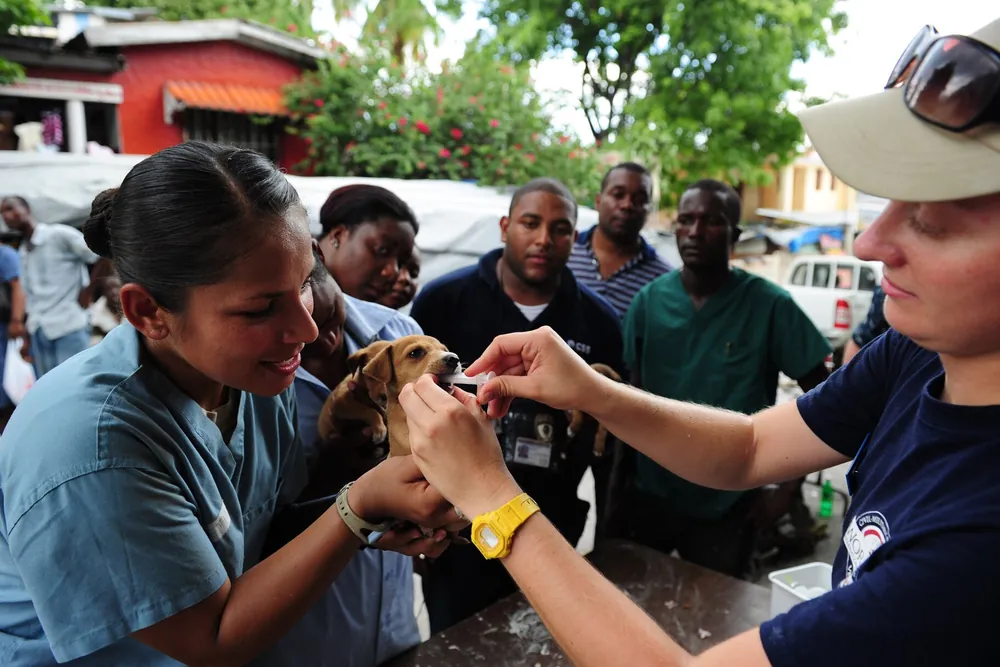
Many dog worming tablets are liver flavoured, but some dogs still resist. Greenies Pill Pockets are soft treats with a pocket to hide a tablet, in peanut butter or smoky ham flavour. You can also hide the tablet in a small amount of your dog’s usual food. Never force a tablet down your dog’s throat.
Do I need to treat fleas too?
Yes. Dogs catch flea tapeworm by swallowing infected fleas, so keep up regular flea control as well as worming. Our dog flea treatment guide compares the flea products we stock.
References
- APVMA, Veterinary Labelling Code: anthelmintics for dogs and cats.
- SA Health, Hydatid disease: symptoms, treatment and prevention.
- RSPCA Pet Insurance, Puppy worming schedule: a guide.
- ESCCAP Guideline 01, Worm control in dogs and cats.
- American Heartworm Society, Heartworm basics.
- Palmer et al., National study of the gastrointestinal parasites of dogs and cats in Australia, Veterinary Parasitology.
- Palmer et al., The veterinary and public health significance of hookworm in dogs and cats in Australia (PubMed).
You can browse our dog flea, tick and worm control range, see flea, tick and worm control for puppies and kittens, read the dog flea treatment guide, or see our monthly pet subscription box.

During veterinary school, he contributed to projects involving species such as hammerhead sharks, Shark Bay mice, woylies, mulgara, and kangaroos, gaining valuable hands-on experience in wildlife health and preservation.

3 comments