

Dog Flea Treatment Guide: Types and How to Choose
Get our free Pet Care Starter Checklist
A printable checklist for dogs and cats, plus practical care tips and new arrivals by email.
No spam. Unsubscribe anytime. | Or see our monthly pet box →
A dog flea treatment is a product that kills fleas on your dog and stops new fleas from taking hold. For most dogs, the simplest plan is a monthly flea product picked by your dog’s weight, used all year, on every pet in the home. Add weekly cleaning of bedding and floors while you clear an infestation. This guide explains the main types, how to choose, and the flea treatments we stock.
Key takeaways
- Treat all year. The RSPCA Knowledgebase says to use a flea preventative product throughout the year and to treat all pets in the home.
- Always dose by weight. Spot-on flea treatments come in weight bands, so weigh your dog and pick the matching pack.
- Never use dog products on cats. The RSPCA warns that flea products made for dogs can be fatal to cats.
- Treat the home too. Flea eggs, larvae and pupae live in bedding, carpets and yards, so clean these weekly until the fleas are gone.
- Flea-only products do not stop paralysis ticks. If you live in or visit tick areas, check the label and talk to your vet about tick control (RSPCA tick paralysis advice).
Quick comparison: types of dog flea treatment
There are four main types of dog flea treatment: monthly spot-ons, flea and tick collars, flea washes and rinses, and powders. Monthly spot-ons and collars give lasting protection. Washes and powders work on contact and are best used alongside a longer-lasting product. Use this table to compare them, then read the matching section below.
| Type | What it covers (per product page) | Examples we stock | How often (per product page) |
|---|---|---|---|
| Monthly spot-on, fleas only | Fleas | Advantage for Puppies and Small Dogs up to 4kg, Advantage for Dogs 4–10kg, Advantage for Dogs 10–25kg, Advantage for Dogs over 25kg | Once a month |
| Monthly spot-on, fleas and worms | Fleas, heartworm and intestinal worms | Advocate for Dogs (1 tube), Advocate for Dogs (3 tubes) | Once a month |
| Flea and tick collar | Fleas and ticks | Kiltix Tick Collar | Replace every five months |
| Flea shampoo | Fleas and Brown Dog Ticks on contact | Fido’s Flea Shampoo | At bath time |
| Leave-in rinse | Fleas and ticks on contact | Fido’s Fre-Itch Rinse Concentrate | After a bath |
| Powder | Fleas, lice and mites on your dog and bedding | Inca Pestene Powder | Weekly or as needed |
Why do fleas matter for dogs?
Fleas are tiny insects that feed on blood. The RSPCA Knowledgebase says the most common flea on pets is the cat flea, and it infests dogs too. Adult fleas are only 1 to 2 mm long and dark brown.
Flea bites are itchy and painful. They can lead to skin damage, allergies and infection. Heavy infestations can cause anaemia (blood loss) in very young or old animals. The University of Sydney Veterinary Teaching Hospitals also notes that fleas can pass on the flea tapeworm if a dog swallows an infected flea while grooming.
That is why many owners pair a flea product with regular worming. Some products, such as Advocate, cover fleas and some worms in one monthly dose.
How do I know if my dog has fleas?
The easiest way to check for fleas is to comb your dog over a wet white tissue. Look for scratching, biting at the skin, red skin and hair loss, often near the tail and back. Some dogs show few signs even with a lot of fleas.
- Part the fur near the base of the tail and look for small, dark fleas moving on the skin.
- Run a fine-tooth comb through the coat and tap it onto a wet white tissue.
- If the black specks turn red, that is flea dirt (flea poo). It turns red because it contains blood.
- Check your dog’s bed for the same black specks.
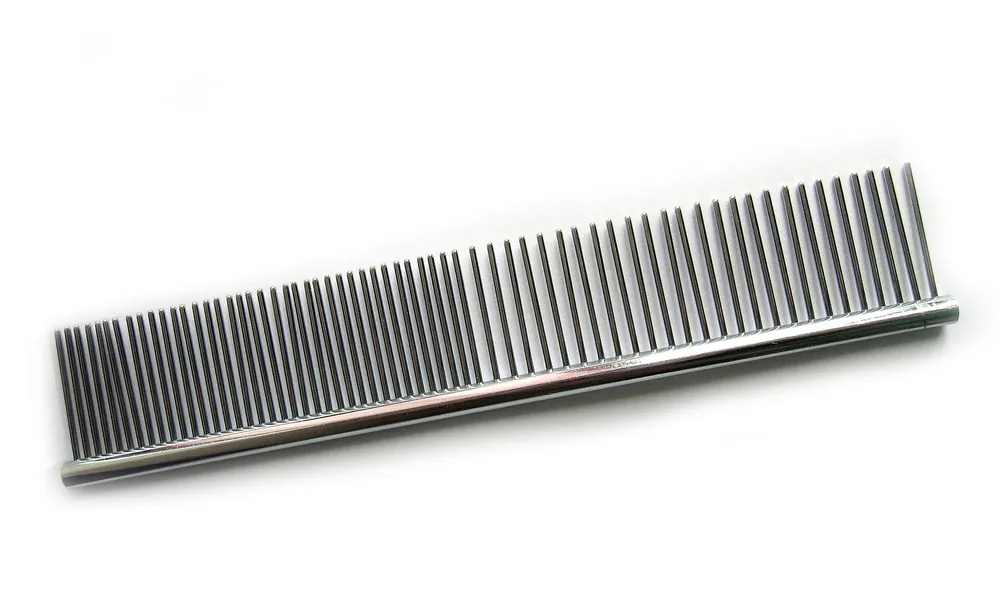
The RSPCA Knowledgebase says intense scratching, itching and chewing can point to fleas or a flea allergy, and this should get prompt vet attention.
How does the flea life cycle affect treatment?
Fleas have four life stages: egg, larva, pupa and adult. Only adults live on your dog. Adult fleas lay eggs in the fur, and the eggs fall off into bedding, carpets and soil. The RSPCA (UK) estimates that 95% of flea eggs, larvae and pupae live in the home, not on your pet. It says a female flea can lay up to 50 eggs in one day, and 1,500 in a lifetime.
The pupa stage is tough. The University of Sydney vets explain that pupae can stay in the home for a long time before adult fleas come out. That is why you may still see a few fleas for weeks after you start treatment. Keep treating your dog every month so that new fleas die soon after they jump on.
If your animal is experiencing flea problems, you must also treat the environment to remove flea eggs, larvae, and pupae (which can survive for weeks to months).
RSPCA Knowledgebase
Flea and tick facts at a glance
These numbers show why one flea treatment is rarely enough on its own. Fleas breed fast, most of the life cycle happens off your dog, and no single product stops every tick. Each fact links to its source.
| Fact | Number | Source |
|---|---|---|
| Size of an adult flea | 1 to 2 mm | RSPCA Knowledgebase |
| How long a flea can live | 14 days to a year | RSPCA (UK) |
| Eggs a female flea can lay | Up to 50 a day, 1,500 in a lifetime | RSPCA (UK) |
| Flea eggs, larvae and pupae living in the home, not on the pet | 95% | RSPCA (UK) |
| How far some fleas can leap | More than 100 times their body length | RSPCA (UK) |
| Ticks found from the shoulder line forward | 90% | Dogs Australia (Dr Ross) |
| How long to keep treating all pets | At least 6 months, ideally all year | Dogs Australia (Dr Roser) |
What are the main types of dog flea treatment?
The main types of dog flea treatment are monthly spot-ons, flea and tick collars, shampoos, leave-in rinses and powders. Vets can also offer tablets, chews and long-acting injections. Here is how each type in our range works, based on its product page and label directions.
Monthly spot-on for fleas: Advantage
Advantage is a monthly spot-on that you squeeze onto the skin at the back of the neck. Its product page says it kills fleas on contact, so they do not need to bite. Fleas stop biting within 3 to 5 minutes and are killed within 1 hour. One dose lasts a month.
Advantage comes in four weight bands. Choose Advantage for Puppies and Small Dogs up to 4kg, Advantage for Dogs 4–10kg, Advantage for Dogs 10–25kg or Advantage for Dogs over 25kg to match your dog. Advantage treats fleas only. It does not treat ticks or worms.
- Best for: dogs that only need flea cover, or owners who manage worms with a separate product.
- Watch out for: tick areas, where you will need a separate tick product.
Monthly spot-on for fleas, heartworm and worms: Advocate
Advocate is a monthly spot-on that covers fleas, heartworm and a range of intestinal worms, such as roundworm, hookworm and whipworm, according to its product page. You can buy Advocate for Dogs (1 tube) or a three-tube pack of Advocate for Dogs, each in four weight bands.
Its product page says Advocate can be used from 7 weeks of age at the right weight band. Advocate does not cover ticks. If your dog is already on a heartworm product, check with your vet before you switch.
- Best for: owners who want fleas, heartworm and gut worms covered in one monthly dose.
- Watch out for: paralysis tick areas, where you still need tick control.
Flea and tick collar: Kiltix Tick Collar
The Kiltix Tick Collar is a collar that releases its active ingredients across your dog’s coat and skin. Its product page says it gives flea and tick control for up to five months. Fit it so two fingers slide under the collar, trim the extra length and wash your hands after fitting.
The product page says it is not recommended for puppies under 12 weeks or for dogs with known sensitivity to insecticides. It is a dog product, so keep it away from cats. A flea collar works alongside your dog’s normal collar. It is not a collar to clip a lead onto.
- Best for: owners who want set-and-forget cover and do not want monthly doses.
- Watch out for: check the label for which tick species it controls before you rely on it for paralysis ticks.
Flea shampoo: Fido’s Flea Shampoo
Fido’s Flea Shampoo is a bath-time wash that contains pyrethrin, a plant-based insecticide. Its product page says it controls fleas and Brown Dog Ticks on dogs and cats, and comes in 250 ml and 500 ml bottles. Wet the coat, lather, leave it on for a few minutes, then rinse well.
A flea wash kills fleas that are on your dog at bath time. Once it is rinsed off, it gives little lasting protection, so use it with a monthly product. Read the label for bathing times around spot-on doses. Our dog shampoo guide explains how to bathe your dog step by step.
Leave-in rinse: Fido’s Fre-Itch Rinse Concentrate
Fido’s Fre-Itch Rinse Concentrate is a pyrethrin-based rinse that you mix with water and apply after a bath. You do not rinse it out. Its product page says it controls fleas and ticks on dogs and cats and conditions the coat. Mix it exactly as the label directs.
Flea powder: Inca Pestene Powder
Inca Pestene Powder is a powder for fleas, lice and mites. Its product page says you can dust it through the coat and over bedding, and reapply weekly or as needed. Keep powder away from your dog’s eyes and nose, and do not breathe it in yourself.
The RSPCA Knowledgebase says there is no evidence that alternative treatments, such as tea leaves or citronella, work against fleas. Stick with registered products used as the label directs.
What do the words on a flea treatment label mean?
Flea and tick products sold in Australia must be registered with the APVMA (Australian Pesticides and Veterinary Medicines Authority). The words on the label tell you how well the product worked in testing. Look for “controls fleas” rather than “aids in the control of fleas” if you want the strongest claim.
| Label words | What they mean | Source |
|---|---|---|
| “Controls fleas” | Met the APVMA efficacy standard of 95% for fleas | APVMA flea and tick guideline |
| “Aids in the control of fleas” | Efficacy of 75% to 95%; may not get rid of all fleas | APVMA labelling code |
| “Controls paralysis tick (Ixodes holocyclus)” | Met a 95% standard within 3 days (72 hours) | APVMA flea and tick guideline |
| “Does not control paralysis tick” | Claims some tick control, but not for paralysis ticks | APVMA labelling code |
Even a 95% result means a few fleas can survive, and new ones keep hatching in the home. That is why the APVMA wording says total eradication needs treatment of both the animal and its environment.
Do flea treatments protect against paralysis ticks?
Most flea treatments do not protect against the paralysis tick (Ixodes holocyclus). Advantage and Advocate do not cover ticks at all. In Australia, the APVMA veterinary labelling code says a product that claims tick control but does not control paralysis ticks must state “Does not control paralysis tick (Ixodes holocyclus)”.
The RSPCA Knowledgebase says paralysis ticks are generally found on the eastern seaboard, from North Queensland down to Victoria, and can also be found inland. The APVMA labelling code notes that Ixodes holocyclus ticks do not occur in Western Australia, and RSPCA Victoria lists three main tick species in Victoria: the bush tick, the Brown Dog Tick and the paralysis tick. The RSPCA Knowledgebase says tick paralysis is serious and can be fatal, and needs urgent vet care. Check every dog product’s label for the words “paralysis tick” before you rely on it. A vet quoted by Dogs Australia says 90% of ticks are found from the shoulder line forward, so search the head, neck and front legs closely, then the rest of the body. Another vet in the same article says no single product is 100% effective at preventing ticks, so daily checks still matter.
The most essential preventative measure is a thorough search of your dog or cat’s skin and coat at least once a day even if tick control products have been applied.
RSPCA Knowledgebase
If you find a tick or see weakness, wobbly back legs, a change in bark, coughing or trouble breathing, take your dog to a vet straight away. Do not give food or water.
How do I get rid of fleas in my home and yard?
To get rid of fleas in your home, vacuum and wash bedding every week until the fleas are gone, and keep treating every pet. The RSPCA Victoria and Dogs Australia suggest these steps:
- Vacuum floors, rugs, furniture and skirting boards weekly. Empty or throw out the vacuum bag straight away.
- Wash pet bedding, blankets and throws in hot water each week. Dry them in the sun if you can, as fleas don’t like bright light.
- Mow the lawn often and clear grass clippings and leaves where your dog lies.
- Clean kennels, runs and the car seat where your dog travels.
- Ask your vet about safe sprays or powders for the home if fleas keep coming back.
How do I choose the best flea treatment for my dog?
The best flea treatment for your dog depends on its weight, age, health, the other pets you have and where you live. The Dogs Australia article quotes a vet who recommends asking your local vet, because many products overlap.
There are so many options, and many overlap in treating mites, ticks or worms, so it’s best to ask at your local vet for advice.
Dr Ross, quoted by Dogs Australia
| Question | Why it matters | What to do |
|---|---|---|
| How much does my dog weigh? | Spot-ons are dosed by weight band | Weigh your dog and pick the matching pack |
| How old is my dog? | Some products have a minimum age | Check the label; ask your vet about young puppies |
| Do I have cats? | Some dog products can be fatal to cats | Use cat products on cats and keep pets apart until a spot-on dries |
| Do I live near paralysis ticks? | Flea-only products do not cover them | Add tick control and search your dog daily |
| Is my dog on a worming or heartworm plan? | Some flea products also cover worms | Avoid doubling up; check with your vet |
| Does my dog swim or get bathed a lot? | Water can affect some products | Follow the label on bathing and swimming |
How to apply a spot-on flea treatment
Apply a spot-on to the skin, not the fur, at the back of the neck where your dog can’t lick it. These steps follow the Advantage product page. Always read your product’s own label first.
- Check the pack matches your dog’s current weight.
- Part the fur at the base of the skull until you can see the skin.
- Place the tip on the skin and squeeze out the whole tube.
- Do not rub it in. Let it spread on its own.
- Wash your hands and keep treated pets apart until the spot dries.
- Write the date down or set a phone reminder for next month.
Common flea treatment mistakes to avoid
- Guessing your dog’s weight, or splitting a large dose between small dogs.
- Using a dog product on a cat.
- Treating one pet but not the others in the home.
- Stopping treatment when you stop seeing fleas.
- Skipping the home clean-up, so new fleas keep hatching.
- Relying on a flea-only product in paralysis tick areas.
When should I see a vet about fleas?
See a vet if your dog has broken or infected skin, hair loss, a strong itch that won’t settle, or a heavy infestation. Also ask your vet before treating a very young puppy, a pregnant or nursing dog, or a dog that is old or unwell.
Stop using a product and call your vet if your dog has a reaction, such as drooling, vomiting, shaking or skin irritation where you applied it.
Specific questions about dog flea treatment
How often should I treat my dog for fleas?
Most spot-ons, such as Advantage and Advocate, are used once a month, all year. Collars last longer; the Kiltix product page says to replace it every five months. Follow your product’s label and do not skip doses.
Can I use flea treatment on a puppy?
Yes, if the product is labelled for your puppy’s age and weight. Advantage has a pack for puppies and small dogs up to 4kg. Advocate’s product page says it can be used from 7 weeks of age. The Kiltix collar is not recommended for puppies under 12 weeks. Ask your vet about very young puppies.
Can I use dog flea treatment on my cat?
No. The RSPCA warns that flea products designed for dogs can be fatal to cats. Use a product made and labelled for cats, at the right weight.
Why does my dog still have fleas after treatment?
New fleas keep hatching from pupae in the home for weeks. Keep treating every pet monthly and clean bedding and floors each week. If fleas are still a problem after a few months, see your vet.
Do dogs need flea treatment all year round?
Yes. The RSPCA advises a flea product throughout the year, because fleas can keep breeding inside warm homes. Treating all year also stops a small problem from growing.
Can I bath my dog after a spot-on?
Check the label. Many spot-on products need time to spread before a bath or swim. A good rule is to bathe your dog a few days before the dose, not just after.
Shop dog flea treatment
You can browse every flea, tick and worming product in our dog flea, tick and worm control range. Our pet supplies checklist lists the basics for a new dog, our dog collar guide covers everyday collars, and our puppy food guide helps you feed a new puppy. Our monthly pet box delivers a mix of pet goodies to your door each month.
References
The advice in this guide comes from the RSPCA, the APVMA, Dogs Australia and the University of Sydney vet hospitals listed below. Product details come from each product page on our site. Always read and follow the label on your product.
- RSPCA Knowledgebase, How do I stop my companion animal from getting fleas?
- RSPCA Australia, Understanding fleas and their impact on companion animals
- RSPCA Knowledgebase, How can I protect my dog or cat from tick paralysis?
- RSPCA Victoria, Flea and tick prevention
- APVMA, Veterinary Labelling Code: ectoparasiticides for dogs and cats
- Dogs Australia, Ticks and fleas
- University of Sydney Veterinary Teaching Hospitals, Fleas
- RSPCA (UK), How to get rid of fleas
- APVMA, WAAVP guideline for fleas and ticks on dogs and cats

During veterinary school, he contributed to projects involving species such as hammerhead sharks, Shark Bay mice, woylies, mulgara, and kangaroos, gaining valuable hands-on experience in wildlife health and preservation.



1 comment