

Dog Nail Clippers vs Grinder: Which Is Better for Your Dog?
Get our free Pet Care Starter Checklist
A printable checklist for dogs and cats, plus practical care tips and new arrivals by email.
No spam. Unsubscribe anytime. | Or see our monthly pet box →
Dog nail clippers vs grinder comes down to speed and control: clippers cut each nail in one quick snip, while a grinder sands the nail down gradually and leaves a smoother edge. Clippers are quick, quiet and simple. Grinders are slower and buzz, but make it easier to take off a little at a time. The right pick depends on your dog’s temperament, nail type and your confidence.
Key Takeaways
- Dog nail clippers vs grinder comes down to speed and control: clippers give you a fast, precise cut, while grinders work gradually but need a steady hand and a calm dog.
- Clippers are silent and have no vibration. Grinders buzz and vibrate, which some dogs dislike and others accept with practice.
- Whichever tool you use, stay 1 to 2mm away from the quick, and on dark nails take off about 1mm at a time (Vet Voice).
Quick Comparison Table
Choosing between dog nail clippers vs grinder depends on your dog’s temperament, nail thickness and your grooming experience. Both methods trim nails well, but they work differently. This table compares the key points of each approach to help you decide which suits your pet best.
| Point | Nail clippers | Nail grinder |
|---|---|---|
| How it works | Scissor or guillotine blades cut through the nail in one motion | A spinning drum or disc sands the nail down gradually |
| Speed | About one squeeze per nail | Slower, a few passes per nail |
| Noise and vibration | Silent apart from a click, no vibration | Buzzing or whirring sound and constant vibration |
| Finish | Clean, flat cut that can feel sharp | Smoother, rounded edge with less splintering |
| Best for | Dogs that keep still, thin or light-coloured nails, quick sessions | Thick or hard nails, owners who want to take off tiny amounts |
| Upkeep | No charging; keep blades sharp and clean | Needs charging or batteries, and cleaning of nail dust |
AdelaideVet explains that you can use clippers to shorten the nails, or a rotary tool to grind them down gradually if your dog has a very long quick, because damaging the quick is very painful. Clippers deliver faster results but can split thick nails. Grinders take longer but produce a smoother edge.
A dog that is highly active on a hard surface may keep its nails short naturally – these surfaces act like a nail file and also keep the quick pushed back.
Deb Ryan, Dog Grooming Australia, quoted by Dogs Australia
Bottom Line
Choosing between dog nail clippers vs grinder comes down to your dog’s temperament, the thickness of its nails and how much control you want. Clippers are faster, quieter and cheaper upfront, which makes them ideal if your dog stays still and you are comfortable with a quick, decisive cut. Grinders take longer but produce a smoother finish and let you remove nail in tiny steps. Neither tool is objectively better.
Clippers work by guillotine or scissor action. You position the nail and squeeze to cut through it cleanly, and the job takes seconds per nail. Grinders use a spinning wheel to sand the nail down gradually, so each nail takes longer. Some dogs find the slower pace calmer, while others dislike the vibration and whirring noise.
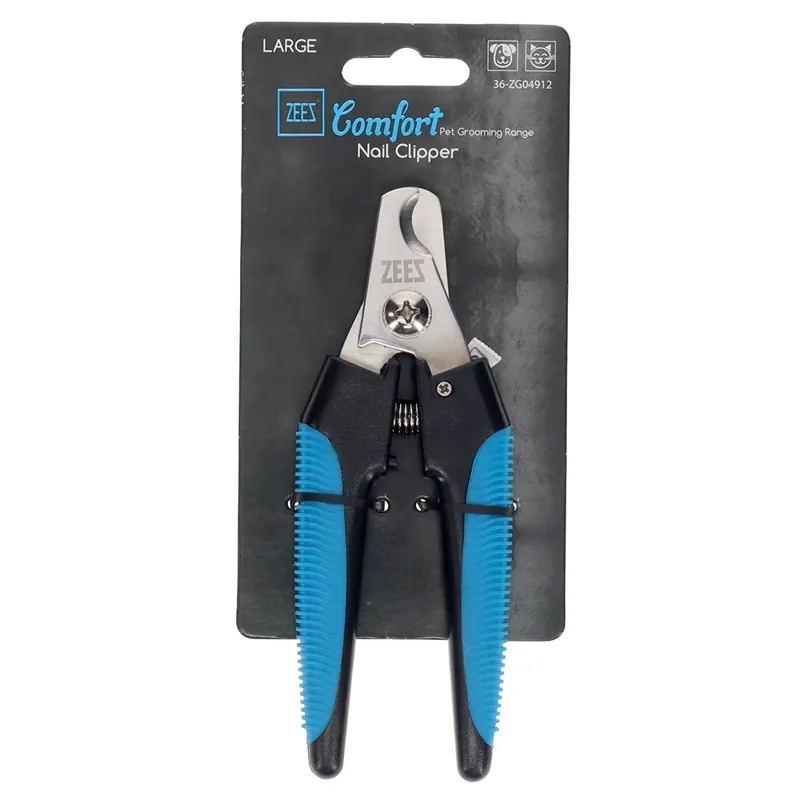
If you own a small to medium dog and want reliability without fuss, the ZeeZ Comfort Nail Clipper has sharp stainless steel blades, a built-in cutting guard that limits how much nail is cut at once, and an ergonomic non-slip handle. Our Pet Nail Clippers are a simple handheld option if your dog is cooperative. We stock nail clippers rather than grinders, along with the rest of our dog and cat grooming and skin care range.
Your choice hinges on three things: your dog’s anxiety level, its nail thickness (thick, hard nails are often easier with a grinder), and your budget and patience for a longer grooming session.
Dog Nail Care Facts From Veterinary Sources
These numbers from Vet Voice, RSPCA Pet Insurance and PDSA apply whether you choose clippers or a grinder, and they are the details most owners get wrong.
- Dogs have 4 main nails on each paw, and many also have dewclaws higher up the leg that do not touch the ground, so they need trimming too (Vet Voice).
- Most dogs need a nail trim every 4 to 8 weeks, depending on lifestyle (Vet Voice); RSPCA Pet Insurance suggests checking every 3 to 4 weeks, or as needed.
- Stay 1 to 2mm away from the quick, and on black nails remove about 1mm at a time (Vet Voice).
- Trim a small amount from the tip at about a 45-degree angle (RSPCA Pet Insurance).
- Dewclaws can curl back into the pad if they are missed, which is painful and an infection risk (PDSA).
How Dog Nail Clippers vs Grinder Work
Nail clippers and grinders trim your dog’s nails in opposite ways. Clippers use a scissor or guillotine blade to cut the nail in one quick snip. Grinders use a spinning disc or drum to sand and file the nail down gradually. Understanding how each one works helps you pick the right tool for your dog. The dog nail clippers vs grinder choice comes down to speed, noise and control.
How Nail Clippers Work
Nail clippers cut your dog’s nail with a sharp blade, similar to scissors or garden secateurs. You position the clipper around the nail, squeeze the handles, and the blade slices through in a single motion. There are two main types: scissor clippers, which look like regular scissors, and guillotine clippers, where you insert the nail into a hole and a blade slides across.
The cut is instant and clean when done correctly. If you angle the clipper wrong or cut too far, you can cut into the quick, the sensitive core of the nail that contains nerves and blood vessels. This causes bleeding and pain (Vet Voice). Clippers give you a precise stopping point, which many owners find reassuring.
| Type | Key feature | Best for |
|---|---|---|
| Scissor-style nail clippers | Easy to control and precise | Medium to large dogs with strong nails |
| Guillotine nail clippers | Quick, clean cut with a squeeze mechanism | Small to medium dogs |
| Nail grinder | Spinning abrasive drum smooths rough edges | Dogs with dark or thick nails, taken slowly |
How Nail Grinders Work
Nail grinders use a small rotating drum or disc covered in a fine abrasive to gradually wear away the nail. You hold the grinder against the nail and let the spinning motion do the work. The process takes longer than clipping. Many grinders have more than one speed, and lower speeds create less vibration.
The drawback is the sound and vibration. Even quieter models make noise that can frighten anxious dogs. Grinders also produce fine dust and heat, so work in short touches, keep the area ventilated and use a steady hand.
Key Differences at a Glance
The main differences between dog nail clippers vs grinder tools are speed, precision and how the session feels for your dog:
- Clippers deliver instant results but need exact blade positioning
- Grinders work slowly, which makes it easier to stop before the quick
- Clippers are silent; grinders produce vibration and sound
- Clippers need no power; grinders need batteries or charging
- Clippers can split very thick nails; grinders sand thick nails smoothly
Speed, Noise and Control
Nail clippers finish the job in seconds, while grinders take longer but offer fine, gradual control. Speed matters less than comfort for your dog, because a nervous pup needs a tool that feels calm and safe. Clippers are faster and silent, grinders are smoother, and the right choice depends on your dog’s temperament and nail type.
Clippers work with a single quick squeeze: one cut and the nail is done, and many dogs tolerate this because it is over fast. Grinders spin continuously and file the nail down gradually, so a full session takes noticeably longer.
Noise is where grinders and clippers differ most. Clippers are silent apart from a mechanical click. Grinders make a buzzing or whirring sound, and some are noisier than others, so the model matters. Vibration also plays a role. Clippers have none, while grinders vibrate constantly, which some dogs find more unsettling than the noise itself.
With clippers you see exactly where you are cutting and can stop instantly. Grinders let you work more gradually, which helps you avoid the quick, but they demand a steady hand and more patience. Thick, dark nails are harder to cut cleanly with clippers and may splinter, while grinders sand through thick nails smoothly and leave no rough edges.
Risk of Injury and Nail Quality
Both tools are safe when used slowly and carefully. The quick is the sensitive core of your dog’s nail, and cutting it causes bleeding and pain, so stay 1 to 2mm away from it (Vet Voice). With clippers you see exactly where the blade meets the nail. With a grinder you remove nail in thin layers, which makes it easier to stop in time.
Clippers create a clean, flat cut. Grinders leave a smoother, rounded edge that some owners prefer because it feels less sharp to the touch. On pale nails the pink quick is usually easy to see. On black nails it is not, so take off about 1mm at a time, or ask your vet clinic to do the trim (Vet Voice). AdelaideVet gives the same advice for dark nails.
Here’s what matters most:
- Clippers suit owners who want speed and certainty
- Grinders suit owners willing to learn a gentler, slower technique
- Some nervous dogs do better with quick clippers, others with a quiet, low-speed grinder
- Black nails hide the quick, so take off small amounts with either tool
- Light-coloured nails let you see the quick with either tool
If you do cut the quick, Dogs Australia recommends keeping styptic powder on hand: press a pinch onto the nail to stop the bleeding. If your dog has thick, hard nails that clippers struggle with, a grinder may save you hand fatigue.
Cost and Practicality
Dog nail clippers vs grinder also comes down to upfront cost, upkeep and how often you will actually use the tool. Clippers have a lower entry price and need minimal upkeep, while grinders cost more and need charging and cleaning. Your choice depends on your budget and how comfortable you feel with each method.
Clippers win on initial cost. A basic handheld pet nail clipper is one of the cheapest grooming tools you can buy. Our Pet Nail Clippers are a simple everyday option, while the ZeeZ Comfort Nail Clipper adds a built-in cutting guard. Keep blades clean and sharp, because dull blades can crush or split the nail instead of cutting it.
If you have a nervous dog, you might want to try using a file.
PDSA vet Q&A
Grinders have a higher upfront price. They need cleaning after each session to remove nail dust, and batteries on cordless grinders wear down over time.
Storage and portability matter too. Clippers fit in a drawer or grooming kit easily, while grinders need charging and take up more space. Most dog owners find clippers more practical for occasional home use. Grinders suit owners who trim nails often or prefer a slower process.
How Often to Trim and How to Start
Your dog’s nails may need trimming every 4 to 8 weeks, depending on lifestyle. Dogs that are very active on hard surfaces such as concrete may wear their nails down on their own (Vet Voice). Overlong nails can stop a dog walking and running properly, and very long nails can curl into the footpads.
- Set up a nail station on a non-slip mat with treats your dog loves, and have the tool ready (AdelaideVet).
- Start slow: do one nail, then give a treat. Let your dog move away if it wants to, and spread the paws over a few sessions.
- Use a tool made for pets. Human nail clippers and scissors are not suitable and can squash and split a dog’s nail (PDSA).
- With clippers, line the handles up with the paw pad and cut around the nail. Avoid the quick.
- Take a small amount from the tip at about a 45-degree angle, and check the dewclaws too (RSPCA Pet Insurance).
- With a grinder, touch the nail for a moment at a time, check the nail, then repeat.
- If your dog is fearful, stop and ask your vet clinic for help rather than pushing on.
A lick mat or a few soft dog treats and chews make a good reward. Our dog treats guide covers how to pick small training treats.
Overall Verdict
The choice between dog nail clippers and a grinder comes down to your dog’s temperament, nail type and how comfortable you feel with each tool. Neither option is objectively better; they simply suit different situations.
Nail clippers win on speed, simplicity and cost. You have direct control over how much nail you remove with each squeeze, they are silent with no vibration, and they work well for dogs with thin or soft nails. The main risk is cutting into the quick, and clippers can leave a sharper edge.
Grinders take longer, but they sand the nail smooth rather than cutting it, which reduces splintering and suits thick, hard nails. However, grinders produce noise and vibration, which can frighten anxious dogs, and they cost more upfront.
For most first-time owners, clippers are a sensible start. They are forgiving, affordable and work for most dogs. Switch to a grinder later if your dog’s nails are especially thick or if your dog becomes anxious with clippers.
Which Should You Buy
Choosing between dog nail clippers and a grinder depends on your dog’s temperament, nail type and how comfortable you feel with each tool. Clippers give you direct control and work fast on most dogs. Grinders take longer but produce a smoother finish and let you remove nail in tiny steps. Your dog’s anxiety level, nail thickness and your own confidence matter most.
Choose nail clippers if you:
- want a quick, quiet trim with no charging
- have a dog that keeps still for a few seconds per paw
- have a small to medium dog with thin or light-coloured nails
Choose a nail grinder if you:
- have a dog with thick, hard nails
- want a smooth, rounded edge
- have a dog that accepts buzzing and vibration after practice
Shop our grooming and skin care range for clippers, brushes and combs, or see our monthly pet box for a regular delivery of food, toys and treats for your dog or cat.
Frequently Asked Questions
What should you look for in dog nail clippers vs a grinder?
For clippers, look for sharp stainless steel blades, a non-slip handle and a safety guard that limits how much nail is cut. For a grinder, look for a low speed setting, a guard over the drum, and a model that is not too loud for your dog. Choose a size that suits your dog.
Is a grinder safer than clippers for dogs?
Neither is automatically safer. Both can hurt the quick if you go too far. Grinders remove nail gradually, which makes it easier to stop in time, while clippers give you a clear, instant cut. Stay 1 to 2mm from the quick with either tool (Vet Voice).
How often should I trim my dog’s nails?
Many dogs need a trim every 4 to 8 weeks, but active dogs on hard surfaces may wear their nails down naturally. If you are unsure, ask your vet clinic to check (Vet Voice).
Specific Questions About Dog Nail Clippers vs Grinder
What do I do if I cut the quick?
Stay calm, press a pinch of styptic powder onto the nail end and hold gentle pressure to stop the bleeding (Dogs Australia). Plain cornflour also helps a nail clot (PDSA). A badly torn or injured nail needs a vet check.
Can I use human nail clippers on my dog?
No. Use dog nail clippers or a pet grinder. PDSA warns that scissors and human nail clippers are not designed for dog claws and are likely to squash them and make them split.
Can I use the same nail clippers on my cat and dog?
Some clippers suit both. The ZeeZ Comfort Nail Clipper is made for cats and small to medium dogs. Large dogs with thick nails usually need bigger, stronger clippers or a grinder.
References
- AdelaideVet, A guide to trim your dog’s nails
- Vet Voice (Australian Veterinary Association), Maintenance of your dog’s nails
- Dogs Australia, Essential guide to canine care
- PDSA, How to clip your dog’s nails
- PDSA, Vet Q&A: How do I cut my dog’s nails safely?
- RSPCA Pet Insurance, How to trim your pet’s nails safely
More grooming help: how to groom a dog at home, how to clean your dog’s ears, and our dog and cat grooming range.

During veterinary school, he contributed to projects involving species such as hammerhead sharks, Shark Bay mice, woylies, mulgara, and kangaroos, gaining valuable hands-on experience in wildlife health and preservation.




3 comments