

Dog Car Seat Cover Guide: Types, Fitting and Travel Tips
Get our free Pet Care Starter Checklist
A printable checklist for dogs and cats, plus practical care tips and new arrivals by email.
No spam. Unsubscribe anytime. | Or see our monthly pet box →
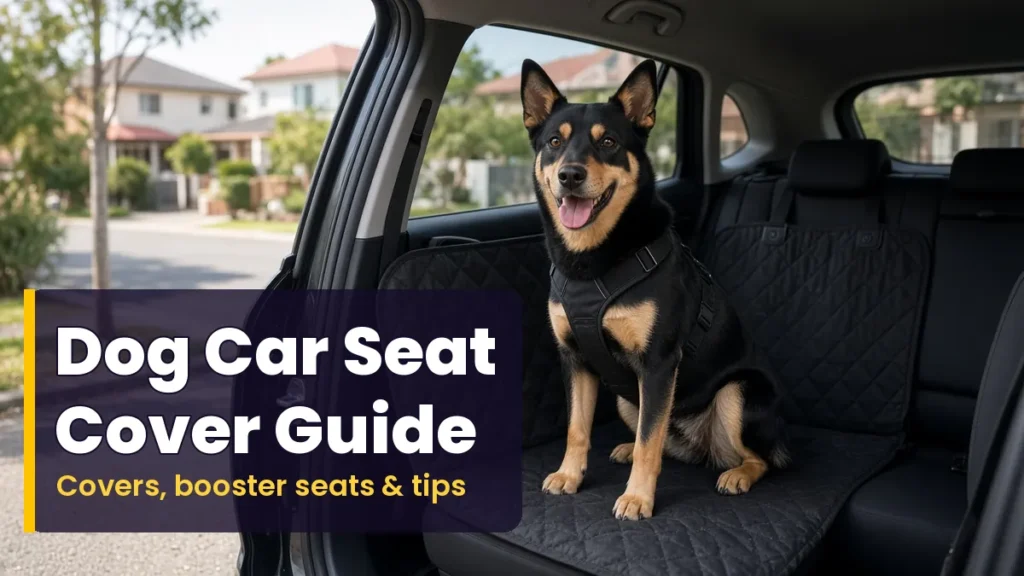
A dog car seat cover is a large, tough sheet that sits over your back seat and catches hair, mud, wet paws and scratches. It keeps your car cleaner and makes clean-up after the beach or the dog park much quicker. This guide explains the types of covers, how to choose one, how to fit it and how to keep your dog settled on car trips. You can also see the dog car seat cover and travel accessories we stock.
Key takeaways
Here are the main points to know before you buy a seat cover. Each one is explained in more detail below, with advice from the RSPCA, Blue Cross and the PDSA, three well-known animal welfare charities, on helping your dog travel calmly in the car.
- A seat cover protects your seat from hair, dirt and claws. It is not a restraint.
- Measure your back seat before you buy, and check the cover has gaps for the seat belt buckles.
- Water resistant covers are easier to wipe down after wet or muddy trips.
- The RSPCA says dogs should be restrained in the car, for example with a restraint that clips into the seat belt system.
- Never leave your dog alone in a parked car, even on a mild day.
What does a dog car seat cover do?
A seat cover protects your car seat from your dog. It catches loose hair, sandy or muddy paws, drool and claw marks, so the seat underneath stays cleaner. When you get home, you lift the cover out, shake it off and wipe or wash it, instead of scrubbing the seat itself.
- Hair: sheds onto the cover, not into the seat fabric.
- Mud and sand: after beach walks, bush walks or the dog park.
- Water: a water resistant cover helps stop wet dogs soaking the seat.
- Scratches: claws touch the cover instead of leather or cloth.
A seat cover is not a way to keep your dog in place. The RSPCA says dogs can be restrained in the back seat using a vehicle restraint that has passed safety or crash tests. Use a seat cover together with a proper restraint, not instead of one.
What types of dog car seat covers are there?
There are four main types of seat covers. A back seat cover lies flat across the rear seat. A hammock cover hooks to the front and back headrests. A boot liner covers the cargo area of a wagon or SUV. A single seat cover protects one seat, usually the front passenger seat.
| Type | Where it goes | Good points | Watch out for |
|---|---|---|---|
| Back seat cover | Flat across the rear bench seat | Easy to fit, leaves seat belts usable | Dog can reach the footwell |
| Hammock cover | Hooks to front and rear headrests | Also covers the footwell | Can block access to the back seat |
| Boot or cargo liner | The boot of a wagon, hatch or SUV | Good for big, muddy dogs | Only fits cars with a cargo area |
| Single seat cover | One seat, often the front | Small and cheap to store | Covers only one seat |
For most families, a back seat cover is the simplest choice. It fits sedans, hatchbacks and SUVs, and it still lets you clip a dog restraint into the seat belt buckle.
How do you choose the right dog car seat cover?
To choose a seat cover, measure your back seat, check the material, and look for seat belt openings. Think about the size of your dog and how messy your trips are. A Labrador or Kelpie that swims at the beach needs a tougher, water resistant cover than a small indoor dog.
- Size: measure the seat width and the depth from the backrest to the front edge.
- Material: water resistant fabric is easier to wipe clean.
- Seat belt access: openings let you use the buckles with the cover in place.
- Grip: a cover that stays put is more comfortable for your dog.
- Cleaning: check the care label. Some covers are hand wash only.
- Storage: a cover that folds small is easy to keep in the boot.
Our dog car seat cover and car seats
These are the seat cover and car seats we stock. Each product links to its own page with full sizes and care notes. The seat cover suits dogs of most sizes, while the booster seat and centre console seat are made for small dogs only.
| Product | Size | Best for |
|---|---|---|
| Pet Back Seat Cover | 140cm x 150cm | Keeping the back seat clean for dogs of most sizes |
| Dog Car Booster Seat – Black | 28cm H x 41cm W x 36cm D | Small dogs who like to see out |
| Dog Car Seat Centre | 24cm H x 40cm W x 21cm D, up to 6kg | Very small dogs on the centre console |
| Beau Pets Car Restraint Strap | Adjusts from 40cm to 65cm | Linking your dog to the seat belt clasp |
Pet Back Seat Cover
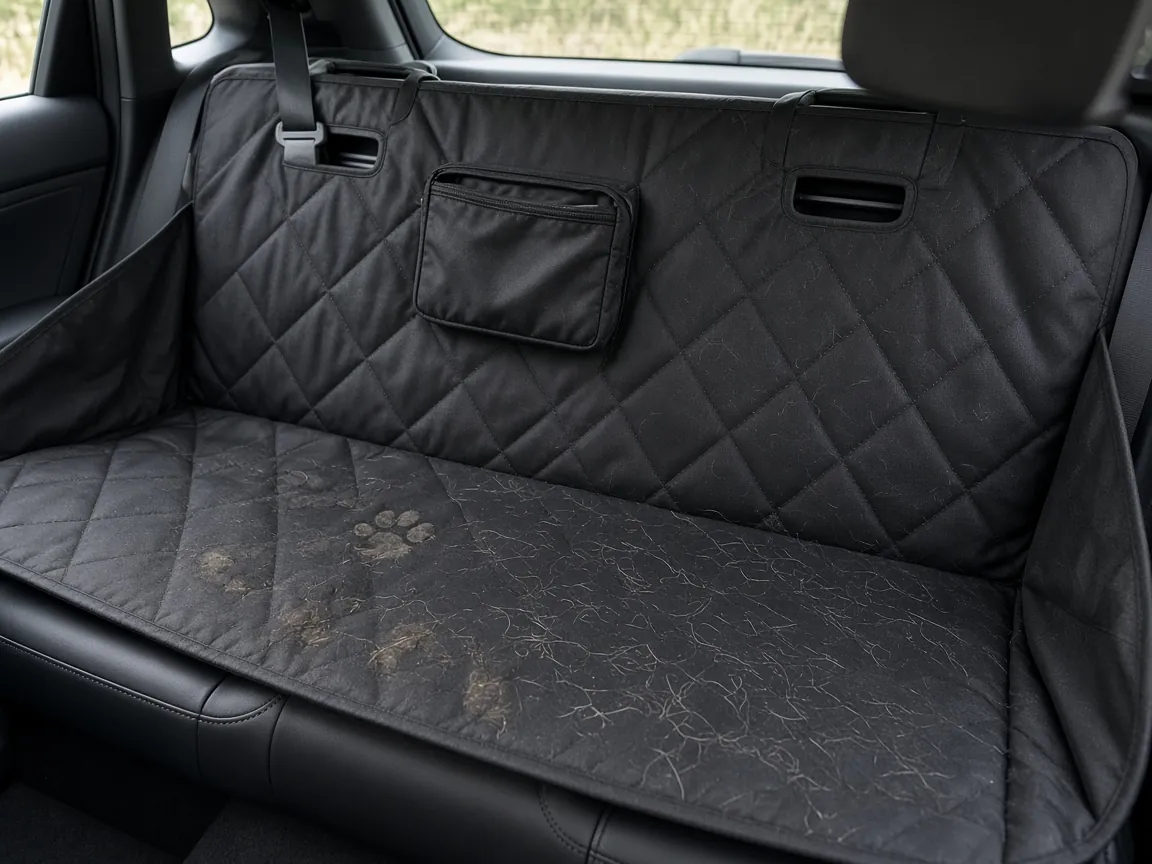
The Pet Back Seat Cover is 140cm x 150cm and made from water resistant material. It has a storage pocket and 2 seat belt buckle access points, so you can still clip in a car restraint. It folds up to carry and store, and is hand wash according to the care label. At 2.1 square metres, it covers a full rear bench in most cars. It is about 3.7 times wider than our 41cm booster seat.
Dog Car Booster Seat – Black
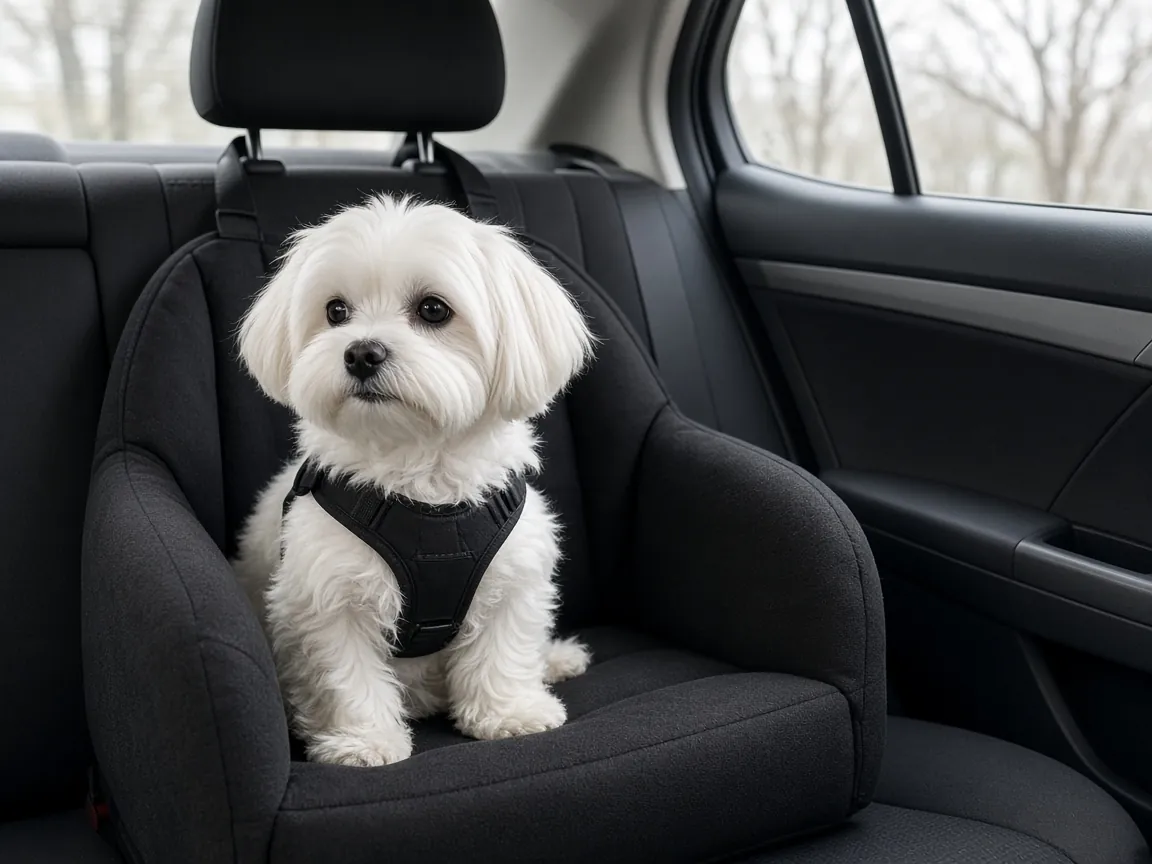
The Dog Car Booster Seat – Black measures 28cm high, 41cm wide and 36cm deep. It secures to the headrest and has a PVC bar frame to help it hold its shape. It sets up quickly and folds down to store. At 28cm high, it is about 17% taller than our centre console seat. It is made for small pets, such as a Maltese, Shih Tzu or Chihuahua.
Dog Car Seat Centre
The Dog Car Seat Centre sits on the centre console and is 24cm high, 40cm wide and 21cm deep. It holds dogs up to 6kg, has a built-in internal clip, a carry handle and side pockets. It is for very small dogs only, and your dog should still be clipped to the internal clip.
Beau Pets Car Restraint Strap
The Beau Pets Car Restraint Strap clips to your dog’s harness at one end and into the car’s seat belt clasp at the other. It adjusts from 40cm to 65cm. Never clip it to a collar. You can browse our leads and collars range for more walking and travel gear.
How do you fit a dog car seat cover?
Fitting a back seat cover takes only a few minutes. Spread it flat across the back seat, tuck the edges in where the seat and backrest meet, and pull the seat belt buckles through the openings. Then check the cover sits flat with no loose folds for paws to catch.
- Clean and vacuum the seat first so dirt is not trapped underneath.
- Lay the cover flat with the storage pocket facing the right way.
- Tuck the cover into the gap between the seat base and backrest.
- Push the seat belt buckles up through the openings.
- Clip your dog’s harness restraint into the buckle before you drive.
Dog car seat cover examples for different dogs
Here are some examples to help you match your setup to your dog. A Maltese, Shih Tzu or Toy Poodle up to 6kg could ride in the centre console seat or the booster seat, clipped in. A Beagle, Cocker Spaniel or Staffy usually sits on the back seat cover with a car restraint clipped into the buckle. A Labrador, Kelpie or Border Collie that swims at the beach also suits the water resistant back seat cover, or a secured crate in a wagon or SUV.
How should a dog travel in the car?
A dog should travel restrained in the back seat or in a secured crate, not loose in the car. The RSPCA says restraints must be attached to the vehicle as the maker directs, usually to the seat belts or by buckles that clip into the seat belt. It also says the gear used for car travel may be different from the gear you use for walks.
Cars heat up fast. Blue Cross says that when it is 24°C outside, the inside of a car can reach 38°C in minutes. That is about 14 degrees hotter, or roughly 58% higher, so even a quick stop at the shops is too long to leave your dog.
Never leave your dog unattended in a car. Dogs can very quickly suffer from potentially fatal heat stress, even in mild weather.
RSPCA Australia, Do I need to restrain my dog when travelling in my car?
If your dog travels in a crate, the RSPCA in the UK says they need room to sit and stand at full height, turn around and lie down, with good airflow. Our dog crate guide explains how to measure your dog. Road rules about dogs in cars differ across Australian states and territories, so the RSPCA suggests checking the rules where you will drive.
How do you help a dog get used to the car?
Help your dog get used to the car in small, happy steps. Start with the car parked and the engine off, and give treats when your dog is calm. Then try short drives, and slowly make them longer. Ending each drive at a park or with a walk helps your dog link the car with fun.
Blue Cross suggests keeping the first drive as short as possible, no more than about 15 minutes around the block. It lists signs of a worried dog, such as heavy panting, pacing, lip licking, yawning and a tucked tail. If your dog shows these signs, slow down your training.
Car travel can be stressful for your dog, especially if they’re not used to it.
Blue Cross, Car travel with your dog
- Exercise and play with your dog before the trip.
- Do not feed a big meal just before you leave.
- Keep the car cool, with good airflow to the back seat.
- Stop for water, a walk and a toilet break on long drives.
- Do not let your dog put their head out of the window.
The RSPCA suggests avoiding food for a couple of hours before a car trip, and talking to your vet early if your dog gets car sick. The PDSA also warns that letting a dog put its head out of the window can be dangerous, as they could be hit by stones or fall out.
For familiar bedding during supervised settling-in, see our dog blanket size and material guide; keep restraints and ventilation clear.
Dog car seat cover facts by the numbers
- 140cm x 150cm: the size of our Pet Back Seat Cover, about 2.1 square metres.
- 2: seat belt buckle access points on our back seat cover.
- 6kg: the top weight for our Dog Car Seat Centre.
- 40cm to 65cm: the adjustable length of the Beau Pets Car Restraint Strap, so it stretches about 62% longer at full length.
- About 17% taller: our 28cm booster seat compared with our 24cm centre console seat.
- About 38% shorter: the restraint strap at its 40cm setting compared with its full 65cm.
- About 7%: the floor space of the booster seat (41cm x 36cm) compared with the 2.1 square metre seat cover.
- About 25% of an hour: the 15-minute first drive Blue Cross suggests.
- About 3.7 times: how much wider our 150cm seat cover is than our 41cm booster seat.
- 24°C to 38°C: Blue Cross says a car can reach 38°C within minutes when it is 24°C outside, about 58% hotter.
- About 15 minutes: the longest first drive Blue Cross suggests for a new traveller.
- A couple of hours: how long the RSPCA suggests avoiding food before a car trip.
How do you clean a dog car seat cover?
Clean your seat cover after messy trips so dirt and smells do not build up. Take the cover out of the car, shake off loose hair and sand outside, and wipe off mud with a damp cloth. Then wash it as the care label says, and let it dry fully before you put it back.
- Shake out hair and sand after each trip.
- Use a lint roller or rubber glove to lift stubborn hair.
- Wipe spills and drool with a damp cloth.
- Hand wash when needed, following the care label.
- Dry it fully so it does not get musty.
Getting ready for a new dog? Our pet supplies checklist lists what else you need. You can also try our pet subscription box for food, toys and treats delivered to your door.
Dog car seat cover FAQ: specific questions about seat covers
These are common questions owners ask about seat covers, back seat covers for dogs and dog car booster seats. The answers are short and simple. Follow the links above for more detail on choosing, fitting and cleaning a cover.
Does a dog car seat cover keep my dog safe?
No. A seat cover protects your seat from hair, dirt and scratches, but it does not hold your dog in place. The RSPCA says dogs should be restrained in the back seat, for example with a travel restraint clipped to the seat belt system, or in a secured crate.
Will a back seat cover fit my car?
Most back seat covers fit sedans, hatchbacks and SUVs. Measure your rear seat first and compare it with the cover size. Our Pet Back Seat Cover is 140cm x 150cm and has 2 openings so you can still reach the seat belt buckles.
Can I use a waterproof car seat cover for dogs on leather seats?
Yes. A water resistant cover helps protect leather seats from claws, wet paws and drool. Make sure the cover sits flat and does not slide around, so your dog is comfortable and the leather underneath is not rubbed.
Is a dog car booster seat good for big dogs?
No. Dog car booster seats are made for small dogs. Our booster seat is for small pets, and our centre console seat holds up to 6kg. Bigger dogs are better on a back seat cover with a proper car restraint, or in a secured crate.
References
The advice in this seat cover guide comes from the animal welfare sources listed here. Product sizes come from each product page on our site. Always ask your vet if your dog gets car sick or very worried in the car.
- RSPCA Australia, Do I need to restrain my dog when travelling in my car?
- RSPCA Australia, Taking my dog on a road trip with my family
- RSPCA, Creating a good home for your dog
- Blue Cross, Car travel with your dog
- Blue Cross, Travelling with your dog in hot weather
- PDSA, Safe car travel for pets
Our monthly subscription box brings food, toys and treats for your dog or cat to your door. Pick a Starter, Standard or Deluxe box. Delivery is included Australia-wide, and you can cancel any time.
See the subscription boxes
During veterinary school, he contributed to projects involving species such as hammerhead sharks, Shark Bay mice, woylies, mulgara, and kangaroos, gaining valuable hands-on experience in wildlife health and preservation.




1 comment