

Dog Crate Guide: How to Choose the Right Size and Type
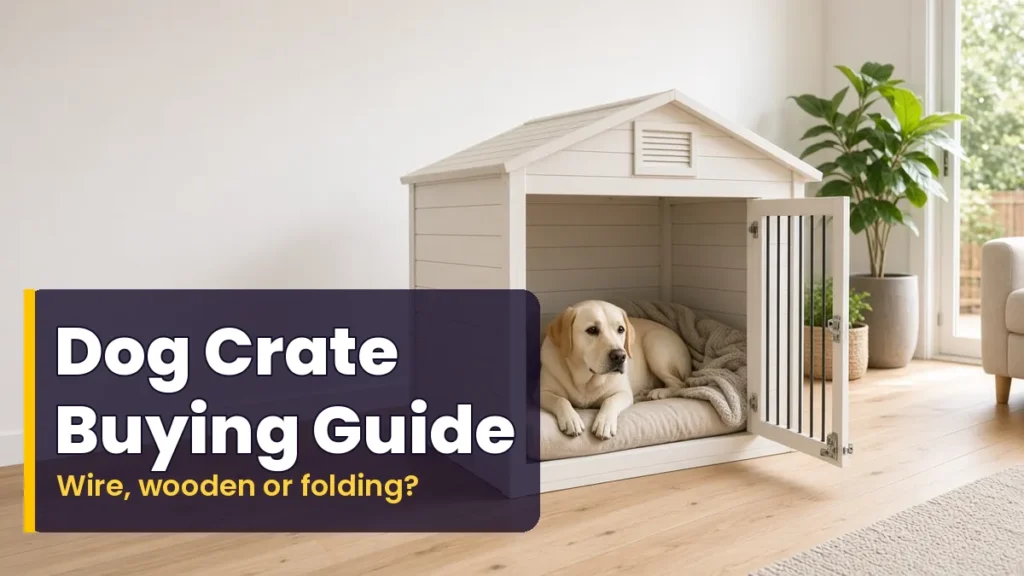
Get our free Pet Care Starter Checklist
A printable checklist for dogs and cats, plus practical care tips and new arrivals by email.
No spam. Unsubscribe anytime. | Or see our monthly pet box →
A dog crate is a small, safe den where your dog can rest, sleep and travel. The right crate is big enough for your dog to stand, turn and stretch out, and feels like a cosy bed, not a cage. This guide explains crate sizes, the main crate types, how to set one up and the dog crates we stock.
Key takeaways
Here are the main points to know before you buy. Each one is explained below, with advice from the RSPCA on crate size, crate training and keeping your dog safe and comfortable when they spend time in a crate at home or away.
- Your dog must be able to stand, turn around, lie flat with legs stretched out, and sit without their head touching the roof.
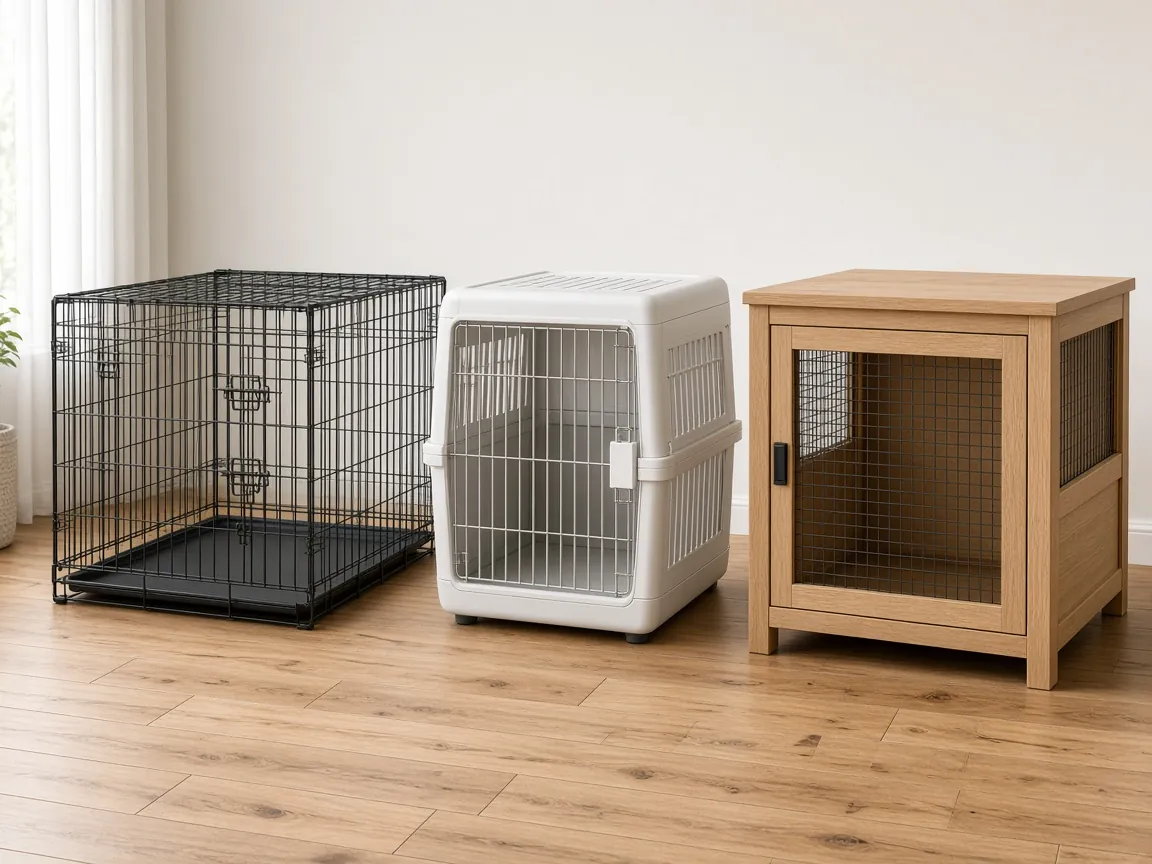
- Folding wire crates are strong, airy and fold flat. Wooden crates look like furniture and suit living areas.
- A crate should be a safe haven. The RSPCA says it must never be used as a punishment.
- Add soft bedding, a safe chew toy and water. A cover over part of the crate can help nervous dogs.
- Build up crate time slowly, in short and calm sessions.
What size dog crate do I need?
Your crate should let your dog stand up, turn around and lie flat with their legs stretched out. They should also be able to sit or stand without their head touching the roof. This is the rule set out in the RSPCA Tasmania guidance on Tasmania’s dog regulations.
To find the right size, measure your dog while they stand. Measure from the tip of the nose to the base of the tail for length. Then measure from the floor to the top of the head for height. Add a few centimetres to both so your dog has room to move.
The crate is of a suitable size so that the animal can turn around, lay out flat with legs outstretched and sit or stand without their head touching the roof.
RSPCA Tasmania, Dog regulations guidance notes
Buying for a puppy? The RSPCA says to get a crate your puppy can grow into. But do not travel with your puppy in an adult-sized crate. A smaller crate protects them better in the car.
| Crate | Size (H x W x D) | Type | Best for |
|---|---|---|---|
| Pet Folding Crate – Medium | 57cm x 76cm x 53cm | Folding wire | Small to medium dogs, travel |
| Pet Folding Crate – Extra Large | 76cm x 106cm x 70cm | Folding wire | Large dogs |
| Pet Crate Wooden White – Medium | 60cm x 73cm x 60cm | Wooden furniture | Small to medium dogs, living rooms |
| Pet Crate – White, Extra Large | 76cm x 106cm x 70cm | Wooden furniture | Larger dogs, living rooms |
| Pet Crate Wooden Oak – Extra Large | 76cm x 106cm x 70cm | Wooden furniture | Larger dogs, oak-look decor |
Dog crate size examples by breed
Here are some examples to guide you. A Cavoodle, Jack Russell or Shih Tzu usually fits a medium crate like our 76cm folding crate. A Labrador, Golden Retriever or German Shepherd needs an extra large crate around 106cm long. A Border Collie or Kelpie sits in between, so measure your own dog first. Every dog is different, so always check their height and length.
Dog crate facts by the numbers
- 10 hours: the most a dog may be crated in any 24-hour period under Tasmanian law (RSPCA Tasmania).
- 1 hour: the minimum daily exercise for a tethered dog under the same Tasmanian rules (RSPCA Tasmania).
- 3 minutes: about how long the RSPCA suggests early crate training sessions should last.
- 10 minutes: how long the RSPCA says your dog should stay calm in the crate after a meal before you start leaving them alone.
- About 42%: 10 hours is about 42% of a full day, so even the legal limit is a long time for a dog.
- About 40% longer: our extra large folding crate is 106cm long, compared with 76cm for the medium crate.
- 4 positions: a well-sized crate lets your dog stand, sit, turn around and lie flat (RSPCA Tasmania).
Which type of dog crate is best?
The best crate type depends on where you will use it and how your dog behaves. Folding wire crates suit training and travel. Wooden crates suit a lounge room, where the crate also works as a side table. Plastic crates are mostly used for travel and flights.
| Type | Good points | Watch out for |
|---|---|---|
| Folding wire | Strong, good airflow, folds flat, easy to see in | Can look plain; needs a cover for a den feel |
| Wooden furniture | Looks like furniture, flat top can be used as a table | Heavy, needs assembly, not for chewers |
| Plastic travel | Enclosed and cosy, used for travel | Less airflow; harder to store |
The RSPCA adds that a crate should be placed out of direct sunlight and away from draughts, wherever it goes.
Our dog crates
These are the crates we stock in folding wire and wooden styles. Each name links to its product page with full sizes and care notes. Match the size to your dog using the measuring steps above before you choose.
Pet Folding Crate – Medium and Extra Large
The Pet Folding Crate – Medium measures 76cm long, 57cm high and 53cm wide. It gives your dog a den at home and can be used to contain your pet during travel. The Pet Folding Crate – Extra Large is 106cm long, 76cm high and 70cm wide, suits large dogs, and folds down for storage.
Wooden dog crates
Wooden crates look like a piece of furniture. The Pet Crate Wooden White – Medium is 60cm high, 73cm wide and 60cm deep, and its top holds up to 15kg. For bigger dogs, the Pet Crate – White, Extra Large and Pet Crate Wooden Oak – Extra Large are 76cm high, 106cm wide and 70cm deep. Their slatted sides let air flow through.
Comparing sizes helps you choose. The extra large folding crate is about 33% taller than the medium (76cm vs 57cm) and has about 1.8 times the floor space. The bottom panel of the extra large wooden crate holds up to 35kg, 75% more than the 20kg medium, and its top holds 20kg, about 33% more than the 15kg medium top.
Wooden crates need adult assembly and come with wall fixings. Secure them to the wall as the instructions say, and do not let anyone sit or stand on top. They are made for indoor use only.
How do I make a dog crate comfortable?
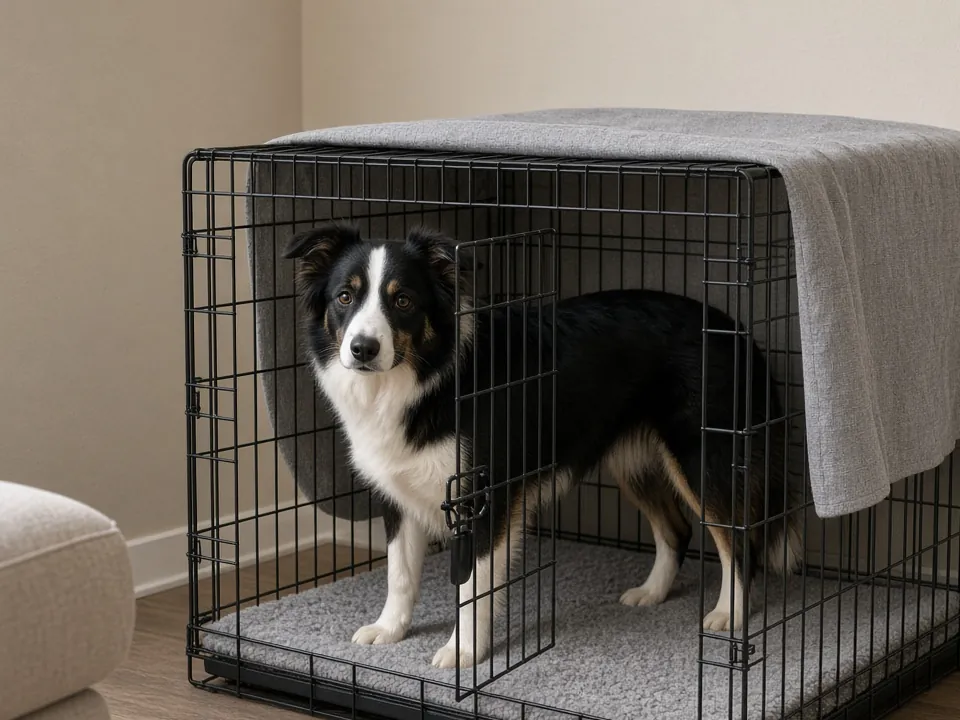
Make the crate comfortable with soft bedding, a safe chew toy and access to water. Put the crate where the family spends time, so your dog does not feel left out. A cover over part of the crate makes it darker and more like a den.
- Bedding: the Snooza Calming Multimat is made in Australia and designed to fit popular crate sizes. A large pet blanket (130cm x 100cm) is a washable extra layer. Read our dog blanket guide for more.
- Cover: the Pet Crate Cover – Black, Extra Large is 76cm high, 107cm wide and 70cm deep, with hook and loop windows for airflow.
- Water: use a clip-on bowl so it cannot be tipped over.
- Chews: add a tough chew toy to keep your dog busy.
Placing a cover over part of the crate can help nervous dogs.
RSPCA, How to crate train a puppy
How do I crate train my dog?
Crate train your dog slowly, with treats, meals and short sessions. The RSPCA suggests fixing the door open at first, so it cannot swing shut and scare your dog. Toss treats inside, then feed meals in the crate before you ever close the door.
- Fix the door open and let your dog explore with treats or a toy.
- Feed meals at the back of the crate.
- Close the door while your dog eats, then open it as soon as they finish.
- Leave the door closed a little longer each time, until your dog stays calm for about ten minutes after eating.
- Slowly start leaving the room for short times.
If your dog whines, pants, barks or seems scared, you have moved too fast. Go back a step and try again more slowly. The RSPCA says this can take several minutes or several days, so be patient.
How long can a dog stay in a crate?
A dog should only stay crated for as long as they can cope with, and puppies need much shorter times than adult dogs. Tasmania’s dog regulations say a crated dog must not be confined for more than 10 hours in any 24-hour period, according to RSPCA Tasmania. Much shorter is better.
Dogs also need regular toilet breaks, exercise and company. The RSPCA says dogs should have a chance to go to the toilet at least every few hours. If your dog seems stressed in the crate, talk to your vet.
Where should I put a dog crate?
Put the crate inside, in a quiet corner of a room where your family spends time. Keep it out of direct sunlight, away from heaters and draughts, and away from cables your dog could chew. Your dog will settle better if they can see and hear you.
New puppy on the way? Our pet supplies checklist lists everything else to buy. Our pet subscription box can also send treats and toys to keep crate time fun.
Dog crate FAQ: specific questions about dog crates
These are common questions owners ask before they buy a crate. The answers are short and simple. Follow the links above for more detail on sizes, crate types and training.
Is crating a dog cruel?
Crating is not cruel when the crate is the right size, has soft bedding and water, and is used for short periods. The RSPCA says a crate should be a safe haven and must never be used as a punishment. Dogs still need daily exercise, play and company.
Should a puppy crate be big or small?
The RSPCA suggests buying a crate your puppy can grow into for use at home. For car travel, use a smaller crate, as a puppy is better protected in a smaller space.
Should I cover my dog crate?
A cover over part of the crate can help nervous dogs feel safe, says the RSPCA. Leave at least one side open or use a cover with windows, so air can still flow through.
Can I put a dog crate outside?
Most crates, including our wooden crates, are made for indoor use. A crate outside can get too hot or wet. Keep your dog’s crate inside, out of direct sun and draughts.
References
The advice in this guide comes from the animal welfare sources listed here. Product sizes come from each product page on our site. Always ask your vet if you have concerns about your dog’s health or behaviour.
- RSPCA, How to crate train a puppy
- RSPCA Tasmania, Dog regulations guidance notes for tethering and crating
- RSPCA, Creating a good home for your dog
- RSPCA, Caring for your puppy
- Blue Cross, How to puppy proof your home and garden
Our monthly subscription box brings food, toys and treats for your dog or cat to your door. Pick a Starter, Standard or Deluxe box. Delivery is included Australia-wide, and you can cancel any time.
See the subscription boxes
During veterinary school, he contributed to projects involving species such as hammerhead sharks, Shark Bay mice, woylies, mulgara, and kangaroos, gaining valuable hands-on experience in wildlife health and preservation.




5 comments