

Cat Worming Tablets: How to Choose, Dose and Worm Safely
Get our free Pet Care Starter Checklist
A printable checklist for dogs and cats, plus practical care tips and new arrivals by email.
No spam. Unsubscribe anytime. | Or see our monthly pet box →
Cat worming tablets work best when you pick a wormer that covers roundworm, tapeworm and hookworm, dose it by your cat’s current weight, and give it on a regular schedule. If your cat will not take tablets, a worm syrup or a monthly spot-on can do the job instead. This guide compares the cat wormers we stock and explains how often to worm kittens and adult cats.
Key Takeaways
- In Australia, a cat wormer can only be called an “allwormer” if it controls roundworm, tapeworm and hookworm (APVMA).
- Dose by your cat’s current weight and follow the label. Kittens grow fast, so weigh them often.
- Kittens can catch roundworm from their mother’s milk, so worming starts young (International Cat Care).
- Cats catch flea tapeworm by swallowing fleas when they groom, so treat fleas as well as worms (International Cat Care).
- Most worming tablets do not prevent heartworm. If your vet advises heartworm cover, you need a product that lists it.
Quick Comparison Table
Choosing the right cat worming tablets means knowing what each product covers, how you give it and which cats it suits. The table below compares the cat wormers we stock. Always check the pack for the full dosing table and the worms listed for cats.
| Product | Form | Worms covered (label) | Best for |
|---|---|---|---|
| Endogard Allwormer | Liver-flavoured tablet; cat size for dogs and cats up to 5kg, 4 pack | Roundworm, hookworm, whipworm and tapeworm (dogs and cats) | Kittens from 2 weeks and cats up to 5kg |
| Fido’s Closasole | Tablet, 10 or 100 pack | Roundworm, hookworm and tapeworm, including flea tapeworm | Routine worming with no fasting |
| Fido’s All Wormer Tablets 96 Pack | Tablet scored in quarters, 96 pack | Roundworm, hookworm, whipworm and tapeworm (dogs and cats) | Homes with several cats and dogs |
| Troy Puppy and Kitten Worm Syrup | Meat-flavoured liquid | Roundworm only | Kittens and cats that refuse tablets |
| NexGard SPECTRA for Cats (two sizes) | Monthly spot-on | Intestinal worms including tapeworm, plus lungworm, heartworm, fleas, ticks and mites | Cats from 8 weeks that will not take tablets |
Fido’s All Wormer contains praziquantel and fenbendazole. Fido’s Closasole contains niclosamide and levamisole. Troy Puppy and Kitten Worm Syrup contains piperazine. For the other products, check the pack for the active ingredients and the dosing table.
Cat Worming Facts From Veterinary Sources
These points from the APVMA (Australia’s vet medicine regulator), International Cat Care and the Cornell Feline Health Center explain why regular cat worming tablets matter for your cat and your family. They also show why hunting and fleas change how often you worm.
The most common intestinal worms affecting cats are roundworms and tapeworms, and we recommend a preventative worming regime that covers both types.
International Cat Care, Worming your cat
- Roundworms are the most common gut worms in cats. Kittens often catch them from their mother’s milk (International Cat Care).
- Cats can also catch roundworm by eating eggs in the environment or by eating infected mice (Cornell Feline Health Center).
- The flea tapeworm is passed on when a cat swallows an infected flea while grooming. If your cat has fleas, assume it has this tapeworm too (International Cat Care).
- Another tapeworm is very common in cats that hunt, because they catch it from eating rodents (International Cat Care).
- Roundworm eggs can infect people. This is rare but can be serious, especially in young children, so wash hands after handling litter or soil (Cornell Feline Health Center).
- A national study found gut worms in pet cats right across Australia (Palmer et al., Veterinary Parasitology).
How Common Are Worms in Australian Cats?
Worms are common enough in cats that vets advise regular worming for every cat, even when it looks healthy. Researchers at Murdoch University tested 1,063 cat poo samples from vet clinics and shelters across Australia, and the results below show why worming and hygiene both matter (Palmer et al., Veterinary Parasitology).
- 18.4% of the cat samples carried at least one gut parasite, compared with 23.9% of the dog samples (Palmer et al.).
- The most common was Isospora, a single-celled gut parasite (not a worm), found in 5.6% of samples (Palmer et al.).
- The cat roundworm, Toxocara cati, was the most common worm, found in 3.2% of samples (Palmer et al.).
- Gut parasites can affect as many as 45% of cats in some groups (Cornell Feline Health Center).
- In wider studies, roundworms affect 25% to 75% of cats, with higher rates in kittens (Cornell Feline Health Center).
- Giardia, another single-celled gut parasite, is found in less than 5% of cats, but rates can be much higher in some places (Cornell Feline Health Center). Worming tablets do not treat it, so see a vet if diarrhoea keeps going.
- Roundworm eggs passed in poo can survive in the environment for several years (International Cat Care).
The Australian study found fairly low worm rates in pet cats, which suggests regular worming and good hygiene are doing their job. Kittens, hunting cats and cats in shelters or multi-cat homes still face a higher risk, so keep their routine up.
1. Endogard Allwormer
Endogard Allwormer is a simple choice if you want one tablet that covers the main worm types from the first weeks of life. The liver-flavoured tablets are made for dogs and cats from 2 weeks of age. The cat size suits dogs and cats up to 5kg and comes as a 4 pack.
The label lists roundworm, hookworm, whipworm and tapeworm, including hydatid tapeworm. The tablets can be halved, which helps you match the dose to your cat’s weight as a kitten grows. Endogard does not protect against heartworm, so ask your vet if your cat needs separate heartworm cover.
Good points:
- Liver flavour many cats accept more easily than a plain tablet.
- Suits kittens from 2 weeks of age.
- Tablets can be halved for dosing by weight.
Things to know:
- Does not protect against heartworm.
- Some cats still refuse tablets, even flavoured ones.
Best for: owners of a new kitten or a cat up to 5kg who want one broad wormer for regular use.
2. Fido’s Closasole
Fido’s Closasole is a broad-spectrum wormer for dogs and cats that does not need any fasting. It contains niclosamide and levamisole and controls roundworm, hookworm and tapeworm, including the flea tapeworm. It comes in packs of 10 or 100 tablets, so it suits both single-cat and multi-pet homes.
No fasting means you can fit worming into your normal day without moving meal times. Flea tapeworm cover matters for any cat that has had fleas. Read the label for the dose by weight before you give it.
Good points:
- No fasting needed.
- Covers flea tapeworm.
- Choice of a 10 or 100 tablet pack.
Things to know:
- Does not cover heartworm.
- A tablet may not suit a cat that spits out pills.
Best for: routine worming for cats that take tablets well, especially in homes with fleas to manage.
3. Fido’s All Wormer Tablets 96 Pack
Fido’s All Wormer Tablets 96 Pack is a large pack for homes with several pets. It contains praziquantel and fenbendazole and treats and controls roundworm, hookworm, whipworm and tapeworm in dogs and cats. The roundworms listed include the common cat roundworm. The tablets are scored in quarters so you can dose by weight.
The big pack works out well if you worm several cats and dogs on the same routine. Check the label for the right dose for each cat’s weight, and store the pack as the label says so the tablets stay in good condition.
Good points:
- Large 96 tablet pack for multi-pet homes.
- Tablets scored in quarters for dosing by weight.
- One product for both cats and dogs.
Things to know:
- More tablets than a one-cat home is likely to need.
- Does not cover heartworm.
Best for: homes with several cats, or cats and dogs, that worm on the same schedule.

4. Troy Puppy and Kitten Worm Syrup
Troy Puppy and Kitten Worm Syrup is a meat-flavoured liquid that removes roundworms. It is labelled for kittens, cats, puppies and dogs (and guinea pigs). The active ingredient is piperazine. A liquid can be easier than a tablet for a small kitten or a cat that spits out pills.
Keep in mind that this syrup treats roundworm only. It does not cover tapeworm or hookworm, so most cats will also need a broad wormer as part of their routine. Our flea, tick and worm control for puppies and kittens range has more options for young pets.
Good points:
- Liquid form for cats that refuse tablets.
- Meat flavour.
- Suits kittens as well as adult cats.
Things to know:
- Roundworm only, so it is not an allwormer.
- Some cats still dislike the taste.
Best for: kittens and tablet-shy cats that need roundworm treatment, alongside a broad wormer.
5. NexGard SPECTRA Spot-On for Cats
NexGard SPECTRA for cats is a monthly spot-on that you apply to the skin instead of a tablet. It covers fleas, intestinal worms including tapeworm, lungworm, ticks, mites and heartworm in one product. It comes in two sizes: 0.8 to 2.4kg and 2.5 to 7.5kg, and is for cats from 8 weeks of age.
This is a good option if your cat fights every tablet. Pick the size that matches your cat’s current weight and follow the label for where and how to apply it. Our cat flea treatment guide explains spot-ons in more detail.
Good points:
- No tablet to give.
- One monthly product for worms, fleas, ticks, mites and heartworm.
- Two weight sizes for kittens and adult cats.
Things to know:
- You must give it every month to keep cover going.
- Use the right size for your cat’s weight.
Best for: cats that refuse tablets, and owners who want one monthly product for several parasites.
How Often to Give Cat Worming Tablets
Most cats need worming every one to three months, and kittens need it much more often. The right gap depends on your cat’s age, whether it hunts, whether it goes outside and the product you use. The schedules below come from veterinary sources, but your product label always comes first.
| Cat | What vets and regulators suggest |
|---|---|
| Kittens | International Cat Care: treat for roundworm every two weeks from 3 weeks to 8 weeks of age, then monthly until 6 months |
| Kittens (Australian label example) | APVMA: treat for roundworm and hookworm at 6, 8 and 12 weeks of age, then every 3 months |
| Adult cats | International Cat Care: every 1 to 3 months, depending on hunting and outdoor access |
| Tapeworm | APVMA label example: every 3 months; treat fleas too |
| Pregnant cats | APVMA label example: at mating, before the kittens are born, then every 3 months. Ask your vet first |
Hunting cats that eat mice, rats, birds or lizards usually need worming at the shorter end of the range. Indoor cats still need regular worming, because worm eggs and fleas can still reach them. Pick one day each month or each season and set a reminder so you do not forget.

What to Look For When Buying Cat Worming Tablets
The best cat worming tablets for your cat match its weight, cover the worms it is most likely to catch, and come in a form you can actually get into your cat. Use these checks before you buy, and ask your vet if your cat has health problems.
- Weight range: weigh your cat and check that the product covers that weight. Kittens change weight fast.
- Worms covered: an allwormer for cats should cover roundworm, tapeworm and hookworm (APVMA).
- Age: check the youngest age on the label before you use it on a kitten.
- Form: tablets, liquids and spot-ons all work. Choose the one your cat will accept.
- Heartworm: most worming tablets do not cover it. If your vet advises heartworm cover, choose a product that lists it.
- Cat use: only use products labelled for cats. Never give a cat a dog-only product.
How to Give Your Cat a Worming Tablet
Giving a tablet is easier when you stay calm and keep it quick. Many cat worming tablets are flavoured, so some cats will eat them from your hand or in a small amount of food. If your cat refuses, try these steps, and switch to a liquid or spot-on if tablets keep failing.
- Check the dose for your cat’s current weight and split the tablet only if the label allows it.
- Offer the tablet in a small amount of your cat’s favourite wet food first.
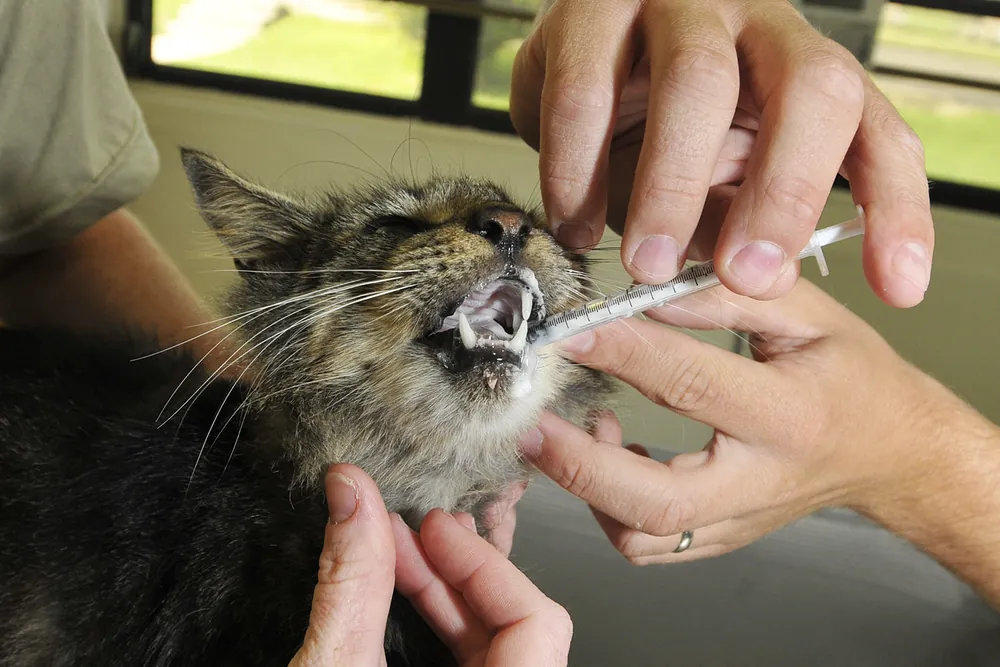
- If that fails, wrap your cat gently in a towel, tilt its head up, open its mouth and place the tablet at the back of the tongue.
- Close its mouth softly, stroke its throat and offer a little food or water straight after.
- Watch for a minute to make sure the tablet was swallowed and not spat out.
- Give praise or a treat when you are done, and never force a tablet down your cat’s throat.
Signs Your Cat Needs Worming
Many cats show no signs until they have a lot of worms, which is why regular worming matters. When signs do show, the most common are weight loss, vomiting, diarrhoea, an itchy bottom and a kitten that is not growing well (International Cat Care).
- Diarrhoea or vomiting that keeps coming back.
- Weight loss even though your cat is eating.
- A pot belly, especially in kittens.
- A dull coat.
- Worms in the poo or vomit, or rice-like segments around the bottom.
- Scooting or licking around the bottom.
If your cat has ongoing diarrhoea, vomiting, weight loss or is very young, pregnant, nursing or unwell, see a vet before you give a home wormer. These signs can point to a problem that needs a vet.
Cat Worming Tablets and Family Safety
Some cat worms can infect people, so good hygiene matters as much as the tablets. Clean the litter tray every day, wash your hands after handling litter or garden soil, and teach children to wash their hands after playing outside (Cornell Feline Health Center).
Keep up flea control as well, because fleas spread tapeworm. Our cat flea treatment guide compares the flea products we stock. If you also have a dog, read our dog worming tablets guide too, because dogs need different products and doses.
Specific Questions About Cat Worming Tablets
These are the questions cat owners ask us most about worming. The short answers below cover how often to worm, kittens, indoor cats, dog products, spot-ons and fleas. For advice about your own cat, always read the product label and talk to your vet.
How often should I worm my cat with cat worming tablets?
Adult cats are usually wormed every 1 to 3 months, depending on hunting and outdoor access (International Cat Care). Kittens need worming more often, from a few weeks of age. Always follow the label on your product, and ask your vet if you are not sure.
Can I give cat worming tablets to a kitten?
Yes, some wormers are made for young kittens. Endogard Allwormer is labelled from 2 weeks of age, Troy Puppy and Kitten Worm Syrup suits kittens, and NexGard SPECTRA for cats is for kittens from 8 weeks. Dose by your kitten’s current weight. Our kitten food guide has more tips for new kittens.
Do indoor cats need worming?
Yes. Indoor cats have a lower risk than hunting cats, but fleas, insects and eggs carried in on shoes can still pass worms on. Most indoor cats still need a regular worming routine. Your vet can help you choose how often.
Can I use dog worming tablets on my cat?
Only if the product is labelled for both dogs and cats, and you use the cat dose on the label. Never give your cat a dog-only product, because the dose and ingredients may not be safe for cats. When in doubt, ask your vet.
Is a spot-on as good as a worming tablet?
A spot-on can work well if it lists the worms you need to cover. NexGard SPECTRA for cats covers intestinal worms including tapeworm, plus lungworm, heartworm, fleas, ticks and mites. A spot-on must be given every month. Tablets may suit you better if your cat takes them easily.
Why do I need to treat fleas if I worm my cat?
Cats catch flea tapeworm by swallowing fleas when they groom (International Cat Care). If you only treat worms, your cat can pick up tapeworm again from the next flea. Use flea control all the time, or a product that covers both.
References
- APVMA, Veterinary Labelling Code: anthelmintics for dogs and cats.
- International Cat Care, Worming your cat.
- Cornell Feline Health Center, Gastrointestinal parasites of cats.
- ESCCAP Guideline 01, Worm control in dogs and cats.
- American Heartworm Society, Heartworm basics.
- Palmer et al., National study of the gastrointestinal parasites of dogs and cats in Australia, Veterinary Parasitology.
You can browse our cat flea, tick and worm control range, see flea, tick and worm control for puppies and kittens, read the cat flea treatment guide, or see our monthly pet subscription box.

During veterinary school, he contributed to projects involving species such as hammerhead sharks, Shark Bay mice, woylies, mulgara, and kangaroos, gaining valuable hands-on experience in wildlife health and preservation.
Popular right now
-
 Beau Pets - Soft Polyware Collar Quick Release - 25mm x 40-65cm - Blue$18.95
-
Beau Pets - Soft Polyware Collar Quick Release - 20mm x 30-50cm - Red$17.95
-
Beau Pets - Soft Polyware Collar Quick Release - 20mm x 30-50cm - Purple$17.95
-
Beau Pets - Soft Polyware Collar Quick Release - 20mm x 30-50cm - Pink$17.95



3 comments