

Kitten Essentials: What to Buy for a New Kitten
Get our free Pet Care Starter Checklist
A printable checklist for dogs and cats, plus practical care tips and new arrivals by email.
No spam. Unsubscribe anytime. | Or see our monthly pet box →
Kitten essentials are the few things a new kitten needs from day one: complete kitten food and fresh water, bowls, a litter tray with litter it knows, toys, simple grooming tools and a plan for vet care and parasite control. Start with items your kitten is already used to from the breeder or shelter to avoid stress. This guide lists each essential, the products our Australian online pet shop stocks for it, and a printable-style checklist.
Key Takeaways
- Kitten essentials include food bowls, a litter tray in a quiet spot, toys, grooming tools, and parasite control. Start with the food and litter your kitten already knows, then change slowly (RSPCA UK).
- Kittens need to eat often. The RSPCA Knowledgebase says kittens should be offered food at least 4 times per day, so choose a complete and balanced kitten food and keep clean water out at all times.
- For one kitten, the RSPCA suggests at least two litter trays, two feeding spots and two water bowls, all in separate places, plus toys, scratching surfaces and places to rest and hide.
Quick Comparison Table
Setting up your home with kitten essentials means choosing products that support nutrition, comfort, and safety from day one. The table below compares seven key items that form the foundation of a well-equipped kitten home, helping you make informed decisions across food, litter, bowls, toys, and health care.
| Item | Primary benefit | Key feature | Recommended use |
|---|---|---|---|
| Advance Kitten Chicken Dry Food | Complete and balanced nutrition | Australian made in NSW | Daily meals for growing kittens |
| Black Hawk Kitten Chicken Dry Food | Complete and balanced nutrition | Made with Australian chicken | Main dry food option |
| Hill’s Science Diet Kitten | Made for a kitten’s first year | DHA from fish oil for brain and eye development | Daily feeding |
| Pet Silicone Double Bowl | Food and water in one compact unit | Two 370ml stainless steel inserts, dishwasher safe | Mealtimes and water |
| Cat’s Best Original Clumping Litter | Easy scooping | Clumping wood fibre, no chemical additives | Daily litter tray care |
| GiGwi Refillable Catnip Rabbit Toy | Play and stimulation | Refillable organic catnip teabag | Interactive play sessions |
| Advantage for Kittens and Small Cats | Flea control | Monthly spot-on, cats up to 4kg | Monthly flea protection |
1. Advance Kitten Chicken Dry Food
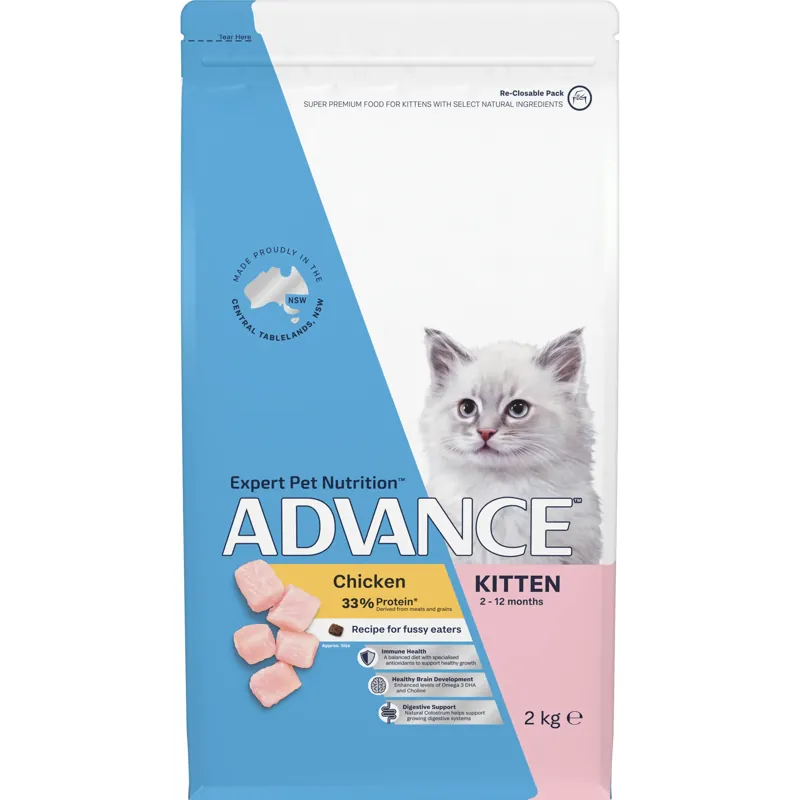
Advance Kitten Chicken is a complete and balanced dry food made specifically for growing kittens. This Australian-made option, developed in the Central Tablelands of New South Wales, provides the proteins, minerals, fibres and fats your kitten needs during its first months.
Kittens should be offered food at least 4 times per day, according to the RSPCA Knowledgebase, and the RSPCA suggests starting with wet kitten food and introducing dry kitten food as your kitten grows. Advance Kitten Chicken fits that plan once your kitten is eating dry food. Pair it with a wet food such as Advance Kitten Wet Food Trays for moisture.
The main thing to watch is the switch. Start by mixing a small amount with whatever food your kitten ate at the breeder or shelter, and increase the new food slowly. Follow the feeding guide on the bag and ask your vet to check your kitten’s weight and body condition.
Advance Kitten Chicken works best for kittens that are already eating dry food and need a reliable, locally made option. It is ideal if you want to stick with one brand as your kitten grows.
2. Black Hawk Kitten Chicken Dry Food
Black Hawk Kitten Chicken is a complete and balanced dry food formulated specifically for growing kittens. It is made with real Australian chicken plus vitamins and minerals to support growth, energy and development.
The complete and balanced formula means you don’t need to add supplements or mix it with other foods; it is designed to cover the nutrients a growing kitten needs. Never feed puppy or dog food to a kitten: the RSPCA notes it will be deficient in taurine, which cats can only get through food.
Pros:
- Made with Australian chicken
- Complete and balanced nutrition for growing kittens
- Pairs with the matching Black Hawk Kitten Pouches (chicken in gravy) for wet meals
Cons:
- Like any new food, it needs a gradual introduction if your kitten was eating something else
- Dry food alone gives less moisture than a mix of wet and dry
Black Hawk Kitten Chicken suits owners who want an Australian-made option, or who are mixing dry and wet meals. If your kitten has a sensitive stomach or specific dietary needs, your vet may recommend a different formula.
3. Hill’s Science Diet Kitten
Hill’s Science Diet Kitten is a chicken-recipe dry food formulated for kittens in their first year of life. It is complete and balanced, meaning one food can meet your kitten’s dietary needs without supplements.
The formula focuses on what growing kittens require. It includes DHA from fish oil for healthy brain and eye development, high-quality protein for growing muscles, and a balanced set of minerals for bones and teeth.
Key features of Hill’s Science Diet Kitten include:
- Complete and balanced nutrition for the first year
- Chicken recipe
- DHA from fish oil
Hill’s Science Diet Kitten suits first-time kitten owners who want a food made for the first year. For an indoor kitten there is also a Hill’s indoor kitten recipe in our kitten dry food range. Our kitten food guide covers wet vs dry and how much to feed.
4. Pet Silicone Double Bowl
A dual-compartment bowl makes mealtimes simpler. The Pet Silicone Double Bowl has two 370ml sections, one for food and one for water, so you are not juggling separate dishes. The removable stainless steel inserts are dishwasher safe, which matters when you’re cleaning up after a messy eater.
Kittens need clean, fresh drinking water at all times, but not milk, which the RSPCA says can cause stomach upsets. The RSPCA also suggests giving each cat a choice of water bowls in separate places, so add a second water bowl in another room.
Key features:
- Two 370ml compartments (food and water)
- Removable stainless steel inserts that are dishwasher safe
- Silicone and stainless steel construction
- Designs vary; each bowl is sold separately
Best for: First-time kitten owners who want a practical, low-maintenance feeding spot that keeps food and water organised in one place.
5. Cat’s Best Original Clumping Litter
Cat’s Best Original Clumping Litter is a clumping litter made from natural wood fibres. Cat’s Best says the fibres absorb liquids and odours up to seven times their own volume. It is biodegradable, plant based and has no chemical additives. A plant-based clumping alternative is PooWee! Tofu Cat Litter, made from soybean fibre.
Kittens are usually litter trained when they come home and are likely to prefer the litter they learned on, so the RSPCA UK suggests keeping the same type at first and changing gradually if you want to. If you switch, mix a little of the new litter into the old.
Toilet training your kitten involves regularly showing them the litter tray, which should be located in an easily accessible place.
Vet Voice, Australian Veterinary Association
Litter tray set-up tips from the RSPCA:
- Use at least two trays for one kitten, in quiet, private, easy-to-reach spots away from food and water (RSPCA Knowledgebase)
- A large open tray filled with about 3-4cm of unscented litter is a good starting point
- Remove faeces and urine daily and clean the trays regularly
- Praise your kitten for using the tray and never punish accidents
Not sure which litter type to choose? Compare clumping vs non clumping cat litter or see our cat litter types guide and the full cat litter range.
6. GiGwi Refillable Catnip Rabbit Toy
Play is how kittens learn, burn energy and stay mentally sharp. The GiGwi Refillable Catnip Rabbit Toy gives your kitten a soft plush target to toss, flip, pounce on and kick. It uses a refillable organic catnip teabag, so you can refresh the catnip when interest fades without the mess of loose catnip.
The RSPCA lists play and predatory behaviour as one of the five pillars of a healthy cat environment, and suggests at least two play areas with a variety of toys. Keep play sessions short and stop if games get rough, so your kitten learns that biting and hard scratching end the fun.
For calm time, the LickiMat Cat Playdate Tuff is a textured lick mat. Spread a little wet food on it to slow eating and give your kitten something soothing to do.
Key features:
- Plush rabbit shape for hunting-style play
- Refillable organic catnip teabag system
- Soft exterior for wrestling and cuddling
7. Advantage Flea Treatment for Kittens and Small Cats
Advantage Flea Treatment for Kittens and Small Cats is a monthly spot-on for kittens and cats up to 4kg. You apply it to the skin at the back of the neck. Fleas do not need to bite to be killed, and each dose lasts a month.
Here’s what makes this treatment practical for new kitten owners:
- Monthly application
- Kills fleas on contact
- No tablets to hide in food
- Made for kittens and small cats up to 4kg
Advantage treats fleas only, not worms. For broader cover, NexGard SPECTRA for cats 0.8-2.4kg is a monthly spot-on for fleas, worms, ticks, mites and heartworm, and Troy Puppy and Kitten Worm Syrup removes roundworms. Always follow the label and ask your vet about the right product and timing for your kitten’s age and weight. Read more in our cat flea treatment guide and cat worming guide, or browse flea and worm control for puppies and kittens.
Other kitten essentials: grooming, dental care and treats
Get your kitten used to gentle handling early. The RSPCA suggests stroking first, then a few soft brushstrokes with a tasty treat as a reward, building up slowly. Useful tools from our grooming range:
- ZeeZ Comfort Grooming Mitt: a two-sided glove with a rubber side for brushing and a fabric side that collects loose fur.
- Pet Brush Slicker Wooden: a slicker brush for mats, tangles and loose fur, handy for medium and long-haired kittens.
- ZeeZ Comfort Nail Clipper: stainless steel blades and a cutting guard, made for cats and small dogs.
- PetzPark Toothpaste for Cats with a Finger Toothbrush: a pea-sized amount daily, suitable for kittens, adult and senior cats.
- Inaba Churu for Kitten: a creamy purée treat for kittens under one year, fed by hand. More options in our cat treats range and cat treats guide.
Cats generally don’t need baths, and the RSPCA advises avoiding bathing unless your vet recommends it. If a bath is truly needed, Fido’s Puppy and Kitten Shampoo is soap free and pH balanced.
New kitten checklist
Use this new kitten checklist before your kitten comes home. Items marked with a product are in stock in our shop; the rest are general things to get.
| Essential | Why it matters | Our pick |
|---|---|---|
| Complete kitten food (wet and dry) | Balanced nutrition for growth | Advance Kitten, Black Hawk Kitten, LifeWise Kitten, kitten wet food |
| Food and water bowls | Fresh water at all times, no milk | Pet Silicone Double Bowl |
| Two litter trays and litter | Quiet spots away from food | Cat’s Best Original, PooWee! Tofu |
| Toys and a lick mat | Play and calm time | GiGwi Catnip Rabbit, LickiMat Cat Playdate |
| Brush or grooming mitt, nail clipper | Gentle handling from day one | ZeeZ Grooming Mitt, ZeeZ Nail Clipper |
| Cat toothpaste and finger brush | Early dental routine | PetzPark Toothpaste, Finger Toothbrush |
| Flea and worm control | As directed by your vet | Advantage Kittens, NexGard SPECTRA, Troy Worm Syrup |
| Secure cat carrier | Safe trips home and to the vet | General item |
| Scratching surfaces | Normal scratching behaviour | General item |
| Bed and hiding places | Quiet places to rest | General item |
Setting up a safe room and kitten-proofing
Kittens shouldn’t be brought home until they’re at least eight weeks old.
RSPCA UK, Kitten care
The RSPCA UK suggests a quiet settling-in room for the first days, away from children, other animals and noise, with a bed, food and water, a litter tray, hiding spots, scratching surfaces and toys. Before your kitten arrives, block gaps under cupboards and appliances, close the toilet lid, windows and washing machine door, and put away wires, toxic plants, medicines and cleaning products.
Book a vet visit soon after your kitten comes home. The RSPCA Knowledgebase recommends a general health check and talking to your vet about vaccinations, microchipping, desexing, and flea and worm prevention.
What you can skip at first
You do not need a cupboard full of products on day one. Specialty foods, lots of treats, shampoo and extra gadgets can wait until you know your kitten. Focus on food, water, litter, a few toys, a safe room and a vet visit, then add grooming and dental items as your kitten settles.
A monthly pet box for ongoing kitten supplies
Once your kitten essentials are set up, a monthly pet box keeps food, toys and treats coming without a full shop each month. Tell us the box is for a cat and we pack for your cat. The Starter Box is $49.99 a month (a bag of food, two toys and a treat). The Standard Box is $69.99 a month (6 items) and the Deluxe Box is $99.99 a month (8 items). Delivery is included in Australia, and you can cancel any time. You can also browse our full cat products range.
Frequently Asked Questions
What are the most important kitten essentials?
Complete kitten food, fresh water and bowls, at least two litter trays with litter your kitten knows, a few toys, scratching surfaces, a bed or hiding place, a secure carrier and a vet visit for a health check. Grooming and dental tools can follow soon after.
What should I buy before bringing a new kitten home?
Buy the food your kitten is already eating, bowls, litter trays and the same litter, toys, scratching surfaces, a bed and a carrier. Use the new kitten checklist above, and our pet supplies checklist if you also have a dog.
How often should a kitten eat?
The RSPCA Knowledgebase says kittens should be offered food at least 4 times per day. Take care not to overfeed or underfeed, and ask your vet to check your kitten’s body condition.
Can kittens drink milk?
No cow’s milk. The RSPCA advises giving clean fresh water at all times but not milk, as it can cause stomach upsets.
How many litter trays does a kitten need?
The RSPCA suggests at least two trays for one cat, in separate places. With more than one cat, provide at least one tray per cat plus one.
Specific Questions About Kitten Essentials
What is in a kitten starter kit?
A good kitten starter kit covers food, bowls, litter and trays, toys, a brush or grooming mitt, a nail clipper and parasite control chosen with your vet. Our checklist table lists an in-stock pick for each.
Do kittens need flea and worm treatment?
Talk to your vet about flea and worm prevention as part of your kitten’s first health check. Choose products made for your kitten’s weight, such as Advantage for Kittens or NexGard SPECTRA 0.8-2.4kg, and follow the label.
Should I bath my new kitten?
Usually not. The RSPCA says cats generally don’t need baths and most find them stressful, so only bath your kitten if your vet recommends it.
References
- RSPCA Knowledgebase, How should I look after my new kitten?
- RSPCA Knowledgebase, What should I feed my kitten?
- RSPCA Knowledgebase, How do I encourage my cat to use a litter tray?
- RSPCA UK, Kitten care: how to look after a kitten
- Vet Voice (Australian Veterinary Association), Kitty litter and cats
More help for new cat owners: kitten food guide, wet cat food guide, cat flea treatment, cat worming tablets and cat litter types compared.

During veterinary school, he contributed to projects involving species such as hammerhead sharks, Shark Bay mice, woylies, mulgara, and kangaroos, gaining valuable hands-on experience in wildlife health and preservation.

1 comment