Best Cat Litter Australia: Litter Types Compared (2026 Guide)
Get our free Pet Care Starter Checklist
A printable checklist for dogs and cats, plus practical care tips and new arrivals by email.
No spam. Unsubscribe anytime. | Or see our monthly pet box →
Last updated: October 2026
Looking for the best cat litter Australia has to offer? It is the one your cat will use every time and you can keep clean. This guide compares the main litter types sold in Australia: clumping wood fibre, pine pellets, tofu, rice hull, clay and crystal. It uses RSPCA advice on trays, depth and cleaning, and links to the cat litter we stock.
Key takeaways
Here is the short version for Australian cat owners. The points below cover how to choose a litter type, how to set up the tray and how often to clean it. Each point is explained further down, with links to the RSPCA Knowledgebase, RSPCA Victoria, RSPCA UK and International Cat Care.
- Your cat’s preference matters most. The RSPCA says cats can have strong preferences for certain trays and litter types.
- The RSPCA suggests a good starting point: a large open tray at least 1.5 times your cat’s length, with about 3–4cm of unscented litter.
- Clumping litter makes daily scooping quicker. In our range, pine pellet litter costs the least per kilogram.
- Give one cat at least two trays, and two cats at least three trays, in separate places.
- Remove waste every day. When you change litter type, do it slowly over about a week.
What are the main types of cat litter in Australia?
Most cat litter sold in Australia is made from one of six materials. Each one looks, feels and cleans up differently. Natural litters are made from plant material such as wood, soybean fibre or rice hulls. Clay and crystal litters are made from minerals. Here is what each type is like to use.
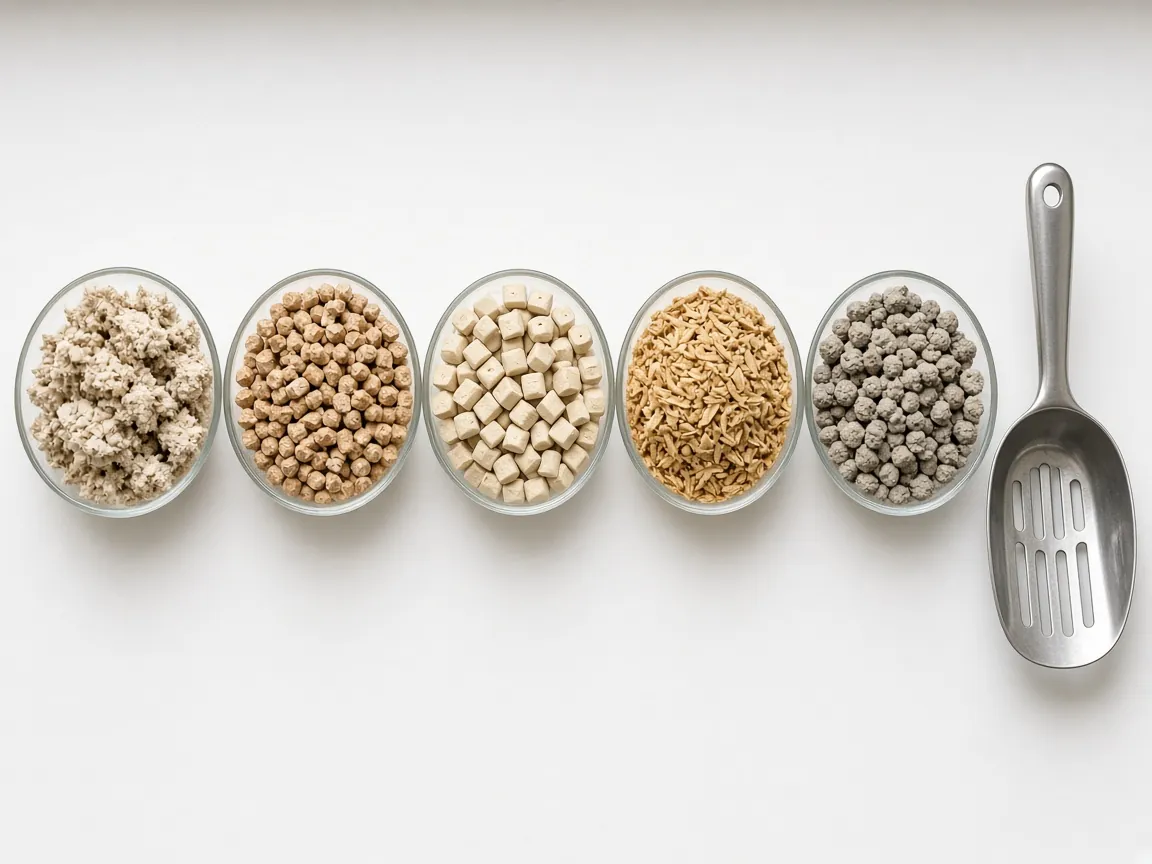
- Clumping wood fibre: fine plant fibres form firm clumps you can scoop out. Cat’s Best Original says its fibres absorb liquid up to seven times their own volume.
- Pine pellets: compressed pine pellets that soak up liquid and break into sawdust where wet. Examples are Elite Wood Pellets 15kg and CatMate Wood Pellet 15kg.
- Tofu: made from soybean fibre, a by-product of soymilk. PooWee! Tofu Cat Litter forms clumps, and the maker describes it as flushable.
- Rice hull: CopRice Max’s Cat Litter uses upcycled rice hulls with a small amount of bentonite clay. It is unscented.
- Clay: clumping clay litter is usually made from bentonite. It forms firm clumps but is heavy to carry. We do not stock it.
- Crystal: silica gel crystals absorb liquid but do not clump. We do not stock it.
How do natural cat litters compare?
This table compares the natural litters in our store. Prices were checked in October 2026 and can change. Price per kilogram helps you compare bags of different sizes, but also think about how often you need to top up or change the tray. Clumping litter usually needs less replacing because you only remove the wet clumps.
| Litter | Type | Bag | Price | Price per kg |
|---|---|---|---|---|
| Cat’s Best Original | Clumping wood fibre | 13kg | $105.95 | $8.15 |
| Cat’s Best Original | Clumping wood fibre | 4.3kg | $37.95 | $8.83 |
| PooWee! Tofu | Clumping tofu | 5kg | $24.95 | $4.99 |
| CatMate Wood Pellet | Pine pellet | 15kg | $39.99 | $2.67 |
| Elite Wood Pellets | Pine pellet | 15kg | $30.95 | $2.06 |
| CopRice Max’s | Rice hull | See product page | $48.99 | See product page |
Which cat litter is best for my cat?
There is no single best cat litter for every cat. The right choice depends on your cat, your home and how you like to clean. Use these simple rules to narrow it down, then test your pick in a second tray. Your cat will show you which one it likes by using it.
- If you want easy daily scooping: choose a clumping litter, such as wood fibre or tofu.
- If you want the lowest cost per kilogram: choose pine pellets, sold in 15kg bags.
- If litter gets tracked through the house: put a mat under the tray, as the RSPCA suggests.
- If you have more than one cat: buy a large bag, such as the 13kg Cat’s Best, to save reordering.
- If your cat is fussy: pick an unscented litter with a soft, sandy feel, and change slowly.
Cats can have strong individual preferences for certain litter trays and litter types. Offer different things to see what they prefer.
RSPCA Australia, How do I encourage my cat to use a litter tray?
Experts agree on a few patterns. International Cat Care says many cats like a fine, sand-like litter, and many prefer clumping litter because it is easier to keep clean. Its experts also note that some cats find hardwood pellets uncomfortable to stand on, especially cats with arthritis. Pellets still suit plenty of cats, as RSPCA UK found in its own trials.
We saw wood pellets perform best in our trials; however, some cats may prefer a fine sandy litter.
RSPCA UK, How to train a cat to use a litter tray
How should I set up a litter tray?
A good tray set-up matters as much as the litter. The RSPCA Knowledgebase says to place trays in quiet, private spots that are easy to reach, away from food and water. Try not to move them often. A towel or mat under the tray stops it slipping and lets your cat wipe its paws.
Count your trays too. RSPCA Victoria says you need one tray for each cat, plus one. So one cat needs 2 trays, and 2 cats need 3 trays. Keep them in different places, so one cat cannot block another from using a tray.
| Number of cats | Trays needed | Starting litter depth |
|---|---|---|
| 1 cat | 2 trays | About 3–4cm |
| 2 cats | 3 trays | About 3–4cm |
| 3 cats | 4 trays | About 3–4cm |
How often should I clean the litter tray?
Clean litter keeps cats using the tray. The RSPCA says faeces and urine need to be removed daily, and trays emptied and cleaned regularly. RSPCA UK suggests spot-cleaning every day and replacing the litter at least once a week. Avoid strong-smelling cleaning products, as they may put your cat off.
International Cat Care gives a useful rule for full clean-outs. Wash the tray and replace all the litter every 2 to 4 weeks if you use clumping litter, and every week if you use non-clumping litter. Use hot water and a mild detergent. Avoid disinfectants that turn cloudy in water, as International Cat Care says these usually contain phenols, which are toxic to cats.
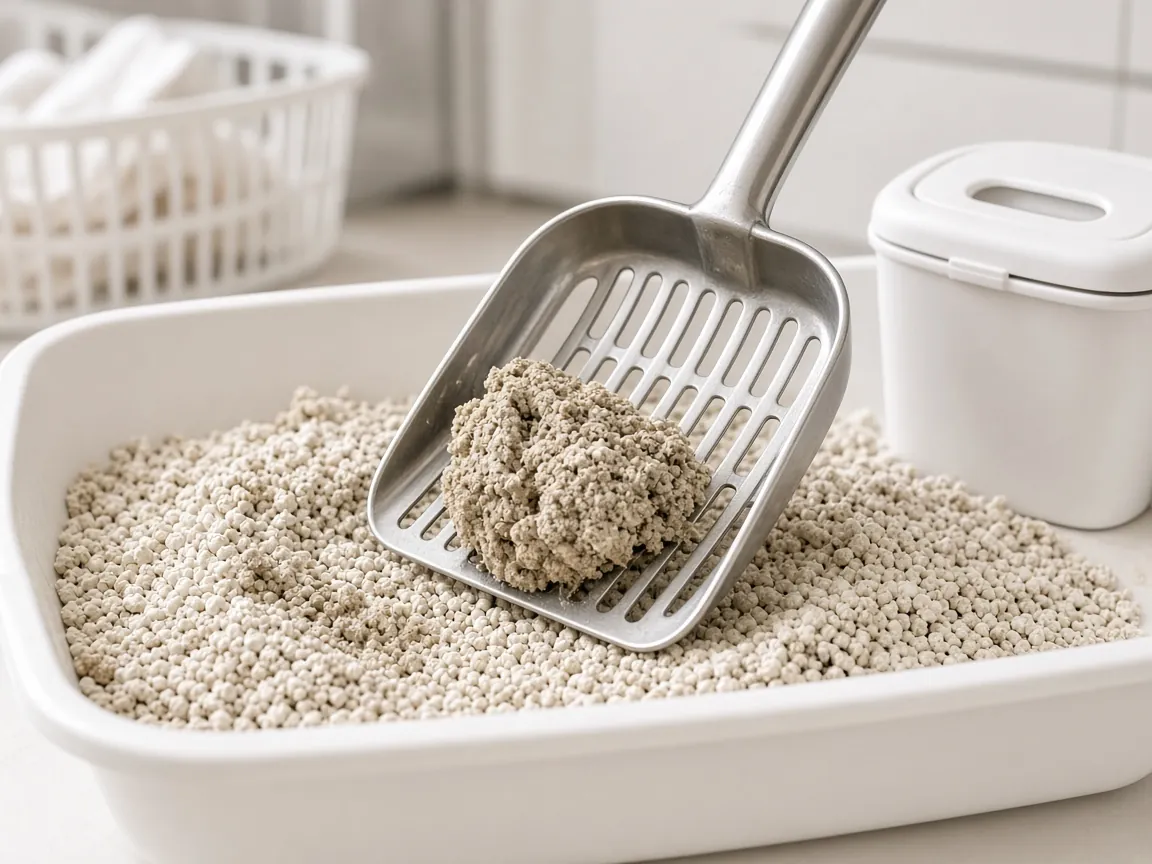
Clumping litter can last longer between full changes, because you only lift out the used clumps. For example, Cat’s Best says its Original litter can stay in the tray for up to seven weeks with regular scooping. Pellet litter works differently. Sift out the sawdust and solids each day, then top up with fresh pellets. A pet cleaner helps with accidents outside the tray.
What is the best cat litter for kittens?
Kittens need a tray they can climb into easily. The RSPCA says to adjust the set-up, including tray height and litter type, for kittens. A low-sided tray in a quiet place, close to where the kitten spends its time, is a good start. Keep it away from the food and water bowls.
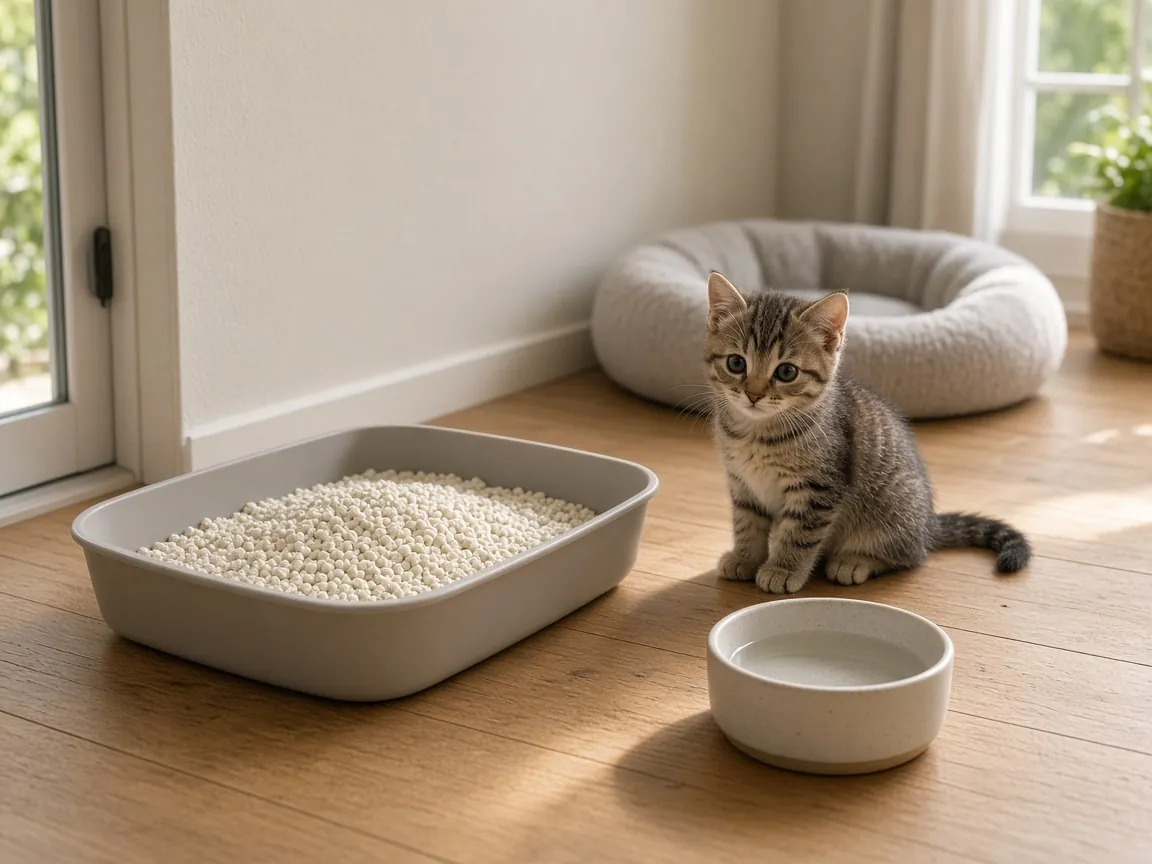
Once your kitten likes a litter, stick with it. International Cat Care says litter preferences develop early in kittenhood. RSPCA Victoria says sudden changes in litter type or brand may lead a cat to reject the tray. RSPCA UK suggests adding a little of the old litter to fresh litter, as the familiar scent helps kittens learn. For a new kitten, also see our dry kitten food and puppy and kitten parasite control.
For the other daily essential, our kitten feeding guide explains wet and dry food, portions and changing diets.
How do I switch to a new cat litter?
Change litter slowly, or your cat may stop using the tray. RSPCA UK advises mixing in the new litter gradually over a week, or putting it in a second tray so your cat can choose. Here is a simple seven-day plan based on that advice:
- Days 1–2: mix about one quarter new litter with three quarters old litter.
- Days 3–4: make it half new and half old.
- Days 5–6: use about three quarters new litter.
- Day 7: use only the new litter, as long as your cat is still using the tray.
- If your cat avoids the tray, go back a step, or offer the old litter in a second tray.
Cats are common in Australian homes. Animal Medicines Australia reports that 73% of Australian households have a pet, and cats live in 34% of homes. That is a lot of litter trays to keep clean.
Buying the best cat litter in Australia online
Litter is heavy, so buying it online saves a trip with a 15kg bag. Mindiampets delivers cat litter across Australia. Orders of $199 or more ship free to metro Sydney, Melbourne, Brisbane, Perth, Adelaide and Canberra. Adding cat food and flea and worm control to one order is the easiest way to reach free shipping. For regular deliveries, see our pet subscription box, from $49.99.
Specific questions about best cat litter Australia
Australian cat owners often ask the same questions about litter. Each answer here stands on its own, using RSPCA advice and maker information, so you can jump straight to the question you need. For health concerns, such as a cat that stops using its tray, always talk to your vet.
What is the best cat litter in Australia?
The best cat litter is the one your cat uses every time. For easy scooping, choose a clumping litter such as wood fibre or tofu. For the lowest cost per kilogram, choose pine pellets. The RSPCA suggests starting with about 3 to 4cm of unscented litter in a large open tray.
How much cat litter should I put in the tray?
The RSPCA suggests filling a large open tray with about 3 to 4cm of litter. This gives your cat enough litter to dig and cover its waste. The tray should be at least 1.5 times the length of your cat. Top up the litter after you scoop out waste each day.
Is natural cat litter better than clay?
Natural litters are made from plants such as wood, soybean fibre or rice hulls, while clay litter is mined. Many natural litters are lighter to carry and the makers describe them as biodegradable. Clay litter clumps well but is heavy. Your cat’s preference matters most, so test a new litter in a second tray.
How many litter trays does one cat need?
RSPCA Victoria says you need one litter tray for each cat, plus one more. That means one cat needs 2 trays, and 2 cats need 3 trays. Put the trays in separate, quiet places away from food and water, so your cat always has a clean tray to use.
Can I flush cat litter?
Some tofu litters, such as PooWee!, are described by the maker as flushable. Before you flush any litter, check that your home plumbing or septic system can handle it, and follow the instructions on the bag. If you are unsure, put used litter in the bin or the general waste.
References
Facts in this best cat litter Australia guide come from the sources listed here. We used the RSPCA Knowledgebase, RSPCA Victoria, RSPCA UK and International Cat Care for litter tray advice, Animal Medicines Australia for pet ownership data, and maker information on each product page for litter features.
- RSPCA Knowledgebase, How do I encourage my cat to use a litter tray?
- RSPCA Victoria, Learning to use kitty litter
- RSPCA UK, How to train a cat to use a litter tray
- International Cat Care, Choosing a litter tray for your cat
- International Cat Care, Soiling indoors
- Animal Medicines Australia, Pets in Australia survey
Our monthly subscription box brings food, toys and treats for your dog or cat to your door. Pick a Starter, Standard or Deluxe box. Delivery is included Australia-wide, and you can cancel any time.
See the subscription boxes
During veterinary school, he contributed to projects involving species such as hammerhead sharks, Shark Bay mice, woylies, mulgara, and kangaroos, gaining valuable hands-on experience in wildlife health and preservation.