
Dog Steps for Bed: How to Choose the Right Height and Size
Get our free Pet Care Starter Checklist
A printable checklist for dogs and cats, plus practical care tips and new arrivals by email.
No spam. Unsubscribe anytime. | Or see our monthly pet box →
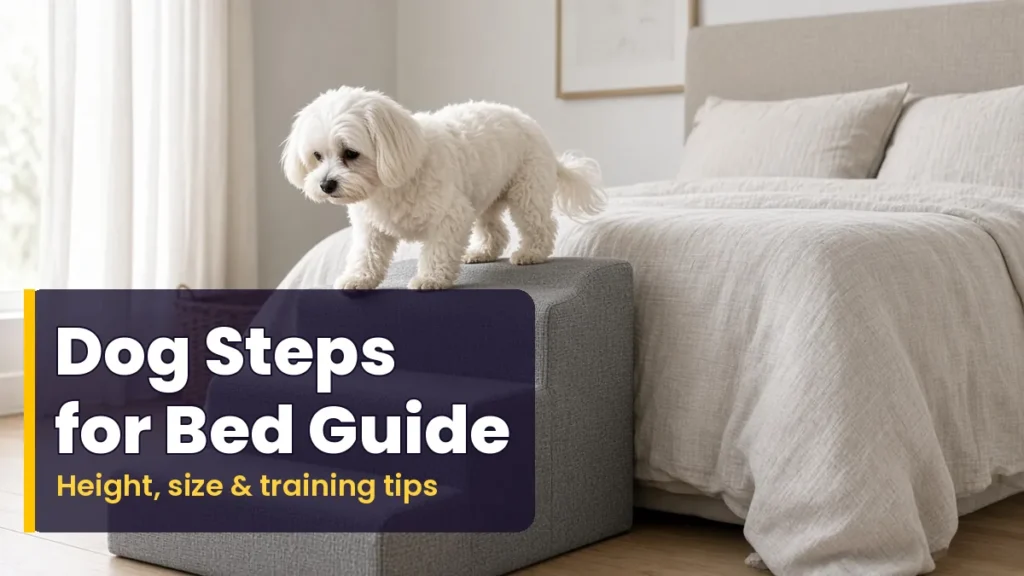
Dog steps for bed use are a simple way to help your dog get up and down without a big jump. They suit small dogs, long-backed dogs, older dogs and puppies who are still learning. This guide shows you how to measure your bed, pick the right height and size, and teach your dog to use the steps with confidence.
Key takeaways
- Measure from the floor to the top of your mattress before you buy dog steps for bed use.
- Check the weight limit. Pick steps rated above your dog’s weight.
- Deep, wide steps with a non-slip surface are easier and safer for most dogs.
- Long-backed breeds and older dogs often benefit from steps, says the American Kennel Club.
- Teach your dog slowly with treats, and stay close until they are confident.
What are dog steps for bed use?
Dog steps, also called pet steps or dog stairs, are a small set of stairs that sit next to your bed or couch. Your dog walks up them instead of leaping. Most have two to four steps. Some fold flat, and some have storage space inside.
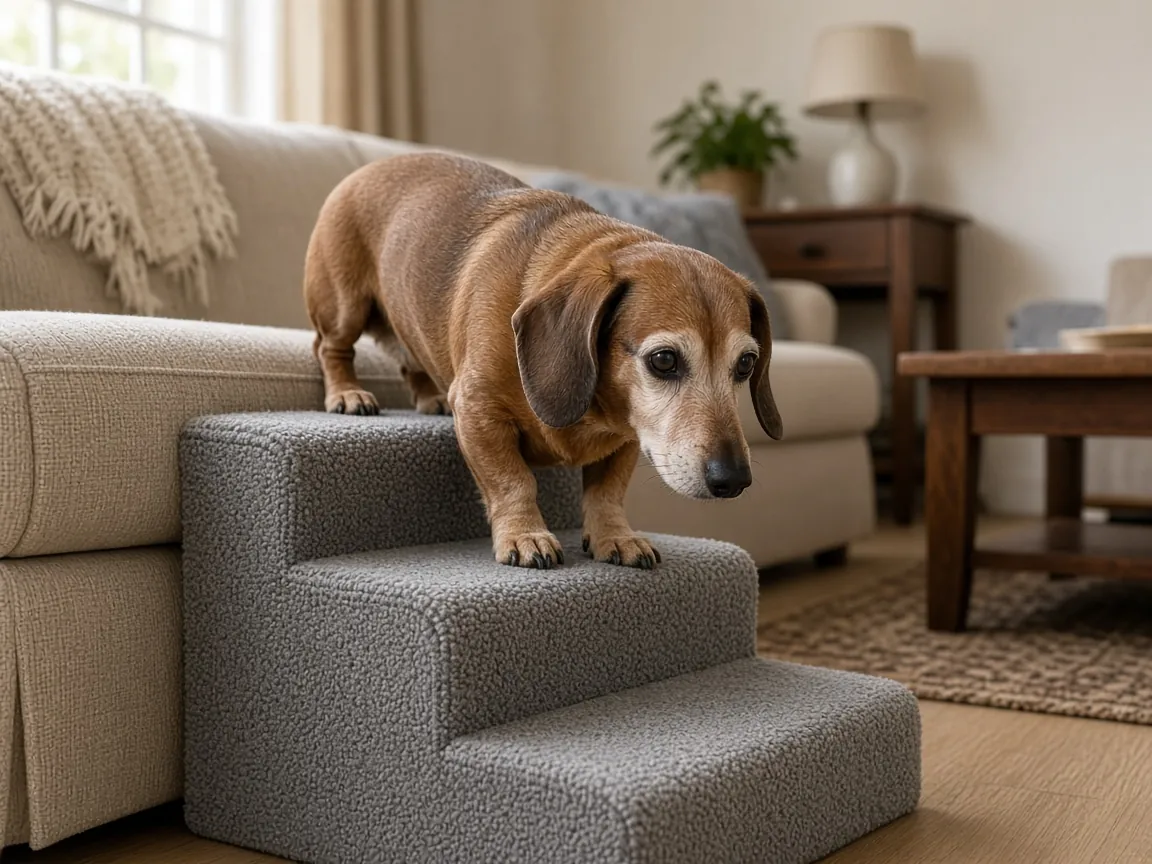
The American Kennel Club says pet stairs can help a dog who still has good balance but has trouble jumping on or off your bed or couch. It suggests deep steps, an anti-skid surface and a set that is rated for your dog’s weight.
They come in a range of sizes, from a single step for a low couch to several steps for bed height.
American Kennel Club, Senior Dog Comfort
Which dogs benefit from bed steps?
Any dog can use steps, but some get more out of them than others. The American Kennel Club lists several groups of dogs who may be helped by dog stairs or ramps.
- Small and toy breeds: dogs like a Chihuahua, Maltese or Shih Tzu who need a running leap to get onto the bed.
- Long-backed breeds: the AKC names Dachshunds, Corgis and Basset Hounds as breeds that are more likely to have back problems.
- Older dogs: dogs with stiff or sore joints may find jumping hard.
- Puppies: young dogs can learn good habits early, before they get used to jumping.
- Dogs getting over an injury: always follow your vet’s advice first.
The American Kennel Club also says the impact of jumping can be uncomfortable for a dog with back pain and may make it worse. Both the PDSA and Blue Cross explain that arthritis is common in older dogs, and that small changes at home can make life easier for them.
Teaching them to use stairs from a young age will be easier than when they’re older and have a habit of jumping.
Dr Amanda Steffen, quoted by the American Kennel Club
How to measure your bed for dog steps
Getting the height right is the most important step. Steps that are too short leave a gap your dog still has to jump. Follow these steps to measure.
- Measure from the floor to the top of your mattress, including any topper.
- Measure how much floor space you have beside the bed.
- Weigh your dog, or check their weight at your next vet visit.
- Look at your dog’s legs. Short-legged dogs need lower, deeper steps.
- Compare these numbers with the product size and weight limit.
| Furniture | Common height range | Steps to look for |
|---|---|---|
| Low couch | About 40 to 45cm | 2 to 3 steps |
| Standard couch | About 45 to 50cm | 3 steps |
| Standard bed | About 50 to 65cm | 3 to 4 steps |
| Tall bed with topper | Over 65cm | 4 steps, or a ramp |
Here is a simple example. If your mattress top is 60cm from the floor, a 40cm set of steps cuts the final jump to just 20cm. That is about 67% less height for your dog to jump, or one third of the original jump.
The same 40cm steps work on other furniture too. On a 45cm couch, they leave a 5cm step up, which is about 89% less height to jump. On a 65cm bed, they leave a 25cm step up, which is about 62% less. On a 50cm bed, the gap drops to 10cm, or 80% less.
If the top of the steps is a little below your mattress, that is usually fine. A small step up is much easier than a full jump. A big gap is not, so pick taller steps or a ramp if your bed is very high.
Features to look for in dog steps
The American Kennel Club lists a few things that make pet stairs safer. Use this checklist when you compare options.
| Feature | Why it matters |
|---|---|
| Deep steps | Gives your dog room to put all four paws on each step. |
| Non-slip surface | Helps stop paws sliding on the steps. |
| Weight rating | The steps must hold your dog safely. |
| Stable base | Wobbly steps can scare a dog and cause a fall. |
| Right height | Leaves only a small step onto the bed. |
| Foldable or storage | Handy in small rooms and when you travel. |
The American Kennel Club also suggests placing stairs where there is a wall or barrier on at least one side. This guides your dog and helps stop them leaping off halfway.
Our pet steps: Pet Collapsible Storage Steps
The Pet Collapsible Storage Steps are a set of dog steps for small and medium dogs. Here are the details from the product page on our site.
| Detail | Pet Collapsible Storage Steps |
|---|---|
| Size | 40cm (H) x 62cm (W) x 31cm (D) |
| Maximum weight | 12kg |
| Product weight | 3.68kg |
| Colour | Grey |
| Design | Foldable, with storage in each step |
| Best for | Small and medium dogs |
At 40cm high, these steps suit a couch or a lower bed. On a taller bed, they still cut the jump down a lot. The storage in each step is a handy place for spare leads, toys or a brush. The steps weigh 3.68kg, so lifting them is easy. Because the weight limit is 12kg, they suit dogs like a Dachshund, Jack Russell, Cavoodle or Shih Tzu, not large breeds. Always supervise your dog while they learn to use them.
You can see more items like this in our dog training products range.
Dog steps or a ramp?
Steps take up less floor space and suit most small dogs. A ramp has a smooth slope and no steps. The American Kennel Club says ramps can suit dogs with sore joints or back problems, and large dogs who need help getting into a car. Ask your vet which is best if your dog has a health problem.
How to teach your dog to use bed steps
Most dogs need a little help to learn. Keep sessions short and happy, and use small, tasty treats.
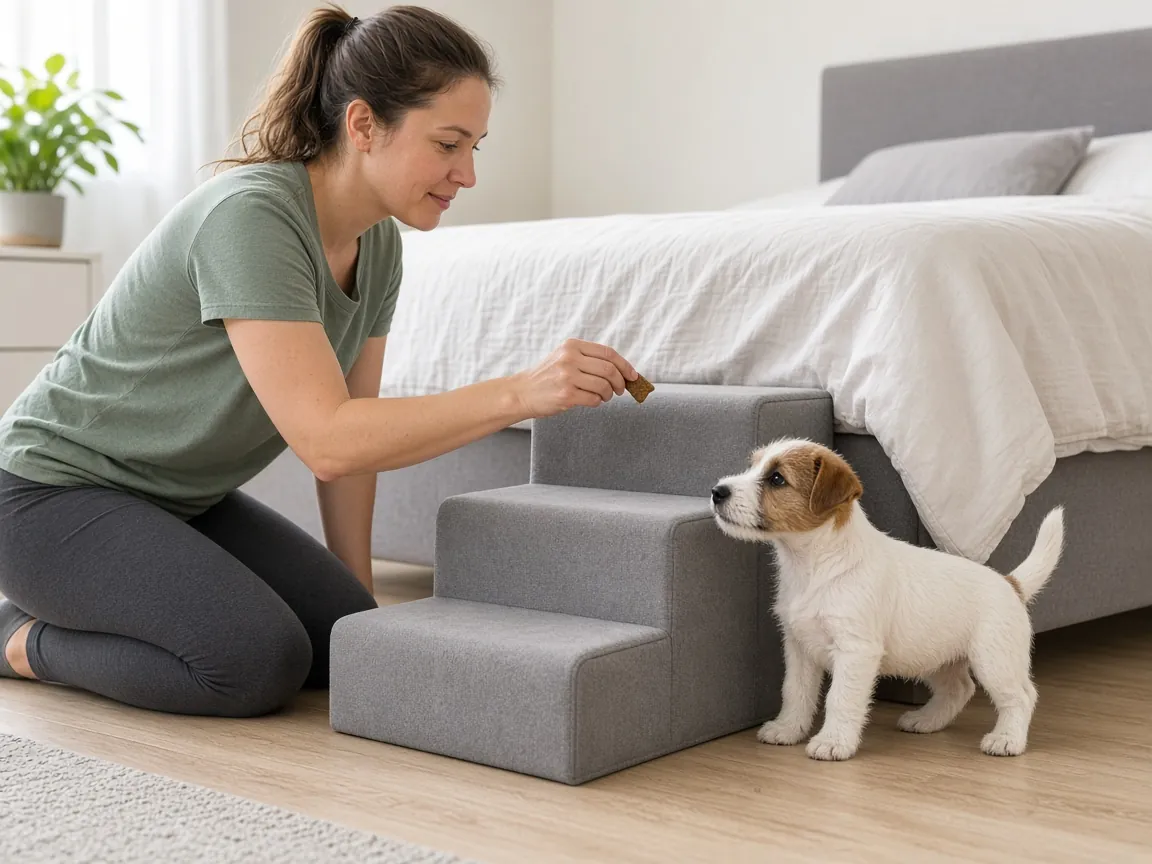
- Put the steps against the bed or couch so they cannot slide.
- Let your dog sniff the steps and give a treat for looking at them.
- Place a treat on the bottom step. Reward when your dog puts a paw on it.
- Move the treat up one step at a time. Reward each step.
- Once your dog reaches the top, give a reward on the bed.
- Practise coming down slowly, one step at a time.
- Gently stop your dog from jumping off the bed, and guide them to the steps instead.
Strong-smelling treats can help hold your dog’s attention. Our Boat To Bowl Training Treats are made from Australian tuna and sardines. A Black Dog Treat Pouch keeps treats close to your hand while you train.
Some dogs learn in a day, while others need a week or more. If your dog seems scared, go back a step and make it easier. Never push or pull your dog up the steps.
Safety tips for dog steps
- Place the steps on a flat floor, not on a loose rug that can slide.
- Check the steps often for wear and loose parts.
- Stay close until your dog is fully confident.
- Keep the steps clear of clothes and toys.
- Talk to your vet if your dog stops using the steps or seems sore.
Making the bed comfy at the top
A soft spot at the top gives your dog a reason to use the steps. A large pet blanket on your bed helps catch fur. On the couch, a water-resistant couch cover helps protect your furniture.
Some owners like to give their dog a bed of their own on the floor too. Options include the Pet Bed Round Medium, the Pet Bed Wide Rib Medium and the Pet Bed Lounge Classic Medium. You can browse more in our dog beds range.
Dog steps by the numbers
- 40cm: the height of our Pet Collapsible Storage Steps.
- 12kg: the maximum dog weight for those steps.
- 3.68kg: how much the steps weigh, about 31% of their 12kg weight limit, so they are easy to move.
- About 67%: how much a 40cm set of steps cuts the jump onto a 60cm bed.
- 3 breeds: Dachshunds, Corgis and Basset Hounds, named by the AKC as prone to back issues.
- 1 barrier: the AKC suggests a wall or barrier on at least one side of the steps.
Looking for new toys and treats to reward your dog while they learn? Our pet subscription box sends a mix of goodies to your door.
Specific questions about dog steps for bed
Do dogs need steps for the bed?
Not every dog does. Steps are most helpful for small dogs, long-backed breeds, older dogs and puppies. The American Kennel Club says jumping on and off high furniture places stress on joints.
How tall should dog steps for a bed be?
Measure from the floor to the top of your mattress. Pick steps that come close to that height, so your dog only has a small step onto the bed.
Are steps or ramps better for dogs?
Steps take up less space and suit most small dogs. Ramps can suit dogs with sore joints or back problems. Ask your vet if your dog has a health problem.
How do I get my dog to use pet steps?
Use treats to lure your dog up one step at a time. Keep sessions short, reward every step and stay close until your dog is confident.
Can large dogs use pet steps?
Yes, if the steps are rated for their weight. Our Pet Collapsible Storage Steps hold up to 12kg, so they suit small and medium dogs.
References
The advice in this guide comes from the dog and animal welfare sources below. Product details come from each product page on our site. Always ask your vet if your dog has joint or back problems.
- American Kennel Club, Dog Stairs vs. Ramps
- American Kennel Club, Senior Dog Comfort: Making Your Home More Accessible
- American Kennel Club, Dog Back Pain
- PDSA, Arthritis in dogs
- Blue Cross, Arthritis in dogs
Our monthly subscription box brings food, toys and treats for your dog or cat to your door. Pick a Starter, Standard or Deluxe box. Delivery is included Australia-wide, and you can cancel any time.
See the subscription boxes
During veterinary school, he contributed to projects involving species such as hammerhead sharks, Shark Bay mice, woylies, mulgara, and kangaroos, gaining valuable hands-on experience in wildlife health and preservation.