

Senior Dog Food Guide: How to Choose for Older Dogs
Get our free Pet Care Starter Checklist
A printable checklist for dogs and cats, plus practical care tips and new arrivals by email.
No spam. Unsubscribe anytime. | Or see our monthly pet box →
The best senior dog food is a complete and balanced food made for older dogs that suits your dog’s size, teeth and health. Most dogs move to a senior food at around seven, and large breeds often sooner. Switch slowly over about a week, watch your dog’s weight, and ask your vet first if your dog has a health problem. This guide shows what to look for and compares the senior foods we stock.
Key takeaways
- Most dogs are ready for a senior food at around seven. The RSPCA (UK) says it varies with breed and size.
- Large dogs age sooner. Some senior foods for large breeds start at six years of age.
- Change food slowly. RSPCA Victoria suggests about a week, adding the new food in 25% steps.
- Watch weight closely. Older dogs often move less and need fewer calories, so it is easy to overfeed.
- See your vet first if your dog has kidney, heart or weight problems, or loses weight without trying.
Quick comparison table
Choosing the right senior dog food means matching the food to your dog’s size, age and needs. The table below compares the senior dog foods we stock in Australia, using the details on each product page. Use it to narrow your list, then read the matching section below.
| Senior dog food | Made for (per product page) | Key features (per product page) | Pack sizes |
|---|---|---|---|
| Hill’s Science Diet Adult 7+ Small & Mini | Small and mini dogs aged 7+ | Small kibble; antioxidant blend; no artificial flavours, colours or preservatives | One bag size |
| Hill’s Science Diet Adult 7+ Senior Vitality | Dogs aged 7+ | Blend for energy, brain and mobility; vitamin E and omega-6 for skin and coat | 5.67kg |
| Hill’s Science Diet Adult 6+ Large Breed | Large dogs aged 6+ (24–50kg) | Natural sources of glucosamine and chondroitin | 12kg |
| Advance Healthy Ageing Medium Breed | Medium breed mature dogs | Green-lipped mussel, glucosamine, chondroitin, omega-3 DHA and choline; Australian made | 15kg |
| Advance Healthy Ageing Large Breed | Large breed mature dogs | Green-lipped mussel, choline and omega-3 DHA; prebiotic fibre; Australian made | 15kg |
| Black Hawk Mature Dog 7+ Lamb & Rice | Dogs aged 7+ | Grass-fed Australian lamb first; 27% protein, 14% fat | 3kg or 20kg |
| Black Hawk Mature Dog 7+ Chicken & Rice | Dogs aged 7+ | Australian chicken; green-lipped mussel; 25% protein, 14% fat | 3kg or 20kg |
| Black Hawk Mature Dog wet pouches (Lamb & Vegetables) | Dogs aged 7+ | Wet food; glucosamine and chondroitin; serve alone or as a topper | 12 x 85g |
| Cherish Mindful Mature Small Bites | Small and medium dogs aged 7+ | Small kibble; MCT from coconut oil, algal DHA, glucosamine; made in Australia | 8kg |
When is a dog a senior?
A dog is usually called a senior at around seven years old. Dogs Australia says a seven-year-old dog can be termed middle to senior age. The RSPCA (UK) says that at around seven, your dog might benefit from slowly moving onto a diet designed for senior dogs.
Size matters. Large and giant dogs tend to age sooner than small dogs. That is why the Hill’s large breed formula we stock is made for large dogs aged 6+ (24–50kg), and its product page says giant breeds aged 5+ (55kg+) can use it too. Small dogs often stay active for longer, but they can still need a senior food from about seven.
What to look for when buying senior dog food
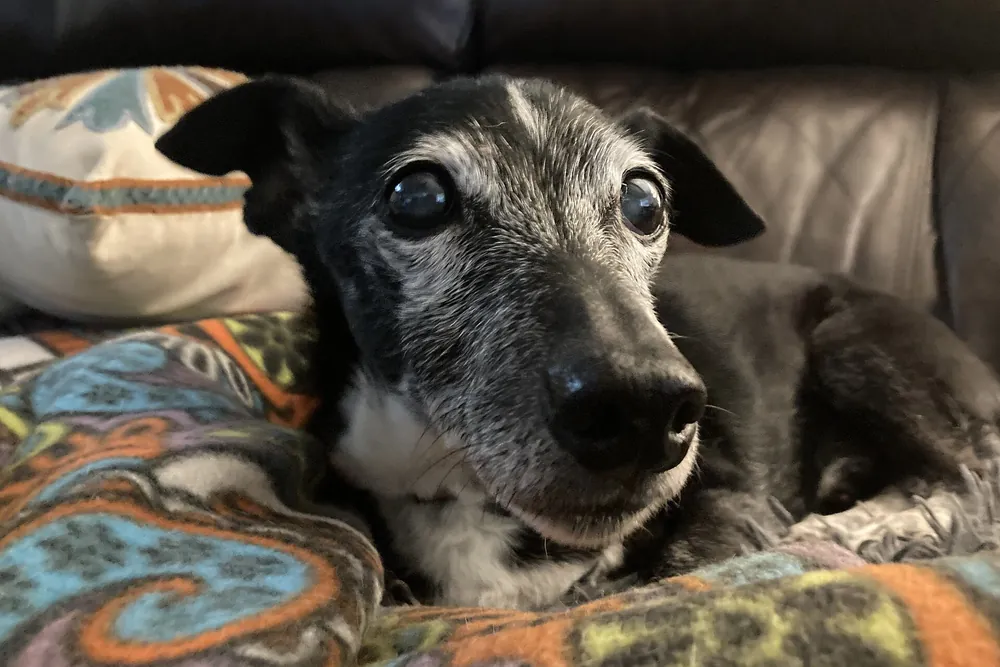
Look for a complete and balanced senior dog food that suits your dog’s size, appetite and teeth. The RSPCA Knowledgebase says the base of your dog’s diet should be a high-quality, balanced commercial dog food that suits their life stage and health status.
The RSPCA Knowledgebase also says any food should meet the Australian Standard for the manufacturing and marketing of pet food (AS5812) or an equal international standard. The senior foods we compare below come from four brands: Hill’s Science Diet, Advance, Black Hawk and Cherish.
Check these points on the pack:
- Life stage: the label should say it is for senior or mature dogs (often 7+).
- Dog size: small, medium and large breed formulas have different kibble sizes and serves.
- Protein: older dogs still need good protein to keep muscle. Compare the protein figure on the pack.
- Fat and calories: less active dogs need fewer calories. Follow the feeding guide and adjust for your dog.
- Joint ingredients: some senior foods add green-lipped mussel, glucosamine or chondroitin.
- Kibble size: small dogs and dogs with worn teeth may find small kibble easier to chew.
If your dog has dental problems, a wet food or kibble softened with warm water may be easier to eat. If your older dog has kidney disease, heart trouble or sudden weight loss, talk to your vet before you switch foods.
Diets lacking input from nutrition experts may result in deficiencies or imbalances, posing significant health risks to dogs.
Frontiers in Animal Science review of home-prepared dog food
That review, published in Frontiers in Animal Science, looked at home-prepared dog food. It is one reason most owners choose a complete and balanced commercial senior food rather than a home-made diet.
1. Hill’s Science Diet Adult 7+ Small & Mini
Hill’s Science Diet Adult 7+ Small & Mini is a dry food for small and mini breed dogs aged seven and older. Its product page says it has a small kibble made to suit smaller jaws, an antioxidant blend for immune support, and balanced minerals for heart, kidney and bladder health. It contains no artificial flavours, colours or preservatives.
- Small kibble for small mouths
- Easy-to-digest ingredients, per the product page
- Contains grains such as brown rice, wheat and barley
Best for: small and mini dogs aged 7+ that can still chew dry food.
2. Hill’s Science Diet Adult 7+ Senior Vitality
Hill’s Science Diet Adult 7+ Senior Vitality is a dry food for dogs aged seven and older. Its product page says it has a blend of ingredients to support brain health, energy and everyday mobility. It adds vitamin E and omega-6 fatty acids for skin and coat, and high-quality protein to help keep lean muscle.
- Made for dogs aged 7+
- 5.67kg bag
- Contains grains such as brown rice, wheat and barley
Best for: older dogs that are slowing down and need a food made for their life stage.
3. Hill’s Science Diet Adult 6+ Large Breed
Hill’s Science Diet Adult 6+ Large Breed is made for large dogs aged six and older that weigh 24 to 50 kilograms. Its product page says it contains natural sources of glucosamine and chondroitin for joints, balanced minerals for heart and kidney health, and omega-6 and vitamin E for skin and coat.
- For large dogs aged 6+ (24–50kg) and giant breeds aged 5+ (55kg+), per the product page
- 12kg bag
- Contains grains such as rice, wheat and sorghum
If your dog already has stiff or sore joints, ask your vet about the best plan. Food alone does not treat joint disease.
4. Advance Healthy Ageing Medium Breed
Advance Healthy Ageing Medium Breed is an Australian-made dry food for medium breed mature dogs. Its product page says it has freeze-dried green-lipped mussel powder plus chondroitin and glucosamine for joints, omega-3 DHA and choline for brain function, and a fat level made to help keep a healthy weight.
- Chicken with rice, 15kg bag
- Prebiotic fibre for gut health and omega-3 and 6 with zinc for skin and coat, per the product page
- No artificial colours or flavours, and no added wheat, whole corn, soy or beef
Best for: medium breed older dogs that do well on chicken.
5. Advance Healthy Ageing Large Breed
Advance Healthy Ageing Large Breed is an Australian-made dry food for large breed mature dogs. Its product page says it has choline and omega-3 DHA for brain and heart health, green-lipped mussel powder as a natural source of glucosamine and chondroitin, and fermentable prebiotic fibre for gut health.
- 15kg bag
- Balanced fat content to help control body weight, per the product page
- No wheat or soy, per the product name
Best for: large breed seniors that still have good teeth and enjoy dry food.
6. Black Hawk Mature Dog 7+ (Lamb & Rice or Chicken & Rice)
Black Hawk makes two dry mature foods for dogs aged seven and older. Black Hawk Mature Dog 7+ Lamb & Rice has grass-fed Australian lamb as the first ingredient, with 27% protein and 14% fat. Black Hawk Mature Dog 7+ Chicken & Rice uses Australian chicken, with 25% protein and 14% fat, plus green-lipped mussels and chicory root.
- Both come in 3kg or 20kg bags
- Both include rice and sweet potato for energy, per the product pages
- Emu oil and fish oil for skin and coat, per the product pages
If your dog finds dry food hard to chew, the Black Hawk Mature Dog wet pouches (Lamb & Vegetables) can be served on their own or as a topper on Black Hawk Mature dry food. The product page notes wet food is high in moisture too.
If your dog has kidney problems, ask your vet before choosing a higher protein food.
7. Cherish Mindful Mature Small Bites
Cherish Mindful Mature Small Bites is made in Australia for dogs aged seven and older. Its product page says it has a smaller kibble for small and medium dogs, MCT from coconut oil and algal DHA for the brain, glucosamine for joints, and prebiotic fibre with chicory root for gut health.
- 8kg bag
- Chicken and Tasmanian salmon protein, per the product page
- Small kibble suits small mouths and worn teeth
Best for: small and medium older dogs that like smaller pieces.

How to switch to senior dog food
Switch to a senior dog food slowly over about a week. Dogs Australia says an older dog’s digestion becomes more sensitive, so avoid sudden changes or you risk diarrhoea. RSPCA Victoria suggests adding the new food in 25% steps every couple of days:
| Step | Old food | New food |
|---|---|---|
| Step 1 (first couple of days) | 75% | 25% |
| Step 2 | 50% | 50% |
| Step 3 | 25% | 75% |
| Step 4 (about one week) | 0% | 100% |
You can go slower if your dog has a sensitive stomach. If your dog vomits, has diarrhoea or stops eating, go back a step and call your vet if it does not settle.
How much should I feed a senior dog?
Feed your senior dog the amount on the pack for their ideal weight, then adjust to keep them in good shape. The RSPCA Knowledgebase says the amount depends on your dog’s size, breed, age and exercise, and that your vet can weigh your dog and check their body condition score. It also advises feeding adult dogs at least twice a day to help avoid bloat.
Dogs Australia notes that older, inactive dogs have lower metabolic rates, and that cutting food amounts is usually the best idea as dogs age. The RSPCA (UK) warns that older dogs are more at risk of obesity, which can make arthritis worse.
Senior dog weight check: body condition score
A body condition score helps you tell if your older dog is a healthy weight. The body condition score chart from the World Small Animal Veterinary Association (WSAVA) uses a 9-point scale, where 4 to 5 is ideal and 1 is very thin.
| Score (WSAVA) | What you see and feel |
|---|---|
| 3 (under ideal) | Ribs easily felt and may be visible, with no fat you can feel. Obvious waist. |
| 5 (ideal) | Ribs can be felt without extra fat cover. Waist seen behind the ribs from above. Tummy tucked up from the side. |
| 7 (over ideal) | Ribs hard to feel under heavy fat. Fat over the lower back and base of the tail. Waist absent or barely visible. |
Check your dog every few weeks. If they lose or gain weight and you have not changed their food, talk to your vet. The RSPCA (UK) says both weight loss and weight gain can be a sign of a health issue.
Wet or dry senior dog food?
Both wet and dry senior dog food can be complete and balanced. Dry food is easy to store and measure. Wet food is softer and has more moisture, which can help dogs with sore teeth or a poor appetite. Many owners mix the two, using wet food as a topper on dry food.
Dogs Australia says appetite can drop with age, so a good quality food matters for keeping a healthy weight. If your dog has trouble chewing, ask your vet to check their teeth. Our dog dental chews guide covers chews that help keep teeth clean between vet visits.
Simple feeding tips for older dogs
- Keep fresh, clean water out at all times. Both the RSPCA Knowledgebase and the RSPCA (UK) advise this.
- Feed your senior dog away from younger dogs so they do not have to compete for food.
- Ask your vet if smaller, more frequent meals would suit your dog.
- Count treats as part of the daily food, and cut the meal size a little on treat-heavy days.
- Give your dog a soft, supportive place to rest. Our memory foam dog bed guide and dog steps guide can help older dogs get comfy.
Pros and cons of senior dog food
Senior dog food has clear benefits, but it is not the right choice for every older dog. Here are the main trade-offs to think about before you switch.
Pros:
- Made for the needs of older dogs, with calories and nutrients set for this life stage.
- Many senior foods add joint ingredients such as green-lipped mussel, glucosamine or chondroitin.
- Small kibble options suit small dogs and dogs with worn teeth.
- Wet pouches can be used alone or as a topper for fussy eaters.
Cons:
- Not every older dog needs one. Dogs with health problems may need a vet diet instead.
- Higher protein foods may not suit dogs with some kidney problems. Check with your vet.
- Dry kibble may be hard for dogs with missing teeth or jaw pain.
- Open wet food spoils faster, so store it as the pack says.
Specific questions about senior dog food
When should I switch my dog to senior dog food?
Most dogs can switch at around seven years old. Large breeds may switch sooner, and some large breed formulas start at six. Ask your vet if you are not sure, especially if your dog has a health problem.
Is senior dog food better for older dogs?
A senior food is made for older dogs, which often move less and need fewer calories. It is a good choice for most healthy older dogs. Dogs with kidney, heart or other health problems may need a special diet from the vet.
Can I feed my older dog puppy or adult food?
Adult food can be fine for some older dogs if they stay a healthy weight. Puppy food is usually too rich for older dogs. Our puppy food guide explains why puppies need different food.
How do I get my senior dog to eat?
Try warming wet food a little, adding a wet topper to dry food, or soaking kibble in warm water. If your dog stops eating or loses weight, see your vet.
Do senior dogs need less food?
Many do, because they are less active. Follow the pack feeding guide for your dog’s ideal weight and adjust based on their body condition score.
Shop senior dog food
You can browse all our dry dog food, including the senior foods above, in our dog food range. Our dog lick mat guide has ideas for slow, calm mealtimes. Our monthly pet box sends food, toys and treats chosen for your dog’s size each month.
References
The advice in this guide comes from the RSPCA, Dogs Australia and the WSAVA sources below. Product details come from each product page on our site. Always follow the feeding guide on your dog’s food and ask your vet about any health concerns.
- RSPCA Knowledgebase, What should I feed my dog?
- RSPCA (UK), Caring for older dogs
- RSPCA Victoria, Moving your pet to a new diet
- Dogs Australia, Looking after an ageing dog
- Dogs Australia, Diet of dogs
- WSAVA, Body condition score chart for dogs
- WSAVA, Global nutrition guidelines
- Frontiers in Animal Science, review of home-prepared dog food

During veterinary school, he contributed to projects involving species such as hammerhead sharks, Shark Bay mice, woylies, mulgara, and kangaroos, gaining valuable hands-on experience in wildlife health and preservation.
2 comments