

Rabbit Food Guide: Hay, Pellets, Greens and Treats
Get our free Pet Care Starter Checklist
A printable checklist for dogs and cats, plus practical care tips and new arrivals by email.
No spam. Unsubscribe anytime. | Or see our monthly pet box →
Your rabbit’s diet is the foundation of its health and happiness. The basics of rabbit food are straightforward: hay, fresh greens, a small amount of pellets, and water. Get these right and your rabbit will thrive. This guide covers what to feed, how much, and why each part matters, with the hay, pellets and treats we stock.
Key takeaways
- Hay or grass should be the bulk of rabbit food. RSPCA Australia says about 80% of the overall diet should be fresh grass and grass hay.
- Fresh water must always be available, and rabbits need constant access to good-quality hay to keep their teeth worn down and their digestion working.
- Pellets should be limited and treats kept occasional. Too many of either can lead to weight gain.
- Avoid muesli-style mixes, lawn clippings and sudden diet changes.
What is rabbit food and why it matters
Rabbit food is the complete diet that keeps a pet rabbit healthy: hay, fresh greens, pellets and water in the right amounts. Rabbits are herbivores, and their whole digestive system depends on fibre to work properly.
Your rabbit’s stomach works differently from yours. Rabbits are grazing animals, and RSPCA Australia says wild rabbits graze for up to 6 to 8 hours a day. Agriculture Victoria says rabbits need to eat small amounts often, with about 30 small feeds a day being normal. Their teeth never stop growing, so they need plenty of tough, fibrous food to wear them down.
Here is how the main parts of a rabbit’s diet compare in the advice from Australian and UK animal welfare groups:
| Food | Share of the diet | Source |
|---|---|---|
| Grass and grass hay | About 80% (RSPCA Australia); 85% (RSPCA UK); 80–90% (NSW Department of Education) | RSPCA Australia |
| Fresh leafy greens and vegetables | Up to about 15% (RSPCA Australia); 10% (RSPCA UK) | RSPCA UK |
| Pellets or nuggets | No more than 5% (RSPCA Australia); about 1 tablespoon per rabbit per day (Agriculture Victoria) | Agriculture Victoria |
| Fruit and other treats | Only as a treat, if at all (RSPCA Australia) | RSPCA Australia |
| Water | Unlimited, fresh and clean, at all times | RSPCA Australia |
Rabbit hay: the foundation of a healthy diet
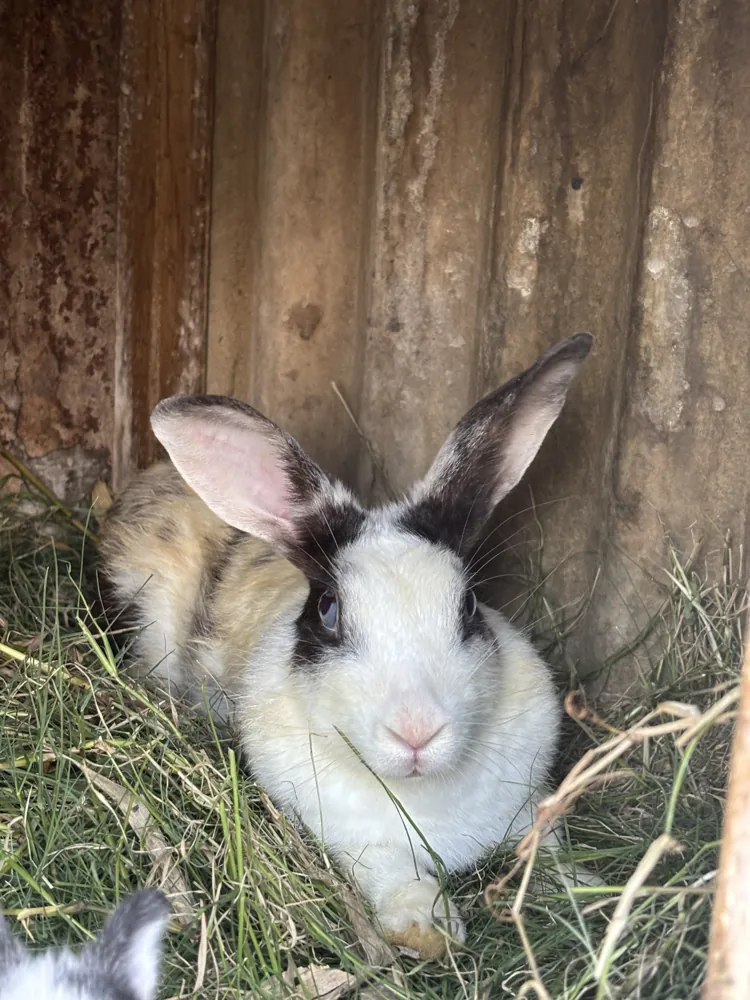
Rabbit hay forms the core of your rabbit’s nutrition and should make up the bulk of what your pet eats every day. Good hay provides the fibre rabbits need to keep their digestive systems working and their teeth worn down to a healthy length.
Why hay is essential
Your rabbit needs hay every day, not just as a snack. The NSW Department of Education says 80–90% of a rabbit’s diet should be fibrous material, grass or hay. RSPCA Australia puts it this way:
Providing a constant supply of grass and/or grass hay is paramount in providing a balanced diet.
RSPCA Australia, What should I feed my rabbits?
Hay helps keep your rabbit’s teeth short, because long periods of chewing wear them down. Rabbits’ teeth never stop growing. Hay also keeps the gut moving.
Types of hay to offer
Not all hay is the same. RSPCA Australia lists timothy, oaten, wheaten, pasture, paddock, meadow and ryegrass hays as good choices. Lucerne (alfalfa) hay is high in calcium. RSPCA Australia says it can be offered freely to young rabbits and pregnant or nursing rabbits, but only as a treat for healthy adults. Varying the type of hay adds some variety to the diet.
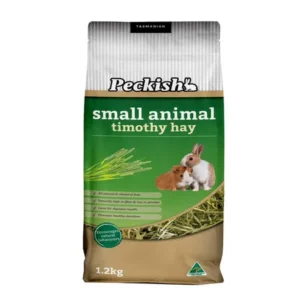
Our Peckish Small Animal Timothy Hay 1.2kg is a grass hay grown in Tasmania. Its product page says it is high fibre, low protein and low calcium, and free from chemicals and perfumes. Avoid hay that smells musty, looks mouldy or is very dusty.
Hay portion and freshness
Your rabbit should have unlimited access to fresh hay throughout the day. RSPCA UK suggests a rabbit-sized bundle of good-quality hay every day, about as big as your rabbit. Replace hay that is wet or dirty, and store hay in a cool, dry place away from direct sunlight to keep it fresh. Agriculture Victoria also suggests a hay tray with good-quality hay, changed daily.
Understanding rabbit pellets and portion control
Rabbit pellets should make up only a small part of your rabbit’s diet, not the main meal. The bulk of their nutrition comes from hay and fresh greens. Getting portions right helps prevent weight gain. This section covers how much pellet food your rabbit needs and which pellets we stock.
Why pellets matter, but should not dominate
Pellets are convenient, but they are not what rabbits eat in the wild. RSPCA Australia says you can offer a small amount of high-quality rabbit pellets, no more than 5% of the diet. It adds that pellets are not essential as long as hay and fresh green vegetables are given every day. Agriculture Victoria says pellets or nuggets should be limited to 1 tablespoon per rabbit per day, and that eating too many may result in obesity.
Still, quality pellets do offer vitamins and minerals. The Animal Welfare League of South Australia says good-quality pellets are important because they help your rabbit get the minerals it needs.
Choosing the right pellet product
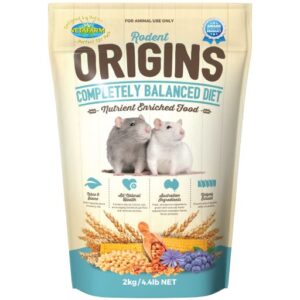
Vetafarm Rabbit Origins is a high-fibre rabbit pellet made with fresh fescue hay grown on Vetafarm’s own Australian farm, says its product page. Wombaroo Clover Pellets are high in fibre and low in starch, and are made to go with a hay and vegetable diet.
When shopping, look for plain, uniform pellets. Avoid muesli-style mixes with coloured bits. Agriculture Victoria says rabbits are selective feeders and tend to pick out the tastier pieces, which leads to an unbalanced diet. RSPCA Australia also says to avoid chaff, pony pellets and grain mixes.
Measuring out the right amount
One tablespoon per day works as a starting point. Agriculture Victoria says rabbits need a tablespoon of rabbit nuggets or pellets once or twice daily. Check the feeding guide on the pack too.
Watch your rabbit’s weight. Agriculture Victoria says a rabbit is at an ideal weight when its ribs can be easily felt, and to adjust feeding so your rabbit does not become over or under weight. If your rabbit gains weight, reduce pellets and keep hay unlimited. If your rabbit looks thin or stops eating, check with a vet first.
Fresh greens and vegetables for rabbits
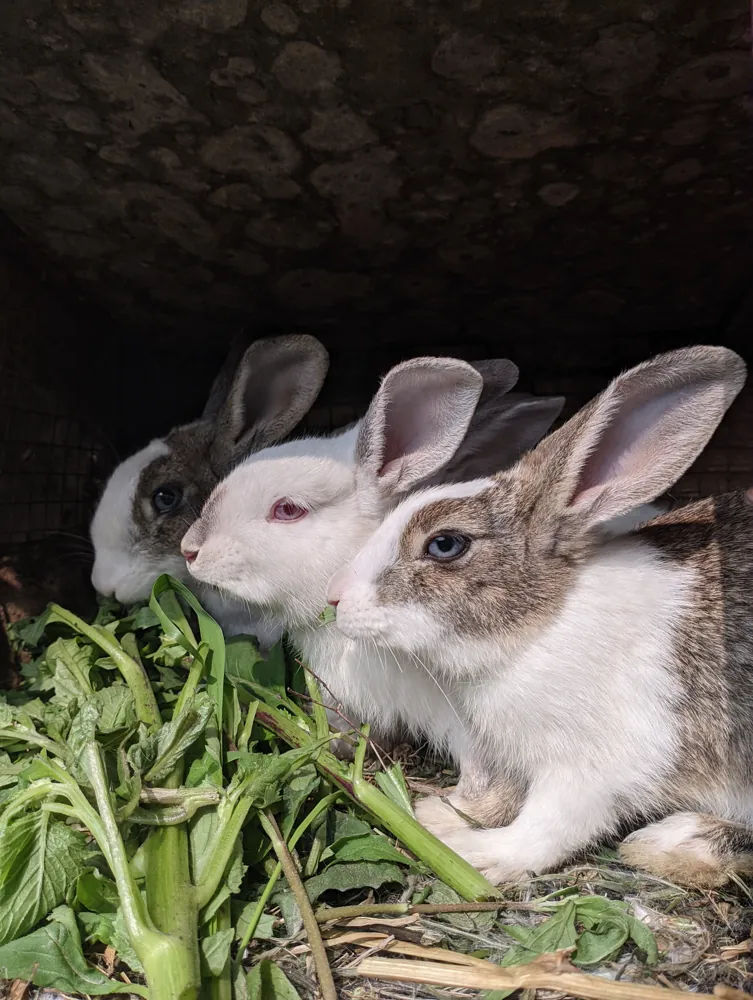
Fresh greens and vegetables are part of your rabbit’s daily diet alongside hay. RSPCA Australia says fresh leafy greens and vegetables can be up to about 15% of the diet, and encourages three to five different types daily, rotating them each day or week. Agriculture Victoria suggests about 2 cups of fresh green vegetables a day.
Best vegetables for rabbits
Your rabbit can safely eat many leafy greens. Rotate them so your rabbit does not get bored. Greens listed by RSPCA Australia and the NSW Department of Education include:
- Kale, bok choy and watercress
- Parsley, basil and mint
- Broccoli and broccolini
- Cabbage and Brussels sprouts
- Celery and capsicum
- Dandelion
Introduce new greens slowly. Your rabbit’s digestive system can be sensitive to sudden changes. Wash all greens well, even if you picked them fresh.
Foods to avoid
Some foods can harm your rabbit. RSPCA Australia lists onion and garlic among poisonous plants, and says not to feed nuts, corn, beans, peas, bread, biscuits, sugar, chocolate, breakfast cereals or lawn clippings. The Animal Welfare League of South Australia adds iceberg lettuce and potato to the list of foods never to feed. Agriculture Victoria says carrots, other root vegetables and fruit should only be fed in small amounts.
Rabbit treats and safe snacking options
Rabbit treats should make up only a small part of your rabbit’s diet, since most of their nutrition comes from hay and greens. Treats work best as training rewards or bonding moments. Think of treats the same way you would think about lollies for yourself: nice in small amounts, but not a meal replacement.
Fresh treats
RSPCA Australia says fruit should only be fed as a treat, if at all, and lists carrots as a treat only. Apple, banana, pear and berries are on its treat list. Offer a small piece, not a bowlful.
Hay-based and packaged treats
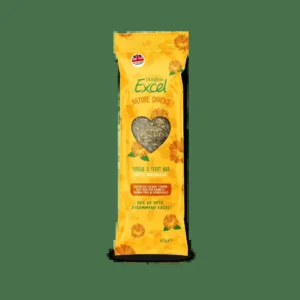
The Burgess Excel Forage & Feast Hay Bar 60g is a treat made from forage and hay. Its product page says you can hand-feed it or crumble it into hay to encourage natural foraging, and to feed it in moderation. Peckish Small Animal Treats Carnival 150g blends dried Australian vegetables with extruded vegetable treats for all small animals. Its product page suggests scattering a few pieces around the enclosure and keeping treats as a small extra on top of a hay-based diet.
Water: always available
Water must always be available. RSPCA Australia says rabbits prefer open dishes over bottles, because lapping from a dish is more natural and encourages them to drink more. Use low, shallow dishes that cannot be tipped over easily. Agriculture Victoria adds that a rabbit may refuse to drink if water is given in a different way to usual, so keep to what your rabbit knows and clean the bowl or bottle regularly.
How much hay does a rabbit need daily?
Your rabbit should have unlimited access to good grass hay, all day and night. Hay is the foundation of healthy rabbit food, making up 80–90% of a rabbit’s diet, according to the NSW Department of Education. RSPCA UK suggests a bundle of hay at least as big as your rabbit every day. The Animal Welfare League of South Australia says the amount depends on the size of your rabbit, so ask your vet for details.
Our Peckish timothy hay comes in a 1.2kg bag. Keep it sealed and dry between feeds.
Common mistakes in rabbit nutrition
Many rabbit owners feed diets that fall short of what rabbits need. These are the most common mistakes, according to the guides cited here:
- Not giving enough hay. Hay should be most of the diet, not a side dish.
- Feeding too many pellets. Agriculture Victoria says about 1 tablespoon per rabbit per day.
- Feeding muesli-style mixes. Rabbits pick out the tasty pieces and leave the rest.
- Feeding lawn clippings. Agriculture Victoria says they ferment rapidly and upset digestion.
- Giving too much fruit or carrot. These are treats only.
- Changing foods suddenly. The NSW Department of Education says to introduce new foods slowly and carefully.
Rabbit food we stock: quick comparison
The table below compares the rabbit foods and treats we stock. Each product page has the full details, so check the pack for feeding amounts.
| Product | Type | Pack | Best for |
|---|---|---|---|
| Peckish Small Animal Timothy Hay | Grass hay, grown in Tasmania | 1.2kg | Daily hay, the main part of the diet |
| Vetafarm Rabbit Origins | High-fibre pellets with fescue hay | See product page | A small daily portion of pellets |
| Wombaroo Clover Pellets | High-fibre, low-starch pellets | See product page | Adding to a hay and vegetable diet |
| Burgess Excel Forage & Feast Hay Bar | Hay and forage treat | 60g | Hand-feeding or mixing into hay |
| Peckish Small Animal Treats Carnival | Dried vegetable treat mix | 150g | Scattering for foraging, in small amounts |
You can see every hay, pellet and treat in our rabbit and small animal food range. For hutch bedding we stock Peckish natural wood shavings and Back-2-Nature recycled paper bedding. Our pet supplies checklist lists the basics to have ready, and our monthly pet box delivers pet supplies each month.
Specific questions about rabbit food
Rabbit owners often ask the same questions about feeding. The answers below follow the RSPCA, Agriculture Victoria, NSW Department of Education and Animal Welfare League advice cited in this guide.
What should rabbits eat every day?
Rabbits should have unlimited grass hay, fresh leafy greens, a small amount of pellets and fresh water every day. RSPCA Australia says about 80% of the diet should be fresh grass and grass hay, up to about 15% greens and vegetables, and no more than 5% pellets.
How much hay does a rabbit need?
Give your rabbit unlimited hay so it can graze all day and night. RSPCA UK suggests a bundle of good-quality hay at least as big as your rabbit every day. The NSW Department of Education says 80–90% of the diet should be grass or hay.
How many pellets should I feed my rabbit?
Agriculture Victoria says pellets or nuggets should be limited to about 1 tablespoon per rabbit per day. RSPCA Australia says pellets should be no more than 5% of the diet and are not essential if hay and greens are given every day.
Is timothy hay good for rabbits?
Yes. RSPCA Australia lists timothy hay with oaten, wheaten, pasture, paddock, meadow and ryegrass hays as good grass hays for rabbits. Lucerne hay is high in calcium, so it should only be a treat for healthy adult rabbits.
Can rabbits eat carrots and fruit?
Only as a treat. RSPCA Australia lists carrots as a treat only and says fruit should only be fed as a treat, if at all. Agriculture Victoria says carrots, other root vegetables and fruit should only be fed in small amounts.
What foods should I never feed my rabbit?
RSPCA Australia says not to feed muesli-style grain mixes, nuts, corn, beans, peas, bread, biscuits, sugar, chocolate, breakfast cereals or lawn clippings. Onion and garlic are on its list of poisonous plants, and AWL also lists iceberg lettuce and potato.
Should my rabbit drink from a bowl or a bottle?
RSPCA Australia says rabbits prefer open dishes, as lapping from a dish is more natural and encourages them to drink more. Use a low, shallow dish that cannot tip over. If your rabbit is used to a bottle, change slowly, as a rabbit may refuse water given in a new way.
References
The advice in this guide comes from the animal welfare and government sources below. Product details come from each product page on our site. Ask your vet if your rabbit has special needs.
- RSPCA Australia, What should I feed my rabbits?
- Agriculture Victoria, Guidelines for keeping pet rabbits
- Agriculture Victoria, Owning a rabbit
- NSW Department of Education, Rabbits – food and water
- Animal Welfare League of South Australia, What should I feed my rabbit?
- RSPCA UK, What do rabbits eat?

During veterinary school, he contributed to projects involving species such as hammerhead sharks, Shark Bay mice, woylies, mulgara, and kangaroos, gaining valuable hands-on experience in wildlife health and preservation.
1 comment