

Slow Feeder Dog Bowl Guide: Types, Tips and How to Choose

Get our free Pet Care Starter Checklist
A printable checklist for dogs and cats, plus practical care tips and new arrivals by email.
No spam. Unsubscribe anytime. | Or see our monthly pet box →
A slow feeder dog bowl has ridges, a maze, pillars or pockets inside, so your dog has to eat around them. It turns a fast gulp into a slower meal. This guide shows the signs your dog eats too fast, the main types of slow feeder, how to pick one, and the six we stock.
Key Takeaways
A slow feeder makes your dog work for each mouthful, so the meal takes longer. Pick the type by food: a maze or ridge bowl for kibble, a lick plate for wet or raw food, and a wobble feeder for a dog that likes a game. Start easy, wash it after each meal, and supervise.
- Signs your dog eats too fast: the bowl is empty in seconds, your dog gulps, or coughs or brings food back up just after eating.
- Maze and ridge bowls suit dry food. Lick plates suit wet, raw or soft food. Wobble feeders turn kibble into a game.
- Flat-faced dogs may do better with a shallow pattern, so their face can reach the food.
- Start with an easy pattern so your dog does not give up, then try a harder one later.
- Wash the feeder after each meal, check it for cracks or chew marks, and do not leave a dog alone to chew a plastic feeder.
- A slow feeder is not a treatment. If your dog often vomits, has a swollen belly or retches without bringing anything up, see a vet straight away.
What Is a Slow Feeder Dog Bowl?
A slow feeder dog bowl is a food bowl with shapes inside it. The shapes break the food into small spaces, so your dog has to lick, nudge or work around them. That means smaller mouthfuls and a longer meal. Some are bowls, some are flat plates, and some are puzzle feeders your dog moves.
RSPCA Australia says slow feeders may be useful for dogs that eat their food very quickly, because they encourage a slower pace. A slow feeder does not change how much your dog eats. Keep feeding the right amount for your dog's size, age and activity, and ask your vet if you are not sure.
Signs Your Dog Eats Too Fast
Most owners can tell a fast eater by watching one meal. If the bowl is empty within moments, your dog barely chews, or they cough, gag or bring food back up soon after eating, a slow feeder is worth a try. Some fast eaters also push the bowl around or guard it from other pets.
- The bowl is empty in seconds, not minutes.
- Your dog swallows kibble whole instead of chewing.
- Coughing, gagging or bringing up food just after a meal.
- Your dog looks for more food straight away.
- Eating fast when other pets are near the bowl.
If bringing food back up happens often, or your dog seems unwell, book a vet check first. A bowl can help with pace, but it cannot find or treat a health problem.
Slow Feeders and Bloat: What We Know
Bloat, also called gastric dilatation-volvulus or GDV, is when the stomach fills with gas and can twist. It is an emergency. RSPCA Australia says dogs at higher risk include large or deep-chested breeds and dogs that gulp their food, and that these dogs should be fed at least twice a day.
The RSPCA also says dogs should not be exercised just before or after eating, and names Boxers and German Shepherds as examples of deep-chested breeds. A Veterinary Evidence review found the research on eating speed and bloat is mixed: most studies found no clear link, but no study found that eating slowly raised the risk.
Slow feeders may also be useful for dogs who tend to eat their food very quickly by encouraging them to eat at a slower pace.
RSPCA Australia, What should I feed my dog?
Slowing the rate at which a dog consumes a meal will not increase risk of GDV but it may possibly reduce the risk.
Louise Anne Buckley, Harper Adams University, writing in Veterinary Evidence
The Cornell University College of Veterinary Medicine lists eating too quickly, feeding once a day, exercise soon after eating and using a raised food bowl among the risk factors for GDV, and advises avoiding raised food bowls for at-risk dogs. In a study of 1,637 large and giant breed dogs published in the Journal of the American Veterinary Medical Association, 6% developed GDV during the study, and a faster speed of eating was one of the factors linked to higher risk.
So a slow feeder is a sensible way to slow a fast eater, but it is not proof against bloat. Signs of bloat include a swollen or tight belly, retching without bringing anything up, drooling and restlessness. If you see these, go to a vet or emergency vet straight away.
Types of Slow Feeder Bowl
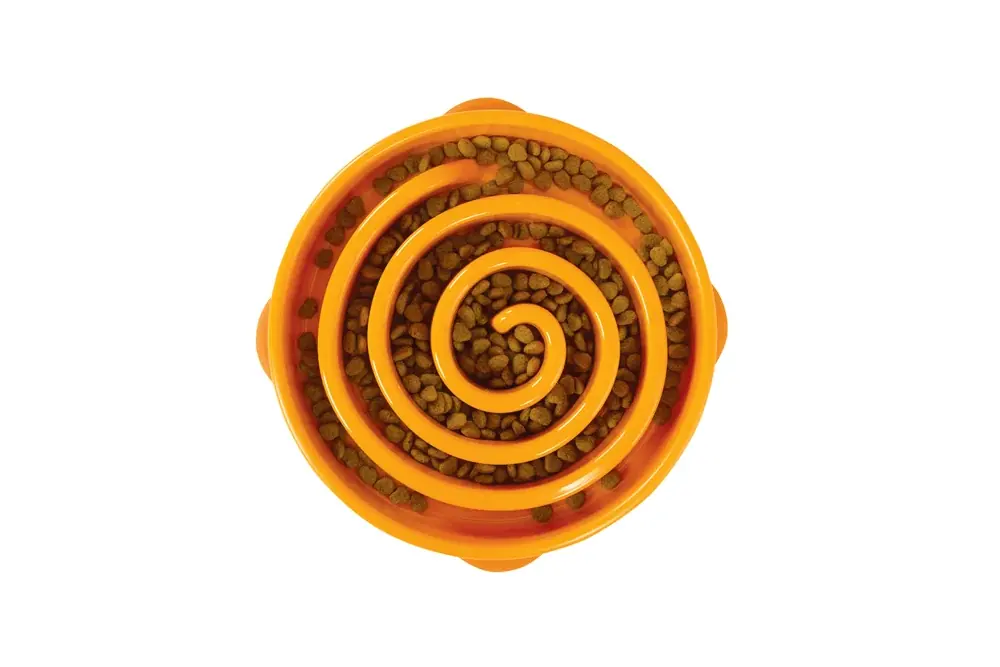
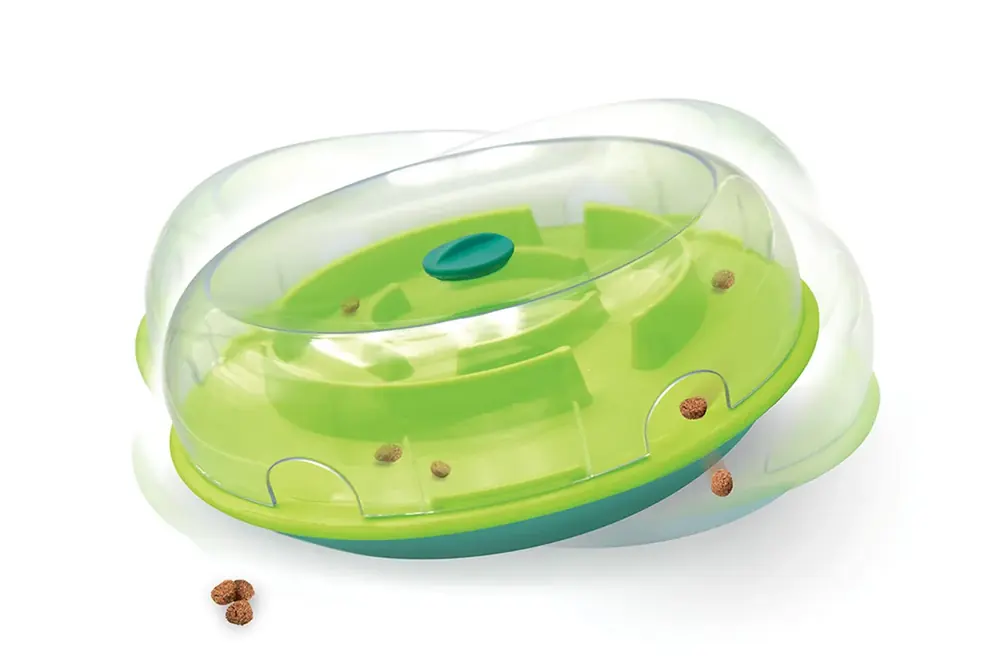
There are four main types of slow feeder. Maze and ridge bowls have raised walls for dry food. Pillar bowls have a few posts in the middle. Lick plates have small pockets for wet, raw or soft food. Wobble and puzzle feeders hold kibble inside and let it out as your dog plays.
| Type | How it slows eating | Best food | Good to know |
|---|---|---|---|
| Maze or ridge bowl | Raised walls split food into narrow paths | Dry kibble | Deep or tight patterns can be hard for flat-faced dogs |
| Pillar bowl | Posts in the bowl break up the food | Kibble or mixed meals | A simple first step for many dogs |
| Lick plate | Small pockets make your dog lick food out | Wet, raw, soft or spreadable food | Flat and open, so the food is easy to see |
| Wobble or puzzle feeder | Your dog rocks or moves it to release kibble | Dry kibble or treats | Needs room to move and close supervision |

How to Choose a Slow Feeder Dog Bowl
To choose a slow feeder, think about four things: the food you feed, your dog's size, the shape of their face, and how easy the bowl is to clean. Match the type to the food first. Then choose a size where the meal fits with room to spare, and a pattern your dog can reach.
- Food type: kibble works in maze, ridge, pillar and wobble feeders. Wet, raw or soft food works best on a lick plate or textured bowl.
- Dog size: check the size on the listing and make sure the full meal fits without piling over the top.
- Face shape: flat-faced dogs, like Pugs and French Bulldogs, may find deep mazes hard. Try a shallow pattern or a lick plate.
- Skill level: start with an easy pattern. A dog that gets frustrated may give up or tip the bowl.
- Cleaning: look for smooth shapes you can reach with a brush, and check the listing for dishwasher advice.
- Grip: a non-slip base helps stop the bowl sliding across the floor.
The Slow Feeder Dog Bowls We Stock
We stock six slow feeders for different dogs and foods. The table below uses only the facts on each product listing. Click through to check sizes and colours before you buy. If you are not sure which suits your dog, start with a simple maze or lick plate and watch the first few meals.
| Slow feeder | Type | Listing facts | Suits |
|---|---|---|---|
| Outward Hound Fun Feeder Slo Bowl (Regular) and Mini | Maze and ridge bowl | Ridges and maze patterns, non-slip base, free from BPA, PVC and phthalates, orange, purple or teal | Dogs that gulp dry food |
| Barkley & Bella Slow Chow Feeder Grey | Maze and ridge bowl | Ridged maze inside, non-skid base, break-resistant polypropylene, free from BPA, PVC and phthalates | Dry food fast eaters |
| Scream Round Slow Down Pillar Bowl | Pillar bowl | Moulded pillar obstacles, sizes 200ml, 400ml and 750ml | A simple first slow feeder |
| LickiMat SloDog Slow Feeder Plate | Lick plate | Deeper pockets, non-slip rubber feet, food-safe polypropylene, dry, wet, raw or liquid food, dishwasher safe | Wet, raw or mixed meals |
| LickiMat Dog OH Bowl | Textured bowl | Raised textured pattern, small, medium or large | Wet food or spreads |
| Outward Hound Nina Ottosson Dog Wobble Bowl (Level 1) | Wobble puzzle feeder | Dog rocks the bowl to release food, removable lid plug, non-slip base | Dogs that like a game |
Outward Hound Fun Feeder Slo Bowl
The Outward Hound Fun Feeder Slo Bowl (Regular) has ridges and maze patterns that make your dog forage through the food. It has a non-slip base and is made free from BPA, PVC and phthalates. It comes in orange, purple or teal. For small dogs, see the Outward Hound Fun Feeder Slow Bowl (Mini).
Barkley & Bella Slow Chow Feeder Grey
The Barkley & Bella Slow Chow Feeder Grey has a ridged maze inside that guides your dog to eat at a slower pace. It is made from break-resistant polypropylene, is free from BPA, PVC and phthalates, and has a non-skid base to keep it steady. It is a plain, simple choice for a dog that gulps dry food.
Scream Round Slow Down Pillar Bowl
The Scream Round Slow Down Pillar Bowl has moulded pillars in the bowl, so your dog has to eat around them. It is a simple design, which makes it a good first slow feeder for many dogs. It comes in three sizes: 200ml, 400ml and 750ml. Pick the size that holds your dog's full meal.
LickiMat SloDog Slow Feeder Plate
The LickiMat SloDog Slow Feeder Plate has deeper pockets that make your dog lick food out bit by bit. The listing says it works with dry, wet, canned, raw and liquid food, has non-slip rubber feet, and is dishwasher safe. It also comes in turquoise. It suits dogs on wet or raw meals.
LickiMat Dog OH Bowl
The LickiMat Dog OH Bowl has a raised textured pattern that slows your dog down while they eat. It comes in small, medium and large. The listing suggests using it with spreadable treats or wet food. It is a good pick if your dog already enjoys a lick mat and you want a bowl shape instead.
Outward Hound Nina Ottosson Dog Wobble Bowl
The Outward Hound Nina Ottosson Dog Wobble Bowl (Level 1) is a beginner puzzle feeder. You fill it with kibble or treats through the removable lid plug, and your dog rocks and wobbles it to get the food out. It has a non-slip base. It suits a dog that likes a game, but it needs space and supervision.
How to Start Using a Slow Feeder
Most dogs learn a new slow feeder quickly if you make the first meals easy. Put a few pieces of food on top so your dog gets an early win. Stay close and watch. If your dog gets upset, paws hard at the bowl or walks away, switch to an easier pattern for a while.
- Start with part of a meal in the new bowl, and the rest in their usual bowl.
- Use the usual amount of food. The bowl changes the pace, not the portion.
- Watch the first few meals and stay nearby.
- Move to the full meal once your dog eats calmly from it.
- Feed each pet in its own spot, so no one feels rushed.
Lick plates also work for treats and calm time. Our dog lick mat guide covers how to use them. For food ideas, see our dry dog food guide and puppy food guide.
Cleaning and Safety Tips
A slow feeder has more corners than a plain bowl, so food can get stuck. Wash it after every meal with warm soapy water and a small brush, then rinse and dry it. Check it often for cracks, rough edges or chew marks. Replace it if pieces start to break off, and never leave a dog alone to chew it.
- Wash after each meal, and check each listing for dishwasher advice.
- Use a bottle brush or old toothbrush for tight paths.
- Replace any feeder that is cracked or chewed.
- Pick the feeder up after meals if your dog likes to chew it.
- Always have fresh water out, in a separate bowl.
Specific Questions About Slow Feeder Dog Bowls
Do slow feeder dog bowls work?
Yes, for many dogs a slow feeder makes each meal take longer, because the dog has to eat around ridges or lick food from pockets. RSPCA Australia says slow feeders may be useful for dogs that eat very quickly. Results vary by dog, so watch the first few meals and adjust the pattern if needed.
Can a slow feeder stop bloat?
No bowl can promise to stop bloat. A Veterinary Evidence review found the research on eating speed and bloat is mixed, though no study found slow eating raised the risk. For at-risk dogs, RSPCA Australia advises at least two meals a day and no exercise just before or after eating. Bloat is an emergency, so see a vet straight away.
Are slow feeders good for puppies?
Many puppies can use a slow feeder, but start with an easy, shallow pattern so they do not get frustrated. Puppies chew a lot, so supervise meals and pick up plastic feeders afterwards. Keep feeding the amount and number of meals your puppy food or your vet suggests, and check the feeder for chew marks.
Which slow feeder is best for wet or raw food?
For wet, raw or soft food, a lick plate or textured bowl usually works better than a deep maze. The LickiMat SloDog Slow Feeder Plate is made for dry, wet, raw and liquid food, and the LickiMat Dog OH Bowl suits wet food and spreads. Maze bowls are easier to clean when you feed dry kibble.
What if my flat-faced dog struggles with a slow feeder?
Flat-faced dogs, like Pugs, French Bulldogs and Bulldogs, can find deep mazes hard to reach into. Try a shallow pattern, a pillar bowl or a flat lick plate instead. Watch that your dog can eat without pushing their face hard into the bowl. If eating looks hard or stressful, ask your vet for advice.
Get Slow Feeders and More Delivered
You can browse all our slow feeders and other feeding gear in our dog products range. If you would like a box of food, toys and treats each month, packed for your dog's size, see our monthly pet subscription box. You can change, skip or cancel any time, so it fits around your dog.
References
These references are the official and expert sources used in this slow feeder dog bowl guide. They are not product listings. For facts about the six slow feeders we stock, use the product pages linked above. This guide is general information, so ask your vet about your own dog's health and feeding.
- RSPCA Australia, What should I feed my dog? (slow feeders, feeding twice a day for dogs at higher risk of bloat, no exercise around meals)
- Buckley L. A., Are dogs that eat quickly more likely to develop a gastric dilatation (+/- volvulus) than dogs that eat slowly? Veterinary Evidence (also on IVIS)
- Cornell University College of Veterinary Medicine, Gastric dilatation volvulus (GDV) or bloat.
- Glickman L. T. and others, Non-dietary risk factors for gastric dilatation-volvulus in large and giant breed dogs, Journal of the American Veterinary Medical Association (PubMed)

During veterinary school, he contributed to projects involving species such as hammerhead sharks, Shark Bay mice, woylies, mulgara, and kangaroos, gaining valuable hands-on experience in wildlife health and preservation.
Popular right now
-
 YumGuard - PasteRica Tasty Treat For Pets - Ocean Fish Paste - 45g$12.95
-
Tetra - Whisper Aquarium Air Pump Price range: $30.95 through $51.95
-
Tetra - TetraMin Flakes Price range: $15.95 through $57.95
-
Tetra - Pleco Tablets - 36g$25.95
1 comment