
Dog Toys Guide: Types, Safe Sizes and How to Choose
Get our free Pet Care Starter Checklist
A printable checklist for dogs and cats, plus practical care tips and new arrivals by email.
No spam. Unsubscribe anytime. | Or see our monthly pet box →
The best dog toys match how your dog likes to play. Fetch toys suit dogs who love to chase. Tug toys suit dogs who like to pull. Puzzle toys give a busy brain a job. Soft toys suit gentle dogs who like to carry and cuddle. This guide explains each type, how to pick a safe size, how to keep toys safe, and the dog toys we stock.
Key takeaways
- Match the toy to the play style. RSPCA Australia says some dogs like toys they can chew and throw around, others like soft toys to snuggle, and many like a mix.
- Safety is up to you. RSPCA Australia says there are currently no mandatory safety standards for pet toys in Australia, so check toys often and supervise play.
- Size matters. The RSPCA Knowledgebase says a toy should be a size that stops choking or accidental swallowing.
- Rotate toys. RSPCA Australia says some dogs get bored with the same toys day in, day out, so swap a few in and out.
- No toy is indestructible. Remove any toy that is torn, cracked or missing pieces.
Quick comparison: types of dog toys
There are six main types of dog toys. Each one suits a different kind of play. Use this table to find the right type for your dog, then read the matching section below for tips and examples we stock. Many dogs enjoy two or three types, so a small mix is a good start.
| Toy type | Best for | Examples we stock | Watch out for |
|---|---|---|---|
| Fetch toys | Dogs who love to chase and run | Chuckit! Ultra Ring, Chuckit! Max Glow Ball, GiGwi Original Ball | Balls that are too small for your dog |
| Water toys | Beach, river and pool play | Chuckit! Amphibious Zipflight, GiGwi G-Foamer Ball | Strong currents and deep water |
| Tug toys | Play with you and training rewards | Coachi Tuggi Hide, Pet Toy Rope Large Pull | Loose threads from rope toys |
| Puzzle and treat toys | Busy brains and fast eaters | GiGwi Treat Dispensing Bulb, Starmark Treat Dispensing Bob-A-Lot, LickiMat Buddy | Too many extra treats |
| Soft and plush toys | Gentle dogs who like to carry | Hugsmart Food Party Pizza, GiGwi Crazy Ball | Squeakers and stuffing coming out |
| Puppy toys | Teething puppies | GiGwi Suppa Puppa, Benebone Bacon Puppy Wishbone | Toys meant for adult jaws |
What are the main types of dog toys?
Dog toys fall into a few main groups: fetch, water, tug, puzzle, soft and puppy toys. RSPCA Australia says a toy’s purpose can range from an interactive puzzle toy or a chew toy to a toy filled with treats or one made for throw and retrieve play. Think about what your dog already loves to do, then pick a toy that lets them do more of it.
Fetch toys
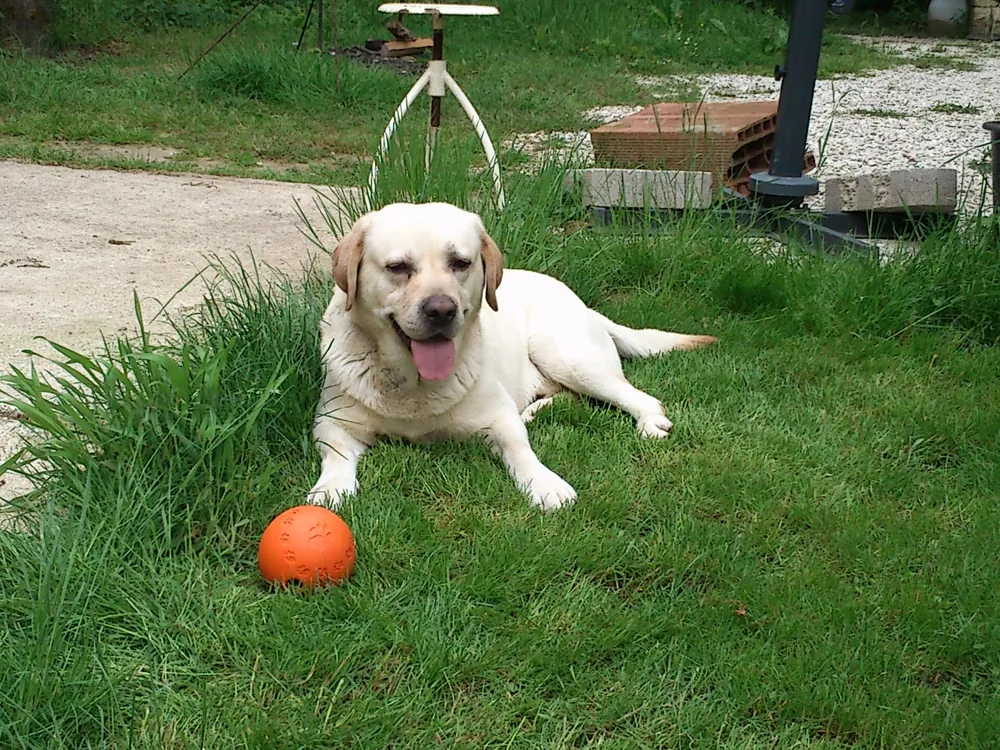
Fetch toys are balls, rings and other throw toys for dogs who love to chase. Fetch is a simple way to add running and play to a walk. The Chuckit! Ultra Ring is a ring that its product page says has an erratic bounce and zig-zag action, and works with the Chuckit! RingChaser launcher.
For early morning or evening play, the Chuckit! Max Glow Ball glows in the dark. Its product page says it charges in minutes under light, glows for up to 30 minutes, needs no batteries and comes in small, medium and large sizes. The GiGwi Original Ball is a 7cm TPR ball with a squeaker inside, and its product page says it floats.
Water toys
Water toys float so your dog can swim out and bring them back. Bright colours help you spot them on the water. Always choose calm, safe water and stay close by.
The Chuckit! Amphibious Zipflight is a soft, floating flying toy for long throws, and its product page says to rinse it after use in water. The GiGwi G-Foamer Ball is a 6.5cm high-visibility orange foam ball that its product page says floats and is easy to grip.
Tug toys
Tug toys are for games you play together. They are great as a training reward for dogs who love play more than food, and they build a bond between you and your dog.
The Coachi Tuggi Hide has a bungee cord, a soft neoprene handle and a hidden pocket for treats or a squeaker, says its product page. The Pet Toy Rope Large Pull is 57cm long. Its product page rates it chewability level 5 for aggressive chewers, and adds that no pet toy is indestructible.
Keep tug games calm and fun. Stop if your dog gets too excited, and use reward-based training to teach a “drop it” cue. The RSPCA Knowledgebase says to supervise dogs with rope or string toys, because dogs may chew, shred or swallow them.
Puzzle and treat toys
Puzzle toys hold food or treats, so your dog has to work it out. The RSPCA Knowledgebase says dogs are less likely to get bored with activities that involve chewing or feeding, such as puzzle feeders or toys filled with food. It also warns that relying too much on food toys can lead to weight gain, so use part of your dog’s daily food rather than extra treats.
The Starmark Treat Dispensing Bob-A-Lot has two chambers and openings you can twist to make it easier or harder. Its product page says it has a weighted base and is dishwasher safe. The GiGwi Treat Dispensing Bulb is natural rubber with flaps inside that slow down treats, and comes in small, medium and large. Its product page says to use dog-safe peanut butter with no xylitol if you smear it. For licking, the LickiMat Buddy is a 20 x 20cm mat. See our dog lick mat guide for spread ideas.
Soft and plush toys
Soft toys suit dogs who like to carry, cuddle and gently squeak. They are not for strong chewers. The Hugsmart Food Party Pizza is a plush toy with a squeaker and a hidden snack pocket, says its product page. The GiGwi Crazy Ball mixes a rubber core with a plush outside and a squeaker inside. Check the seams often, and take the toy away if stuffing or a squeaker starts to come out.
Chew toys for strong chewers
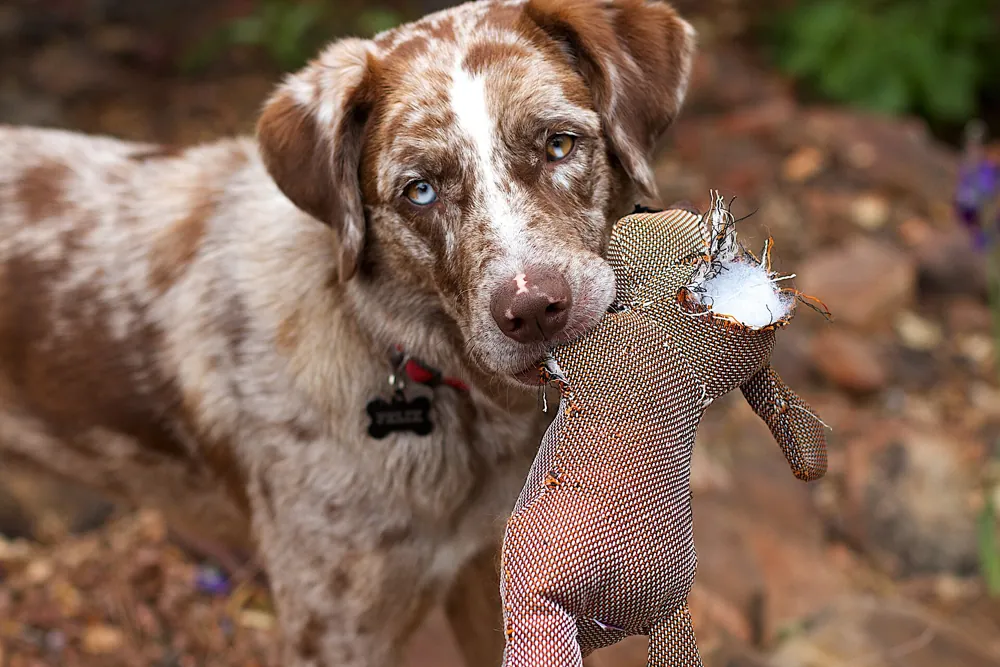
Some dogs destroy toys fast. For these dogs, choose tough rubber or reinforced canvas toys and still watch closely. The GiGwi Duraspikes Rabbit has a cotton canvas shell, reinforced seams and rubber spikes, says its product page. For a full list of tips, read our guide to dog toys for heavy chewers. For chews made to be eaten, see our dog dental chews guide.
Puppy toys
Puppies chew a lot while their teeth come through. The RSPCA Knowledgebase says chewing is normal and that puppies should have safe objects to chew, such as a toy filled with food, with supervision. Pick toys made for puppies, because toys made for adult jaws can be too hard.
The GiGwi Suppa Puppa is a small, light plush toy with a TPR chew end. The Benebone Bacon Puppy Wishbone is made from nylon with real bacon, and its product page says it is made for puppies under 15 lbs (about 7kg). The RSPCA Knowledgebase also suggests rotating your puppy’s toys every day so they don’t get bored. To help your puppy settle, see our crate training guide.
How to choose the right size dog toy
Choose a toy that is too big to swallow but easy for your dog to carry. A good rule is that a ball should be bigger than your dog’s mouth can close around fully. Check the size on the product page and compare it with your dog’s mouth. Here is a quick guide:
- Small dogs and puppies: pick small, light toys they can carry with ease.
- Medium dogs: pick standard balls and toys, and size up if your dog is a strong chewer.
- Large and giant dogs: pick large balls and big tug toys. Small balls can be a choking risk.
- Two dogs or more: buy toys sized for the largest dog in the house.
The RSPCA Knowledgebase says a toy’s size should suit the pet to prevent choking or accidental swallowing, and that it should suit the dog’s age, health and play style.
How do you keep dog toys safe?
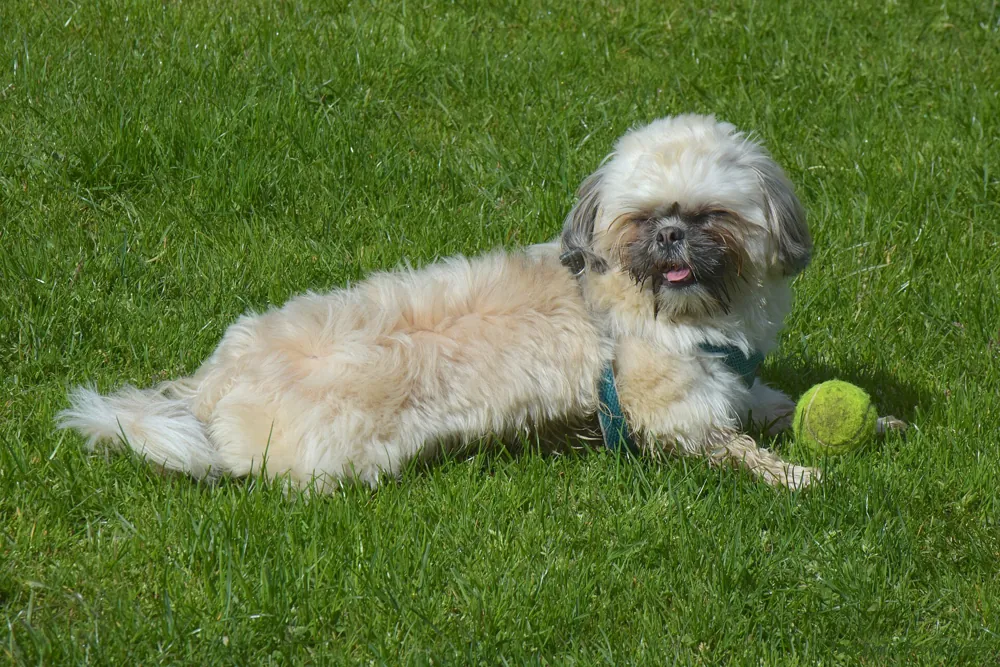
Check toys before each play session and remove anything damaged. RSPCA Australia says to avoid toys that tear apart easily, have squeakers that are easily removed, or have feathers and string that come away. The RSPCA Knowledgebase lists these simple checks:
- Materials are safe and durable, and unlikely to cause injury if chewed.
- The size suits your dog, to prevent choking or swallowing.
- There are no sharp edges, loose parts or bits that could break off.
- The toy suits your dog’s age, health and play style.
- You supervise play, especially with new toys, soft toys, rope toys and chew toys.
- You inspect, clean and disinfect toys regularly.
Why toy size and supervision matter
Swallowed toys are a real risk, which is why size and supervision matter so much. A study of 100 dogs published in Veterinarski Arhiv found that toys, such as balls and stuffed toys, were the most common objects found in the stomach. They made up 31% of stomach cases (16 of 52 dogs). In 23% of those dogs, more than one type of object was found.
A second study of 72 dogs in the journal Animals found balls in 8% of cases, socks in 8%, cloth in 13% and children’s toys in 14%. In that study, 56% of objects were removed with an endoscope and 44% of dogs needed surgery. Keep children’s toys, socks and small balls out of reach, and give your dog toys sized for dogs.
It may surprise you to know there are currently no mandatory safety standards for pet toys in Australia.
RSPCA Australia, Making playtime a good time for you and your pet
If your dog swallows part of a toy, or chews so much that they hurt themselves, the RSPCA Knowledgebase says to seek veterinary advice.
How many toys does a dog need?
Most dogs do well with a small mix of four to six toys, with a few out at a time. Swap them every few days to keep things fresh. RSPCA Australia suggests hiding some toys for a while and bringing them back when the others get boring. Some owners keep a toy box so their dog can choose.
Research backs this up. In a study by researchers from the University of Giessen in Germany and the University of Lincoln in the UK, published in Animal Cognition, 17 dogs were shown a new toy next to two familiar toys. They picked the new toy first in 38 out of 50 tests, which is 76% of the time. A second study of 16 Labrador retrievers, also in Animal Cognition, gave dogs the same toy in 30-second turns until they stopped playing. Their interest came back as soon as they were given a different toy.
In that second study, waiting anywhere from 10 seconds to 15 minutes before offering the new toy made no difference. So a swap works better than a long break with the same toy. That is why rotating a few toys keeps play fresh without buying new ones all the time.
| Finding | Number | Source |
|---|---|---|
| Dogs tested with a new toy beside two familiar toys | 17 dogs | Kaulfuss and Mills, Animal Cognition |
| Tests where the new toy was picked first | 38 of 50 (76%) | Kaulfuss and Mills, Animal Cognition |
| Labrador retrievers in the toy boredom study | 16 dogs | Pullen, Merrill and Bradshaw, Animal Cognition |
| Length of each play turn with the same toy | 30 seconds | Pullen, Merrill and Bradshaw, Animal Cognition |
| Longest time Agriculture Victoria says a dog should be left alone each day | 4 hours | Agriculture Victoria, Caring for dogs |
In Victoria, Agriculture Victoria says dog owners should keep their dog’s environment enriched with toys or activities, as part of their duty to care for their pet’s welfare.
Toys don’t replace time with you. RSPCA Australia says toys should not be used as a substitute for quality, interactive play time, so set aside time to play with your dog every day.
Dog toys for when you are out
Puzzle toys can help when your dog has to spend time alone. Agriculture Victoria says dogs shouldn’t be left alone for more than 4 hours per day. If they must be left for long periods, it says to give them chances for mental stimulation, such as toys, puzzles and food treats. Only leave toys that are safe without supervision, and take away anything your dog could chew apart.
Agriculture Victoria also lists toys, puzzles and play as ways to boost mental stimulation and reduce boredom in dogs who bark. For more ideas, see our boredom buster tips.
Enrichment is essential for the physical and mental health of all dogs.
RSPCA Knowledgebase, Why is enrichment important for dogs?
Specific questions about dog toys
Dog owners ask lots of questions about toys, from size and safety to how many to buy. The short answers below follow the RSPCA and Agriculture Victoria advice cited in this guide, plus the details on each product page. If your dog has a health or behaviour problem, talk to your vet.
What are the best dog toys?
The best dog toys suit your dog’s play style and size. Fetch toys suit chasers, tug toys suit dogs who love to pull, puzzle toys suit busy brains, and soft toys suit gentle dogs. RSPCA Australia says many dogs like a selection of each, so a small mix is a good start.
Are dog toys safe?
Most are safe when they are the right size and you supervise play. RSPCA Australia says there are no mandatory safety standards for pet toys in Australia, so check toys often. Throw out any toy that is torn, cracked or missing pieces.
What size toy should I get for my dog?
Get a toy that is too big to swallow but easy to carry. The RSPCA Knowledgebase says the size should suit your dog to prevent choking or accidental swallowing. For large dogs, avoid small balls.
How often should I replace dog toys?
Replace a toy as soon as it is damaged. RSPCA Australia says to discard toys with holes or pieces tearing off. Check toys before each play session, and wash soft and rope toys regularly.
What toys are good for puppies?
Choose soft, puppy-sized chew toys and simple puzzle toys. The RSPCA Knowledgebase says puppies should have safe objects to chew, such as a toy filled with food, with supervision. Rotate toys daily so your puppy stays interested.
Can I leave toys with my dog when I go out?
Only leave toys your dog can’t chew apart or swallow. Agriculture Victoria says dogs left alone for long periods need mental stimulation such as toys, puzzles and food treats. Soft toys and rope toys are best kept for supervised play.
Why does my dog lose interest in toys?
Many dogs get bored with the same toys. RSPCA Australia says to rotate toys, hiding some for a while and bringing them back later. Playing together also makes a toy more exciting.
Shop dog toys
You can browse every fetch, tug, plush and puzzle toy in our dog toys range. Our pet supplies checklist lists the basics for a new dog, including a few toys. Our monthly pet box delivers a mix of pet goodies to your door each month, which is an easy way to keep toys fresh and rotated.
References
The advice in this guide comes from the RSPCA, Agriculture Victoria and peer-reviewed research sources below. Product details, sizes and care notes come from each product page on our site. Always follow the instructions that come with your toy.
- RSPCA Australia, Making playtime a good time for you and your pet
- RSPCA Knowledgebase, How can I create low-cost DIY enrichment for my cat or dog?
- RSPCA Knowledgebase, Why is enrichment important for dogs?
- RSPCA Knowledgebase, My puppy is chewing everything, what should I do?
- RSPCA Knowledgebase, How can I socialise my puppy?
- Agriculture Victoria, Legal requirements overview for dog owners
- Agriculture Victoria, Caring for dogs
- Agriculture Victoria, Barking dogs
- Endoscopic removal of esophageal and gastric foreign bodies in dogs, Veterinarski Arhiv
- Endoscopic and surgical removal of gastrointestinal foreign bodies in dogs: an analysis of 72 cases, Animals (MDPI)
- Kaulfuss P, Mills DS, Neophilia in domestic dogs, Animal Cognition (PubMed)
- Pullen AJ, Merrill RJN, Bradshaw JWS, Habituation and dishabituation during object play in kennel-housed dogs, Animal Cognition (PubMed)

During veterinary school, he contributed to projects involving species such as hammerhead sharks, Shark Bay mice, woylies, mulgara, and kangaroos, gaining valuable hands-on experience in wildlife health and preservation.
2 comments