

Crate Training a Puppy: Step-by-Step Guide for Day and Night
Get our free Pet Care Starter Checklist
A printable checklist for dogs and cats, plus practical care tips and new arrivals by email.
No spam. Unsubscribe anytime. | Or see our monthly pet box →
Crate training puppy basics are simple. Crate training a puppy means teaching your puppy that their crate is a safe, cosy place to rest. Done slowly and kindly, it can help with sleep, travel and quiet time. This step-by-step guide covers how to set up the crate, how to crate train a puppy during the day and at night, and the mistakes to avoid.
Key takeaways
- Crate training a puppy should go at your puppy’s pace, with lots of rewards.
- Never use the crate as a punishment, say the RSPCA, PDSA and Blue Cross.
- Add soft bedding, water and a safe chew, and put the crate in a quiet, draught-free spot.
- Close the door for a few seconds at first, then slowly build up the time.
- The PDSA says a crate should not be used for longer than three hours at a time.
What is crate training?
Crate training teaches your puppy to relax in a crate. The PDSA says the aim is to give your dog a safe, comfortable space to rest, sleep or have some downtime. It also says crates can help with sleep, travel, recovery after surgery and settling into a new home.
Your dog’s crate should be a place where they feel secure, safe and comfortable.
RSPCA, How to crate train a puppy
A crate is not a place to lock your puppy away for hours. The RSPCA says crates must never be used as a punishment or to stop unwanted behaviour such as chewing furniture.
Setting up the crate for crate training puppy success
A good set-up makes training much easier. Get the crate ready before your puppy comes home if you can.
Choose the right size crate
Your puppy should be able to stand up, turn around and lie down comfortably. The American Kennel Club also explains how to pick a crate that fits your dog as they grow. For help choosing, read our guide to choosing a dog crate.
| Crate | Size | Good for |
|---|---|---|
| Pet Folding Crate Medium | 76cm (L) x 57cm (H) x 53cm (W) | Small to medium puppies, folds for travel |
| Pet Crate Wooden White Medium | 60cm (H) x 73cm (W) x 60cm (D) | Small to medium puppies, looks like furniture |
| Pet Folding Crate Extra Large | 106cm (L) x 76cm (H) x 70cm (W) | Large breed puppies who will grow big |
Size makes a big difference. The Extra Large folding crate has about 7,420 square centimetres of floor space (106cm x 70cm). The Medium folding crate has about 4,028 square centimetres (76cm x 53cm). That means the Extra Large gives about 84% more floor space, which suits big breeds as they grow.
Make it cosy
The Blue Cross suggests a comfy bed, blankets, water and toys in the crate. The RSPCA says a cover over part of the crate can help nervous dogs, and a clip-on bowl stops water being tipped over.
- Bedding: a soft mat such as the Snooza Multimat crate mat, or a large pet blanket.
- Cover: a Pet Crate Cover Black Extra Large to make a den-like space.
- Chew: a safe chew or treat toy such as the Pet Rubber Treat Chew or GiGwi Treat Dispensing Bulb.
- Water: fresh water at all times.
Pick a good spot
The RSPCA says to keep the crate out of direct sunlight and draughts. A quiet corner of a room where your family spends time works well, so your puppy can still see and hear you.
How to crate train a puppy: step by step
These steps follow advice from the PDSA, Blue Cross and American Kennel Club. Move to the next step only when your puppy is relaxed.
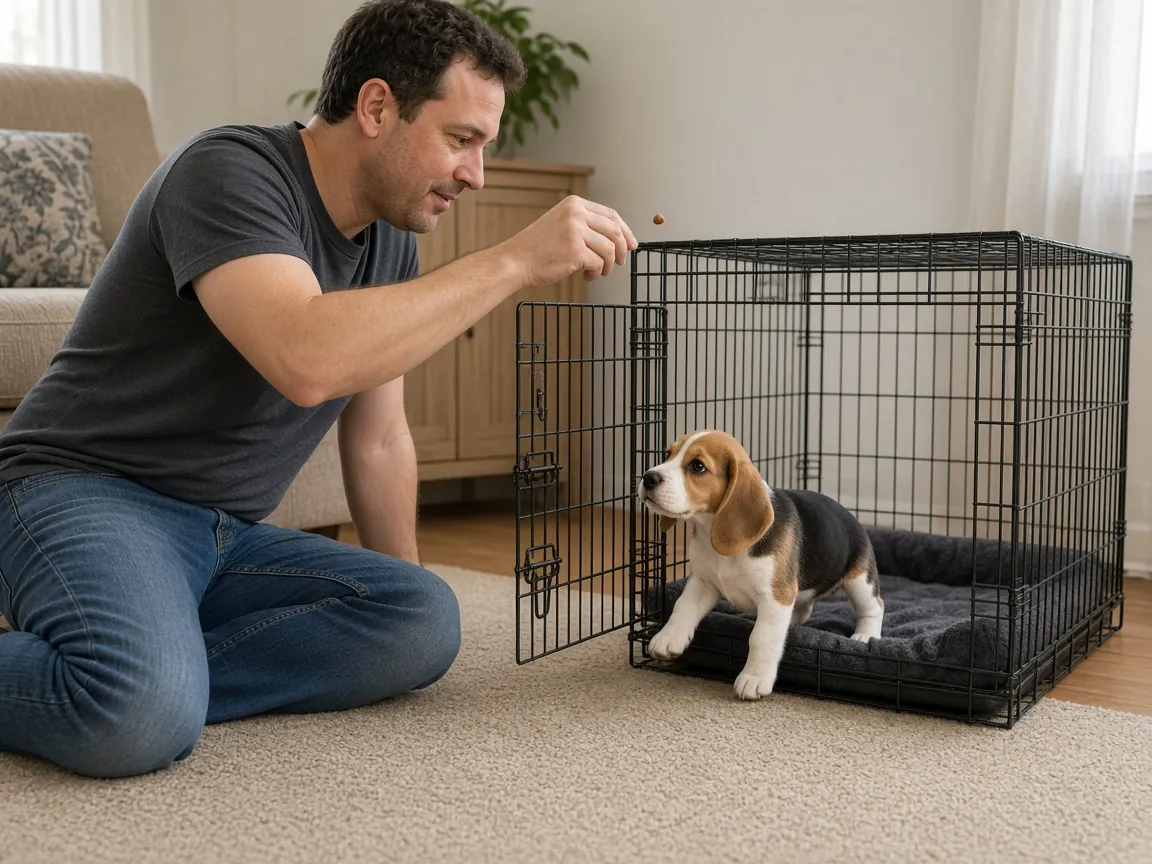
- Let them explore: leave the door open and let your puppy go in and out freely.
- Add treats: drop treats inside the crate, sometimes when your puppy is not looking.
- Reward calm: give extra treats when your puppy sits or lies down inside.
- Feed meals in the crate: the AKC suggests feeding meals near or in the crate.
- Give a chew: offer a long-lasting chew or food toy so your puppy stays inside longer.
- Close the door briefly: shut the door for a few seconds while you stay close, then open it.
- Build up time: over several days, slowly add more time with the door closed.
- Leave the room: step out for a few seconds, then come back. Slowly make it longer.
Small, tasty treats make each step easier. Our Boat To Bowl Training Treats are made from Australian tuna and sardines, and a Black Dog Treat Pouch keeps them handy. The PDSA says to cut your dog’s daily food by 10% if you use lots of treats, or use some of their normal food.
| Stage | What you do | Move on when |
|---|---|---|
| 1. Explore | Door open, treats inside | Puppy walks in happily |
| 2. Settle | Meals and chews in the crate | Puppy lies down inside |
| 3. Door closed | Close door for seconds, you stay close | Puppy stays calm |
| 4. Longer | Add time a little at a time | Puppy rests for longer |
| 5. Leave the room | Step out briefly, then return | Puppy stays relaxed |
Crate training a puppy at night
Night time can be the hardest part. The Blue Cross suggests having your puppy in your bedroom at first, in a bed or crate. Being close to you helps them feel safe. Later, you can slowly move the crate to where you want it to stay.
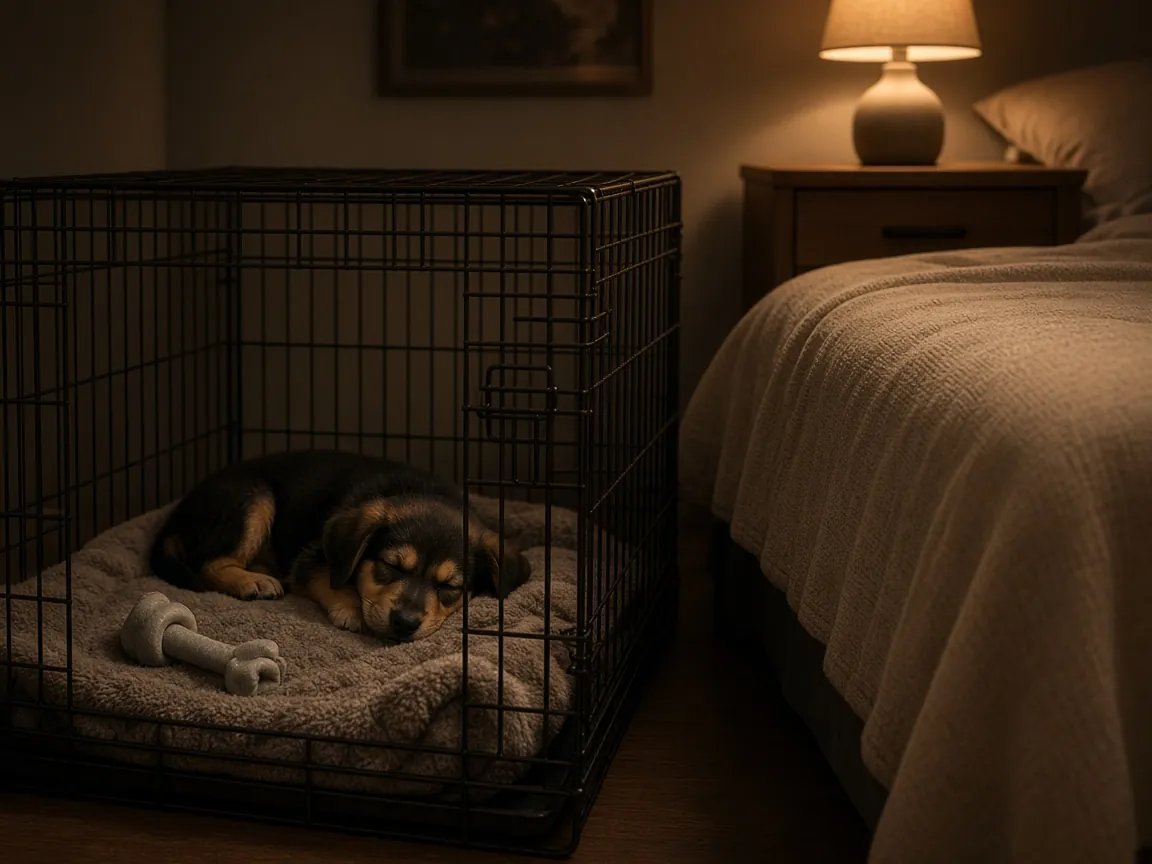
- Take your puppy to the toilet just before bed.
- Keep the room dark and quiet.
- Put the crate beside your bed so your puppy can hear you.
- If your puppy wakes and cries, take them out to the toilet calmly, then back to the crate.
- Keep night toilet trips quiet and boring, with no play.
Young puppies cannot hold on all night. Many owners put puppy training pads near the door for accidents. A 50 pack of medium puppy pads is handy for the first few weeks. Each medium pad is 90cm x 60cm, which is 50% bigger than a 60cm x 60cm pad, and the 50 pack holds 150% more pads than the 20 pack.
Crate training a puppy during the day
Use the crate for short naps and quiet time during the day. The Blue Cross says downtime is as important as socialisation time, and a crate can be a good place for a puppy to sleep without being disturbed.
The PDSA says crates should never be used for longer than three hours at a time, and less if your dog is not used to it. Puppies also need regular toilet breaks, play and time with you.
If you need a bigger safe area while you are busy, a Pet Playpen Foldable Large gives your puppy room to move. Read our dog playpen guide for more ideas.
Here is how that adds up. If your puppy naps in the crate for 1 hour, three times a day, that is 3 hours of rest spread out across the day. That is only 12.5% of a 24-hour day, with lots of play, toilet trips and time with you in between. The PDSA 3-hour limit applies to each single stretch, not just the daily total.
Common crate training puppy mistakes
- Using the crate as a punishment.
- Shutting the door too soon, before your puppy is relaxed.
- Leaving your puppy in the crate for too long.
- Letting your puppy out every time they cry, before they settle.
- Letting children disturb a puppy who is resting in the crate.
If your puppy cries, pants hard or tries to escape, go back a step. The Humane Society of the United States says crate training can take days or weeks, depending on your dog’s age and past experiences. If your dog seems very upset when left alone, talk to your vet or a qualified behaviour professional.
Crate training by the numbers
- 3 hours: the most the PDSA says a dog should be crated at one time.
- 10%: how much the PDSA suggests cutting daily food if you use many treats.
- 3 crates: the sizes compared in the table above, from 53cm to 70cm wide.
- About 40%: how much longer the Extra Large folding crate is than the Medium (106cm vs 76cm).
- 5 stages: in our simple crate training plan.
- 6 sources: the animal welfare and dog groups this guide draws on.
Want new chews and toys to keep crate time fun? Our pet subscription box sends a mix of goodies to your door. You can also browse our crates, pens and outdoor beds range.
Specific questions about crate training a puppy
How long does it take to crate train a puppy?
It depends on your puppy. The Humane Society says crate training can take days or weeks. Go at your puppy’s pace and only move on when they are relaxed.
Should I put a puppy crate in my bedroom?
Blue Cross suggests having your puppy in your bedroom at first, in a bed or crate. This helps them feel safe. You can move the crate later.
How long can a puppy stay in a crate?
The PDSA says no longer than three hours at a time, and less if your dog is not used to the crate. Puppies need regular toilet breaks and play.
Should I cover my puppy’s crate?
The RSPCA says covering part of the crate can help nervous dogs. Leave some sides open for air and so your puppy can see out.
What should I put in a puppy crate?
Add soft bedding, fresh water and a safe chew or toy. Blue Cross and the RSPCA both suggest making the crate comfy and inviting.
References
The advice in this guide comes from the animal welfare and dog sources below. Product details come from each product page on our site. Talk to your vet if you have concerns about your puppy’s health or behaviour.
- PDSA, Crate training your dog
- Blue Cross, How to crate train your puppy
- Blue Cross, How to get a puppy to sleep through the night
- RSPCA, How to crate train a puppy
- American Kennel Club, How to Crate Train Your Dog in 9 Easy Steps
- Humane Society of the United States, Crate training 101
Our monthly subscription box brings food, toys and treats for your dog or cat to your door. Pick a Starter, Standard or Deluxe box. Delivery is included Australia-wide, and you can cancel any time.
See the subscription boxes
During veterinary school, he contributed to projects involving species such as hammerhead sharks, Shark Bay mice, woylies, mulgara, and kangaroos, gaining valuable hands-on experience in wildlife health and preservation.




2 comments