

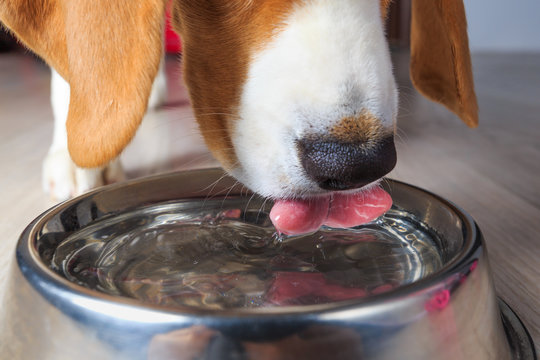
Expert Insight: “Heatwaves are deadly,” warns climate expert Prof. Susan Harris Rimmer. As Australia encounters hotter and more frequent heatwaves, maintaining hydration is critical. In cities like Perth, temperatures have peaked at 43.6°C (12°C above average), while Brisbane often faces intense 37°C heat. Use our calculator below to ensure your dog meets the official guideline of 70ml of water per kilogram of body weight daily.
AU Dog Water Intake Calculator
Critical Signs of Dehydration [14-16]
- Lethargy: Visibly tired or less animated.
- Sunken Eyes: Eyes appear dull and lack moisture.
- Dry/Sticky Gums: Loss of moisture around the mouth and nose.
- Loss of Skin Elasticity: Skin is slow to “pop” back after a gentle pinch.
- 5-Second Rule: If the pavement is too hot for your hand for 5 seconds, it’s too hot for paws.
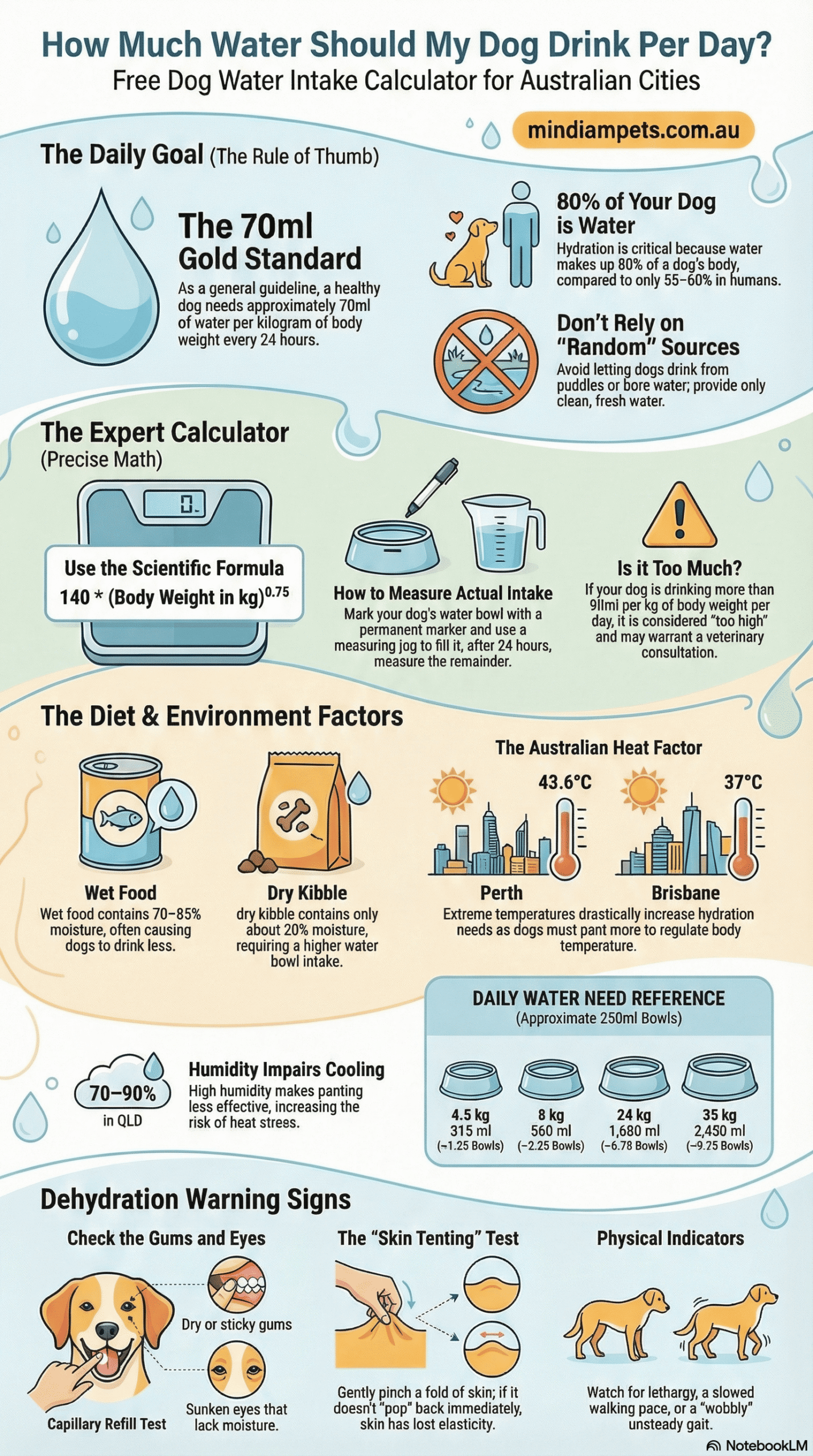
Love this infographic? Help other Aussie pet owners stay safe by sharing it!
Copy the code above to embed this guide on your own website.
The Science of Canine Hydration: Why Your Dog's Water Intake Matters
As Australia encounters "hotter, stronger, and more frequent heatwaves than ever before," according to data from the Bureau of Meteorology and CSIRO, pet owners must prioritize hydration to save lives [5]. In a recent study, it was discovered that three-quarters (75%) of pet owners were unaware of how much water their dogs actually required daily [6]. Official veterinary guidelines specify that pets need approximately 70ml of water per kilogram of body weight every single day [6, 7].
The Australian Climate Challenge: Perth to Brisbane
The geography of Australia presents unique challenges for canine health. In Perth, maximum temperatures have been recorded at more than 12°C above average, reaching peaks of 43.6°C [3, 4]. Meanwhile, cities like Brisbane face dangerous combinations of high heat (up to 37°C) and stifling humidity levels that can exceed 90% [8, 9].
"Heatwaves are deadly... a heatwave could be as life-threatening as a bushfire or a cyclone but is rarely taken as seriously," warns Professor Susan Harris Rimmer, a climate justice expert at Griffith University [10].
Calculating the Precision Requirement: The Metabolic Formula
While the 70ml/kg rule is a vital baseline, experts often use a more refined metabolic precision formula to determine a dog's "Normal Water Consumption Level" over a 24-hour period [11]:
If your dog’s intake exceeds 90ml/kg/day, it is considered too high and may indicate underlying health issues, requiring immediate veterinary consultation [11].
Dietary Impact: Wet Food vs. Dry Kibble
One of the most common reasons pet owners see a fluctuation in water bowl levels is the type of food provided.
- Wet Dog Food: Contains between 70% to 85% moisture [12, 13]. Because wet food is so hydrating, dogs often consume significantly less supplemental water [14, 15].
- Dry Dog Food: Typically contains only about 20% moisture [13]. Dogs on a kibble-heavy diet require a much larger "water payload" to aid digestion and maintain cellular function [16].
Critical Signs of Dehydration in Dogs
Dehydration occurs when total body water is less than normal, often involving a loss of both water and essential electrolytes like sodium, chloride, and potassium [20]. Because the human brain processes visual data 60,000 times faster than text, the infographic above is designed to help you spot these signs instantly [21].
The Symptoms to Watch For:
- Sunken Eyes: Eyes will appear dull and lack their usual moisture [22].
- Lethargy: Your dog may appear visibly tired, less animated, or move at a slowed pace [22].
- The Skin Elasticity Test: Gently pinch the skin on your dog's back. In a healthy dog, it "pops" back instantly. In a dehydrated dog, the skin moves back slowly or not at all [22].
- Dry/Sticky Gums: A loss of moisture around the mouth and nose is a tell-tale sign [22, 23].
Advanced Hydration Strategies for Working Dogs
For active breeds or "detection dogs" working in hot environments, simple water access may not be enough. A study published in Frontiers in Veterinary Science evaluated hydration strategies in dogs working in 29.3°C heat with 70% humidity [24]. The results showed that dogs were more likely to increase their fluid consumption when provided with a flavored Oral Electrolyte Solution (OES) compared to plain water [24, 25].
Pro-Tip: If your dog refuses water during extreme heat, try offering ice cubes for them to lick, or add low-sodium broth to their bowl to encourage intake [19, 22].
The "5-Second Rule" for Paws
Before heading out in cities like Adelaide, Sydney, or Geraldton (which recently hit 49.3°C), use the back of your hand to check the ground [4]. If you cannot hold it there for 5 seconds, the pavement is hot enough to cause deep burns to your dog's paws [26].
Why Use This Calculator and Infographic?
Highly visual content like our infographic generates 3 times more engagement than plain text [27, 28]. By using our embeddable calculator, you are not only tracking your pet's health but contributing to a safer community for Australian dogs. Our tool is optimized for Australian conditions, accounting for the heat, wind, and dry inland air that makes hydration a "what if" necessity on road trips [16].
References & Citations:
1. The Guardian: Heatwave forecasts for Perth and Brisbane (2025).
2. Dogs QLD/NSW: Official Hydration Guidelines (2017).
3. Frontiers in Veterinary Science: Hydration Strategies in Hot Environments (2017).
4. Companion Animal Veterinary Hospital: Water Consumption Cheat Sheets.
5. GeniusVets: The power of infographics in veterinary education.