

Description
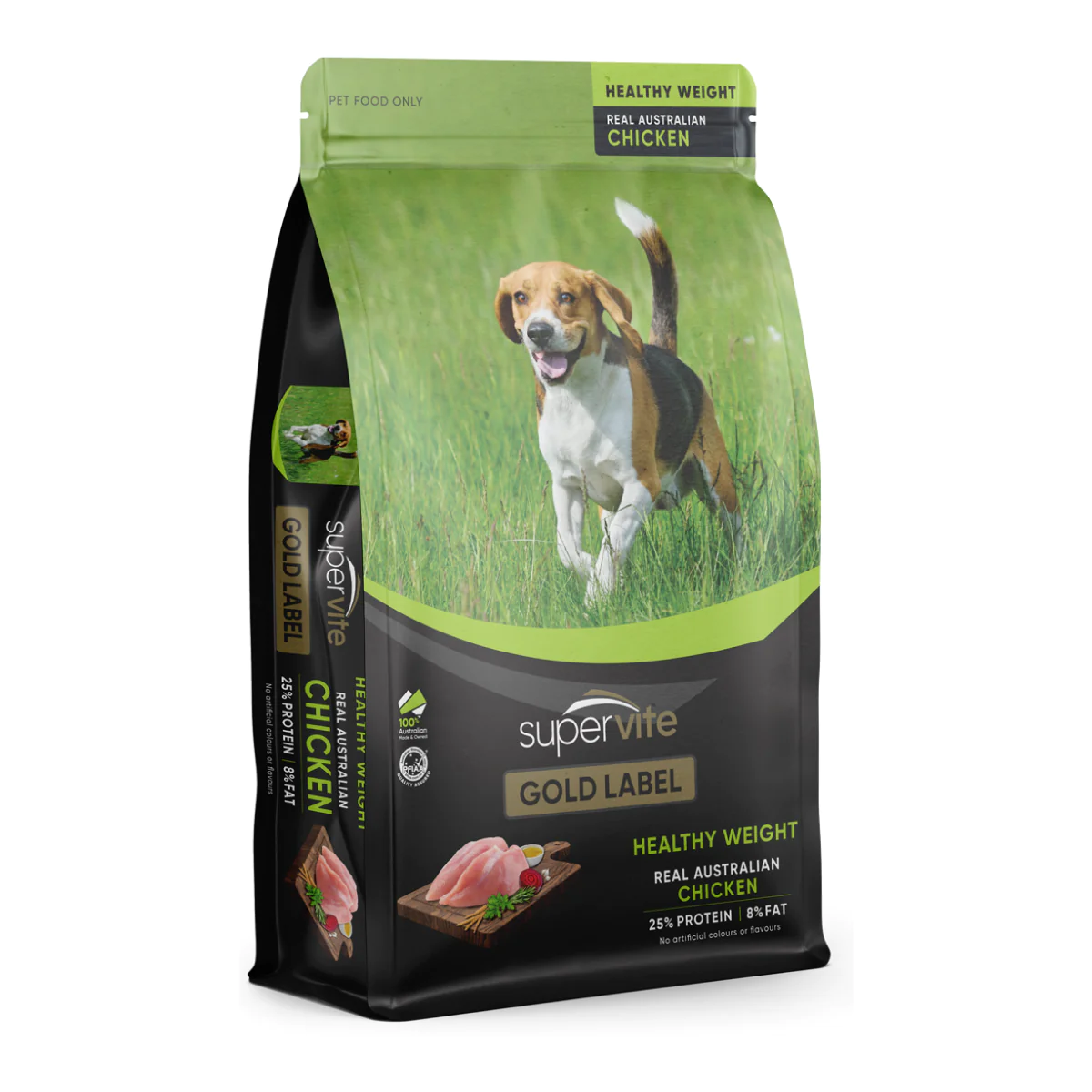
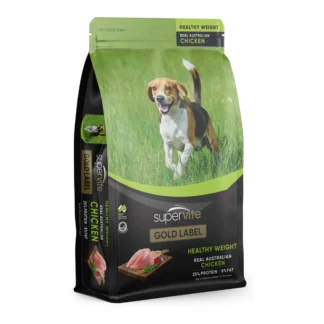
If your dog gains weight easily, food choice matters. Portion size matters too. However, what matters most is a diet that supports lean muscle while helping manage calories. Supervite Gold Label – Adult Dog – Healthy Weight – Australian Chicken is a complete and balanced dry dog food. It is made to deliver solid nutrition and a taste most dogs enjoy.
This recipe uses real Australian chicken and a well-rounded mix of grains, fats, vitamins, and minerals. As a result, it suits adult dogs that need a healthy-weight approach without feeling like they are missing out at meal time.
Who this formula suits
This product is designed for adult dogs that need help staying at a healthy body condition. For example, it can suit dogs that are less active, dogs that have been desexed, and dogs that tend to gain weight quickly. Also, it can suit households where treats are common, because a controlled main diet helps balance the rest of the day.
It may not suit every dog. Therefore, if your dog has a medical condition, check with your vet before changing diet. If your dog is a puppy, choose a puppy-specific formula instead.
Nutrition highlights that matter for healthy weight
Healthy weight feeding is not only about “less food”. It is about the right balance. This formula lists:
- Crude protein (min) – 25%
- Crude fat (min) – 8%
- ME – 310 kcal per 100g
Protein supports lean muscle. Meanwhile, a more moderate fat level can help manage total calories. Also, knowing energy density helps you portion more accurately. Therefore, weigh food when you can, especially during weight-loss phases.
Ingredient overview – what is inside and why it helps
This recipe includes a mix of animal proteins, grains, fats, and micronutrients. It is designed to be complete and balanced for adult dogs.
Ingredients: Meat and meat by-products (chicken, beef, and-or lamb) and-or poultry by-products, whole grain wheat, cereal and-or plant by-products, whole grain barley and-or sorghum, fats and oils (from beef, lamb, fish, poultry and-or vegetable), chicken gravy, fish and fish by-products (tuna and-or salmon), alfalfa, salt, minerals (calcium, phosphorus, potassium, copper, iodine, manganese, magnesium, selenium, zinc), choline, vitamins (A, C, D3, E, B1, B2, B3, B5, B6, B9, B12), natural antioxidants with rosemary extract, garlic.
Chicken and other animal proteins can support muscle maintenance. Whole grains provide energy and fibre. Fish ingredients add variety and can support skin and coat. Vitamins and minerals support daily body functions. Natural antioxidants can help protect food quality. As always, results depend on the full routine – food, portions, exercise, and treat control.
How Australian dog owners use this food day to day
Australia has diverse climates and lifestyles. So feeding routines vary. However, a healthy-weight plan still follows the same basics – consistency, measured portions, and steady activity.
- New South Wales – Sydney, Newcastle, Wollongong – busy walking routes and parks mean small, regular training treats are common. Therefore, reduce meal portions if treats increase.
- Victoria – Melbourne, Geelong, Ballarat – indoor dogs often move less in colder months. So, measured meals help prevent slow weight gain.
- Queensland – Brisbane, Gold Coast, Sunshine Coast – heat can reduce activity at midday. Instead, feed and walk in the cooler morning and evening.
- Western Australia – Perth, Mandurah – beach walks are common. However, watch extra snacks on long outings.
- South Australia – Adelaide – many dogs have backyard routines. So, add short structured play sessions to support weight control.
- Tasmania – Hobart, Launceston – winter inactivity can creep up. Therefore, monitor body condition monthly.
- ACT – Canberra – great walking paths, yet cold mornings can shorten walks. So, keep meal sizes steady and add indoor games.
- Northern Territory – Darwin – heat and humidity change appetite. Therefore, keep water available and feed at cooler times.
Feeding guidance – simple, practical approach
Start with the brand feeding guide on the pack if you have it. Then adjust based on results. Use your dog’s body condition as the real guide.
- If your dog is gaining weight, reduce daily food slightly and track changes for 2 to 3 weeks.
- If your dog is losing too fast, increase slightly and monitor energy and stool quality.
- If treats are used daily, reduce meal portions to balance calories.
Also, use a kitchen scale if possible. Cups vary. Scales stay consistent. Therefore, scales support better results over time.
How to transition to this food
A slow change helps reduce stomach upset. Therefore, take 7 to 10 days.
- Days 1 to 2 – 75% old food, 25% new food
- Days 3 to 4 – 50% old food, 50% new food
- Days 5 to 6 – 25% old food, 75% new food
- Day 7 onward – 100% new food
If stools loosen, slow down the transition. Also, keep treats simple during the switch.
Expert insight
Dr Jay Rollings (BSc DVM) notes that healthy weight plans work best when owners measure food, reduce extra calories from treats, and stay consistent for weeks. Small daily changes add up. Therefore, aim for steady progress rather than quick fixes.
Helpful links
Keyword groups by search intent
Commercial intent
- best healthy weight dry dog food Australia
- adult dog food for weight management
- healthy weight dog kibble chicken
- complete and balanced dog food chicken
- Supervite Gold Label dog food review
Transactional intent
- buy Supervite Gold Label Healthy Weight
- Supervite Gold Label Healthy Weight price Australia
- order healthy weight dog food online AU
- healthy weight dog food delivery Australia
- healthy weight kibble Australian chicken
Informational intent
- how to help a dog lose weight safely
- how many calories does dog food have
- how to portion dry dog food for weight loss
- what protein level is good for adult dogs
- how to switch dog food without upset stomach
Research-driven outline
- Who this food is for – adult dogs needing weight control support
- Why “healthy weight” feeding works – calories, portions, and consistency
- Key nutrition points – protein, fat, and energy density
- Ingredient overview – what is included and why it matters
- How to feed in Australia – routines by lifestyle and climate
- How to transition – simple steps to reduce stomach upset
- FAQ – common buying and feeding questions

Reviews
There are no reviews yet.