

Fish Food Guide: Flakes, Pellets and How Much to Feed
Get our free Pet Care Starter Checklist
A printable checklist for dogs and cats, plus practical care tips and new arrivals by email.
No spam. Unsubscribe anytime. | Or see our monthly pet box →
Choosing fish food is simpler when you match the food to your fish, then feed only what they can finish. Flakes, pellets, wafers and sinking tablets each suit a different job in the tank. This guide explains how much to feed, which types we stock in Australia, and how to keep leftover crumbs from spoiling the water.
Key takeaways
Keep these five points in mind before you open the tub. They cover the main choices you will make: which food to buy, how much to tip in, and how to stop leftover food from harming the water your fish live in every day.
- Match the food to the fish. Goldfish diets are not the same as tropical diets.
- Feed only what your fish can eat in about 2 to 5 minutes.
- It is safer to feed a little less than to leave food rotting in the tank.
- Flakes can lose up to 90% of their vitamins within 30 seconds in water, so do not over-soak them.
- Store food sealed and dry so nutrients stay fresh.
What is fish food?
Fish food is the staple diet you give aquarium or pond fish. Most keepers use a complete flake or pellet each day, then add a small treat like frozen or freeze-dried food now and then. The PetMD feeding guide says most pet fish do well on a pellet or flake staple, with treats only as an extra. That keeps meals simple and balanced for the whole tank.
The RSPCA also says to buy the right type for your fish. Do not give goldfish tropical flakes, because the nutrient mix is different. Common goldfish (Carassius auratus) are listed on FishBase as a widely kept ornamental species, so labelled goldfish diets are easy to find. Browse our full fish food range, or start in the tropical fish food section if you keep community tropicals.
How much fish food should you give?
Overfeeding is one of the most common mistakes new keepers make. Extra food sinks, breaks down and can make the water dirty. Dirty water is harder on fish than a short wait for the next meal, so a small feed done well beats a big dump of flakes on the surface.
Always feed as much as the fish can eat within two to five minutes. Don’t overfeed them. We recommend feeding fish two or three times a day rather than just once a day.
RSPCA, What to feed your pet fish
That is a clear rule you can use every day: about 2 to 5 minutes of eating time, and about 2 or 3 small feeds rather than 1 large one. The RSPCA also says it is better to underfeed than to overfeed, because fish cope better with a little less food than with poor water. PetMD uses the same 2-to-5-minute window. The RSPCA fish health guide also links poor care and dirty water to many common fish problems.
Water quality ties in here. The RSPCA fish environment guide explains that clean water and the right tank setup matter as much as the brand on the tub. Leftover food raises waste in the water, so scoop out what is not eaten after each feed.
| Step | What to do |
|---|---|
| 1. Pick the right type | Choose goldfish, tropical, bottom-feeder or specialty food. |
| 2. Start small | Add a pinch or a few pellets, then watch. |
| 3. Time the feed | Stop when fish finish in about 2 to 5 minutes. |
| 4. Remove leftovers | Scoop out uneaten food so it does not spoil the water. |
What should be in fish food?
A complete staple should cover protein, fat, carbs, fibre, vitamins and minerals. Exact needs vary by species, but PetMD gives clear ranges that help you read a pack label. Use them as a guide when you compare tubs, then still match the food to your fish type.
- Herbivore fish often need about 35% to 45% protein in their food.
- Carnivore fish often need about 40% to 55% protein.
- Fat should make up about 15% to 25% of the diet.
- Carbs are often about 25% to 40% for omnivores, and less than 20% for carnivores.
- Fibre is often less than 5% in most fish diets.
Pellets can maintain stable vitamins longer than fish flakes, which will lose up to 90% of their vitamins within 30 seconds in water.
PetMD, What do fish eat?
So if your fish can take a pellet, pellets are a strong daily choice. Flakes still suit small mouths. Many keepers use one staple every day, then rotate in wafers or a colour food 2 or 3 times a week for variety.
Types of fish food compared
Fish food comes in a few main shapes. The shape controls where it sits in the water, so it should match how your fish like to eat. A top feeder needs floating food. A bottom feeder needs food that sinks and stays put on the gravel for several minutes after it lands.
| Type | Where it sits | Good for |
|---|---|---|
| Flakes | Float, then slowly sink | Small tropicals and mixed community tanks |
| Floating pellets | Stay near the top | Surface feeders, bettas and many goldfish |
| Sinking pellets | Drop to mid-water or the floor | Goldfish that gulp air, cichlids and mid-water fish |
| Wafers and tablets | Sink and stay on the floor | Corydoras, plecos and other bottom feeders |
| Holiday tabs | Slow release while you are away | Short trips, used with care |
Goldfish options we stock
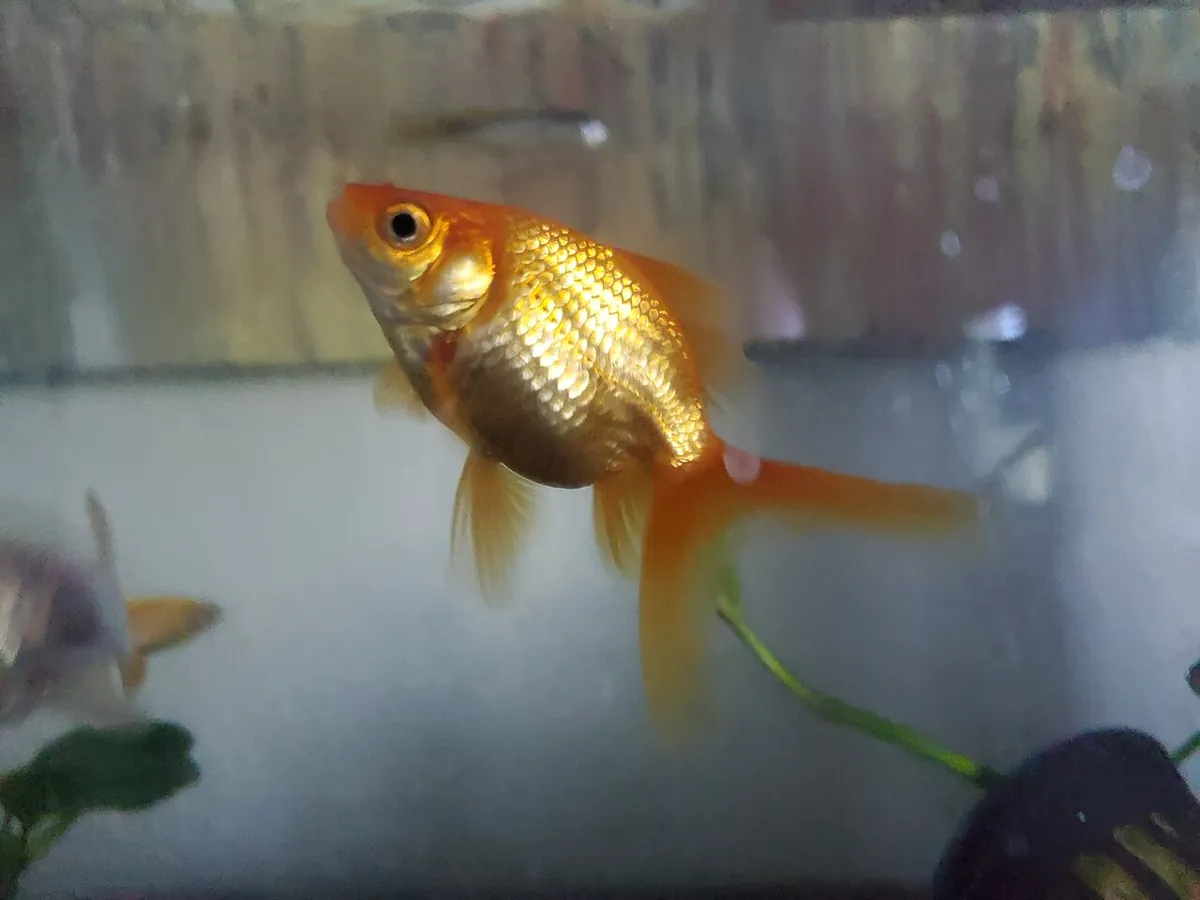
Goldfish need food made for them. The RSPCA warns against using tropical flakes for goldfish. Here are goldfish options we stock. Every product below is in stock. Read each pack for the feeding guide and start with small amounts when you try something new. Our goldfish food guide covers how much and how often to feed.
- Nutrafin Max Goldfish Flakes 215g: a classic flake staple for goldfish.
- Nutrafin Max Goldfish Sinking Pellets 50g: a small pack to see if your fish like sinking pellets.
- Nutrafin Max Goldfish Sinking Pellets 100g: the same sinking pellets in a larger pack.
- Nutrafin Max Goldfish Colour Pellets 175g: pellets made to support colour.
- Tetra Goldfish Flakes: a complete daily flake for goldfish.
- Feedwell Goldfish Flakes: a bulk flake option for regular feeding.
- Hikari Staple Koi Pellets (Medium): a floating pond staple for koi and pond goldfish.
Feed pond fish only when the water is warm enough for them to digest food. PetMD notes outdoor pond fish should not be fed when water is below about 13 C (55 F), because they cannot break the food down well in the cold.
Tropical fish food staples
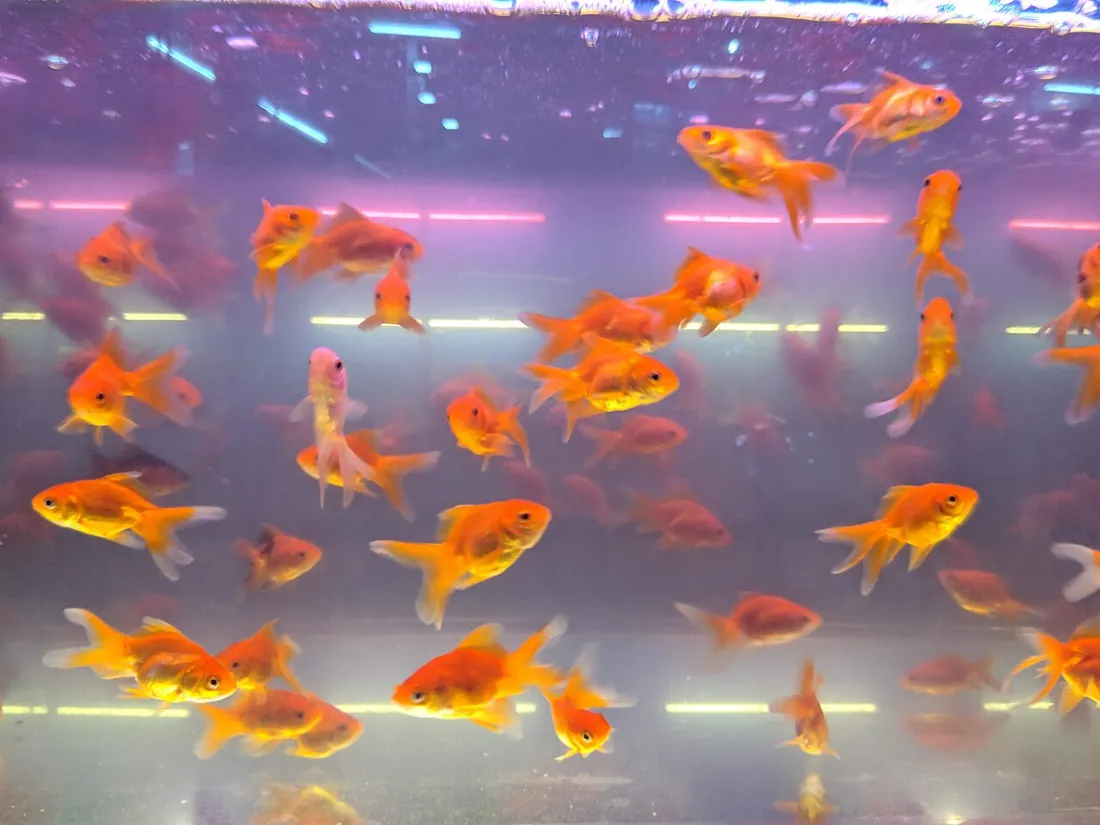
Tropical community tanks often do well on a good flake or fine pellet. Small fish such as tetras and guppies manage flakes easily. Larger tropicals may prefer granules or micro pellets that hold shape longer in the water. Start with one staple, then add variety once fish are eating well for a few days.
- Tetra TetraMin Flakes 52g: a widely used tropical flake staple.
- Tetra Tropical Colour Flakes 200g: flakes made to support colour in tropicals.
- Nutrafin Max Tropical Colour Flakes 215g: colour-focused tropical flakes.
- Sera Vipagran Tropical Granules: mid-water granules for tropical fish.
- Sera Vipagran Baby Granules: fine food for juvenile fish.
- Hikari Micro Pellets: tiny pellets for small tropicals.
- Sera Insect Granules: insect-based granules for variety.
For a closer look at flakes and granules made for community tanks, see our tropical fish food category. A 52g flake tub suits a small tank. A 200g or 215g tub suits a busier community that eats more each week.
Bottom feeder options
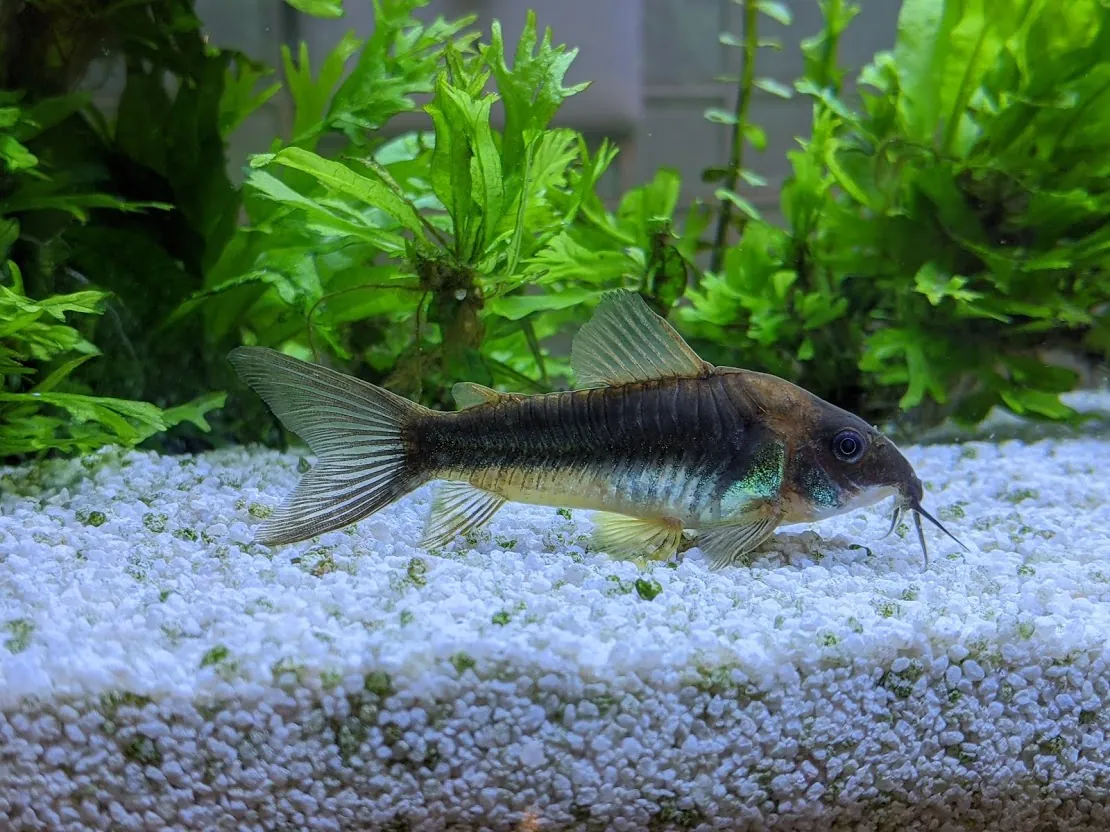
Corydoras, plecos and other bottom dwellers often miss floating flakes. They need wafers, chips or sinking tablets that reach the gravel and stay there long enough to eat. If you only sprinkle flakes on top, bottom fish can go short even when the tank looks busy at the surface for the first 2 minutes.
- Nutrafin Max Bottom Feeder Sinking Tablets 120g: sinking tablets for bottom dwellers.
- Sera Vipachips Tropical Wafers: chips that sink for bottom feeders.
- Sera Spirulina Tabs: herbal tabs with spirulina.
- Hikari Sinking Wafers: nutrient-rich wafers for corydoras and similar fish.
- Hikari Algae Wafers: algae wafers for plecos and bristlenose.
- Hikari Mini Algae Wafers: smaller discs for smaller algae eaters.
Specialty picks: bettas, cichlids and trips
Some fish do better on a food made for their group. Bettas often prefer floating pellets they can take at the surface. Cichlids vary a lot: some eat more plant food, others need a higher-protein diet. Match the label to the group you keep, then still use the 2-to-5-minute rule at every feed.
- Hikari Betta Bio-Gold: floating pellets made for bettas.
- Hikari Cichlid Gold Sinking Medium and Mini: sinking colour food for cichlids.
- Sera Cichlid Sticks: a staple stick for larger omnivorous cichlids.
- Sera Cichlid Malawi Granules: plant-focused food for Malawi cichlids.
- Sera Cichlid Tanganyika Granules: food aimed at carnivorous Tanganyika cichlids.
- Sera Cichlid Carnivore Granules XL and Herbivore Granules XL: larger granules for big cichlids.
- Sera Discus Colour Granules: colour food for discus.
- Sera Immune Probiotic Granules: a variety option with probiotic support listed on the pack.
Going away for a short trip? The RSPCA prefers an automatic feeder or a trusted person over holiday feeding blocks, which can dump too much food at once. If you do use a holiday option, follow the pack and keep the trip short. We stock Sera Holiday Tabs in our holiday fish food range.
How to feed the smart way
Good feeding is as much about habit as about the brand on the tub. These 6 simple steps keep fish fed and water cleaner. Use them with any staple you choose, whether flakes, pellets or wafers, and adjust only the amount to your fish count.
- Match the food: goldfish diets for goldfish, tropical diets for tropicals, sinking food for bottom feeders.
- Feed little and often: 2 or 3 small feeds beat 1 big dump.
- Watch the clock: stop within about 2 to 5 minutes.
- Vary the diet: a staple plus an occasional wafer or insect granule covers more needs.
- Store food well: keep the lid tight and the tub dry.
- Care for the water: clean filters and use a tap water conditioner when you change water. See our aquarium water conditioner guide and our aquarium and fish products for conditioners and test kits.
Want a regular mix of pet treats and toys for a dog or cat in the same home? Our pet subscription box ships Australia-wide each month.
Common fish food mistakes
Most problems come from too much food, the wrong type, or no routine. Fixing them is easy, and your fish can still enjoy a tasty feed every day without the water turning cloudy after only 1 or 2 heavy feeds.
- Using the wrong type: tropical flakes are not made for goldfish.
- Overfeeding: leftover food fouls the water.
- Only floating flakes for bottom feeders: they may go hungry on the floor.
- Skipping a routine: fish learn meal times; steady times reduce waste.
- Leaving food open: damp food loses quality and can spoil faster.
- Relying only on holiday blocks: the RSPCA says they can release too much food too fast.
Specific questions about fish food
Here are short answers to the 5 questions new fish keepers ask most. Each answer is quick, so you can find what you need fast. If your fish look unwell or stop eating, ask an aquatic vet for help.
How often should I feed my fish?
Most aquarium fish do well with 2 or 3 small feeds a day. Give only what they finish in about 2 to 5 minutes.
Are flakes or pellets better?
Both can work. Pellets often hold vitamins better in water. Flakes can lose up to 90% of vitamins within 30 seconds once wet, but they still suit small mouths. Many tanks use 1 staple and add variety.
What should goldfish eat?
Use food labelled for goldfish. The RSPCA says not to use tropical flakes for goldfish because the nutrients differ.
What do bottom feeders eat?
Use sinking wafers, chips or tablets that reach the gravel. Floating flakes alone often miss them.
Can I leave fish without food while on holiday?
For a short trip, an automatic feeder or a trusted person is better than dumping lots of food. Holiday tabs are a backup for short absences only.
References
The advice in this guide comes from the animal welfare and vet sources below. Product details come from each product page on our site. Ask an aquatic vet if your fish are unwell or on a special diet.
- RSPCA, What to feed your pet fish
- RSPCA, Ornamental fish care
- RSPCA, Fish environment and housing
- RSPCA, Fish health
- PetMD, What do fish eat? Your guide to feeding pet fish
- FishBase, Carassius auratus (goldfish)
Our monthly subscription box brings food, toys and treats for your dog or cat to your door. Pick a Starter, Standard or Deluxe box. Delivery is included Australia-wide, and you can cancel any time.
See the subscription boxes
During veterinary school, he contributed to projects involving species such as hammerhead sharks, Shark Bay mice, woylies, mulgara, and kangaroos, gaining valuable hands-on experience in wildlife health and preservation.
2 comments